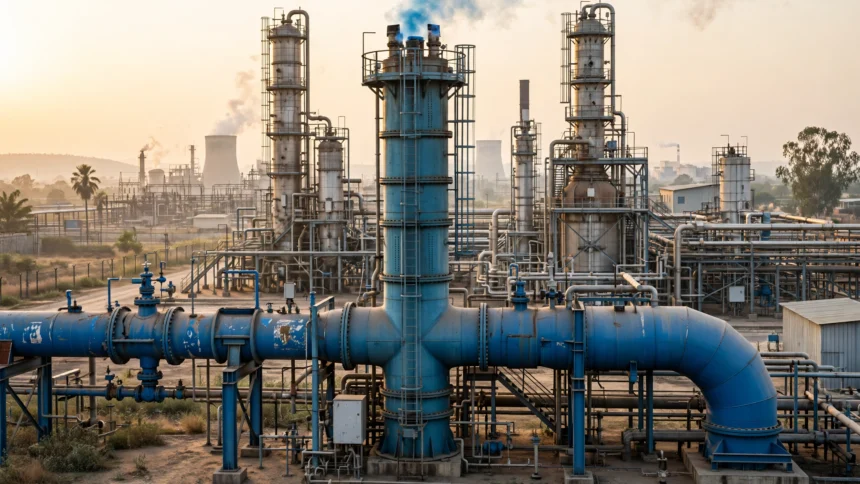
India’s push to turn coal into cleaner fuels took a fresh step forward on Tuesday, with the Coal Ministry announcing that NTPC has filed two proposals under the government’s Rs 37,500 crore coal gasification scheme and opening a third round of applications for other companies to join in.
The announcement, made in New Delhi on 10 November, closes the second round of the Scheme for Promotion of Surface Coal and Lignite Gasification Projects. Both applications in this round came from NTPC, India’s largest power producer, and both aim to convert coal into industrial chemicals rather than simply burning it for electricity.
What NTPC plans to make from coal
NTPC’s two proposals envisage producing urea, methanol and dimethyl ether, known as DME, through coal gasification. These are products India currently imports in large quantities, and making them at home from domestic coal is the core idea behind the scheme.
Urea is the country’s most widely used fertiliser, methanol is a key industrial chemical and a potential blending fuel, and DME can be used as a cooking gas substitute and a transport fuel. The ministry said the two applications underline how gasification can support domestic production of critical industrial products while putting India’s own coal reserves to wider use.
The ministry did not disclose the investment size, proposed locations or production capacities of NTPC’s two projects. Those details are expected to emerge as the proposals move through evaluation.
Round 3 opens today, deadline 11 January
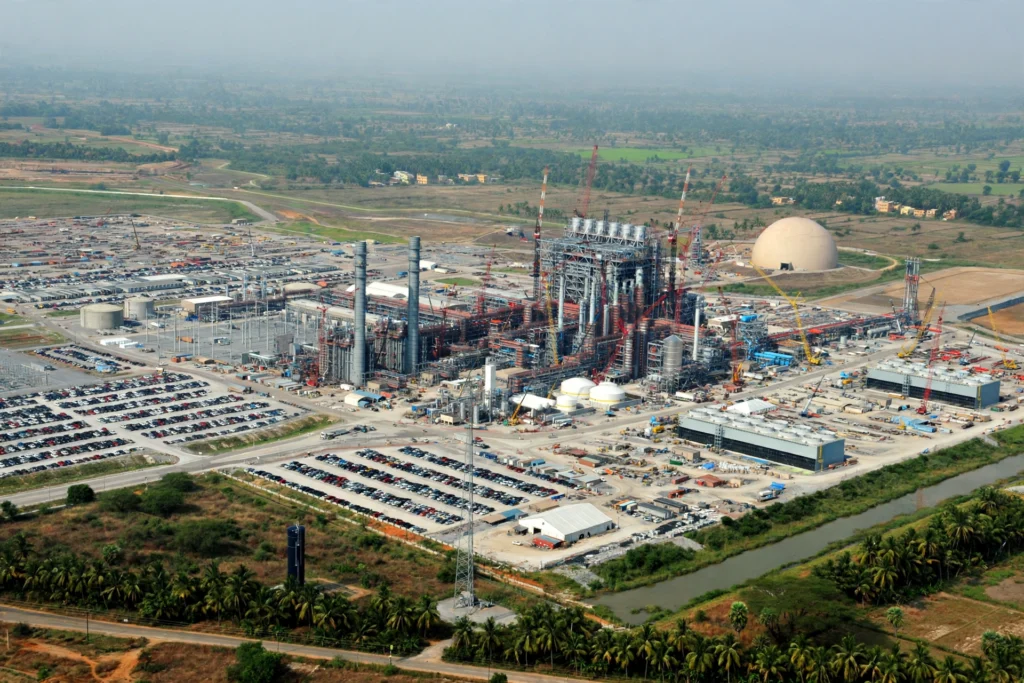
Alongside closing Round 2, the ministry has opened Round 3 of the scheme with effect from 10 November. Companies interested in setting up coal or lignite gasification projects can submit their proposals by 11 January 2027.
The scheme works through competitive selection, with projects judged on benchmarks such as project cost, coal input and syngas output. It is part of a larger national target to build 100 million tonnes of coal gasification capacity by 2030, a goal that would sharply reduce India’s dependence on imported natural gas, methanol and ammonia.
The Union Cabinet had approved the scheme on 13 May 2026 with a total financial outlay of Rs 37,500 crore. The money is meant to support the capital-intensive first wave of gasification plants, which are expensive to build but can run for decades once commissioned.
A scheme that had to defend itself in September
The latest announcement also settles a question that had hung over the programme. In September 2026, reports suggested the scheme had attracted no applications at all. The ministry called those reports premature and incorrect, clarifying that Talcher Fertilisers and NTPC had already submitted applications through the online portal, while other prospective applicants were at various stages of preparing their bids.
Round 2’s outcome shows the pipeline is moving, even if slowly. Two applications from a single company is a modest haul for a scheme of this size, and the government will be hoping Round 3 draws a wider field, including private players and joint ventures.
Why gasification matters for India’s energy security
Coal gasification converts coal into synthesis gas, or syngas, a mixture of hydrogen and carbon monoxide that can be turned into fertilisers, fuels and chemicals. For a country that sits on some of the world’s largest coal reserves yet imports much of its gas and chemicals, the technology offers a way to use a domestic resource for products that currently drain foreign exchange.
The technology also fits into India’s fertiliser security plans. Domestic urea production has been a policy priority for years, and gasification-based plants can produce urea from Indian coal instead of imported natural gas, shielding farmers from global gas price swings.
Environmental questions remain part of the debate. Gasification is cleaner than burning coal directly, but it is still a coal-based process, and its climate credentials depend on how efficiently plants run and whether carbon capture is added later. The government has framed the scheme as a transition step, using coal more wisely while renewable capacity grows.
What happens next
With Round 3 now open, the focus shifts to who else applies before the 11 January deadline. NTPC’s two proposals will go through evaluation, and the ministry is in touch with other prospective applicants who are finalising their submissions.
For investors and the energy sector, the scheme’s progress is a signal of where government money and policy attention are headed: not just more coal mining, but new uses for coal that feed fertiliser plants, chemical factories and fuel supply chains.
FAQs
What is the coal gasification scheme?
It is a government scheme approved in May 2026 with an outlay of Rs 37,500 crore to promote surface coal and lignite gasification projects, which convert coal into syngas for making fertilisers, fuels and chemicals.
Who applied in Round 2?
NTPC submitted the only two applications in Round 2, proposing to produce urea, methanol and dimethyl ether (DME) from coal.
When does Round 3 close?
Round 3 opened on 10 November 2026 and the last date for submitting applications is 11 January 2027.
What is India’s coal gasification target?
The national target is to achieve 100 million tonnes of coal gasification capacity by 2030.
Why does gasification matter?
It lets India make urea, methanol and other chemicals from domestic coal instead of importing natural gas and chemicals, strengthening energy and fertiliser security.
The scheme’s next test is participation. If Round 3 brings in more companies, the Rs 37,500 crore bet on turning coal into chemicals will start to look like a real industrial programme rather than a pilot.