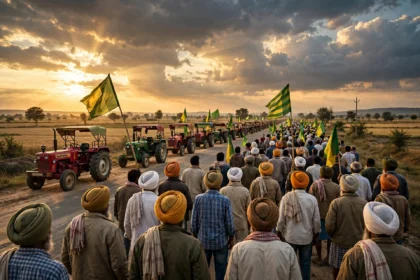
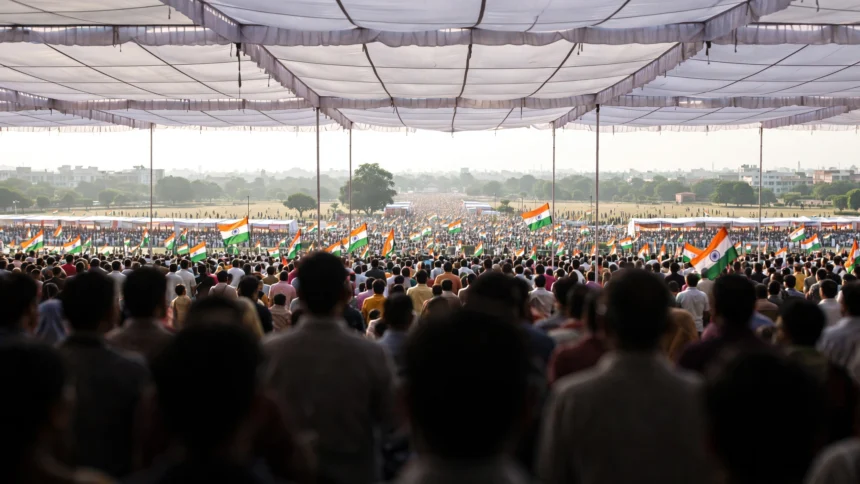
Thousands of people filled Ramlila Maidan in New Delhi on Saturday, and by the end of the day they had made a decision that could shape how India counts itself. A coalition of Other Backward Classes organisations declared a boycott of Census 2027, saying they will stay away from the exercise until the census form carries a separate OBC column and a drop-down list of castes.
The declaration, adopted at a rally organised by the All India Caste Census Coordination Committee, lands just three days before enumerators begin house-to-house visits in four states.
What the groups are demanding
The coalition, which brings together nearly 75 OBC organisations from across the country, has four demands: a separate OBC column on the census form, alongside the SC, ST and General categories; a drop-down list of castes, with a standard code for every community and sub-group; a specific method for counting nomadic and denotified tribes; and removal of the tick-box options for “no caste” and “do not wish to disclose caste”.
At the rally, activist Yogendra Yadav of Bharat Jodo Abhiyaan said: “A caste census will only be meaningful if every OBC caste is correctly identified and counted. This requires a separate category, a list of castes, a drop-down menu, and a separate code for each caste… Count OBCs accurately.” G. Kiran Kumar, national president of the All India OBC Students Association, told The Hindu the groups had submitted memoranda to the government many times without a response, adding: “We will boycott the census until the government listens to us.”
The 46 lakh problem: why 2011 still matters
The dispute is not about whether caste should be counted. Caste enumeration was approved on 30 April 2025, and nobody in the coalition wants that reversed. The fight is about how caste gets written down.
Under the questionnaire notified by the Registrar General on 14 August 2026, the form has 40 questions. SC and ST respondents choose from notified category options. Everyone else types or states their caste in an open text field, with no pre-loaded list of OBC castes and no separate OBC column.
The coalition says this is a recipe for repeating 2011. The Socio-Economic and Caste Census that year used a similar open-ended method, and the coalition points out that it recorded more than 46 lakh distinct caste-name entries. The caste data from that exercise was never published in consolidated form. DMK Rajya Sabha MP P. Wilson, who spoke when the protest was announced on 12 November, called it a “shock and surprise” that there was no drop-down option for OBCs. He also linked the count to quotas, saying that if OBCs were properly enumerated, the existing 27 per cent OBC quota “will have to go up even beyond 50 per cent”.
What the government says
The Centre has not announced any change to the format. Its stated reasoning, reported before the rally, is that the existing Central and State OBC lists do not provide a uniform list of individual castes, and some entries describe broad social or occupational groups rather than single castes. In other words, the government says there is no single agreed list to put in a drop-down.
The courts have so far left the question to the census authorities. On 28 October 2026, the Supreme Court allowed the OBC Federation of India to submit a representation to the Registrar General, rather than ordering an immediate change. That representation is still pending, and no response from the Home Ministry or the Registrar General to Saturday’s declaration had been reported at the time of writing.
Why it matters
This is a fight about a form field, but the stakes are much larger than the form. A census is the base map for almost everything that follows: reservation policy, welfare targeting, and the political argument about who gets what. If a large bloc of households stays away, the data itself becomes contested, and a contested count serves nobody.
Both sides, unusually, have a point. The government is right that no single uniform OBC list exists today, since Central and state lists differ. But the coalition is also right that the open field failed once already, in 2011: 46 lakh entries and no usable published result. The fix the groups want, a standard caste directory with unique codes, would have to be built before the nationwide house visits begin on 25 January 2027.
The timing sharpens all of this. House-to-house counting begins on 1 December in Uttar Pradesh, Punjab, Goa and most of Uttarakhand. Turnout there will be the first real test of whether the boycott call has force on the ground, or whether it stays a Delhi declaration.
What happens next
Online self-enumeration is already open in Goa, Punjab, Uttar Pradesh and non-snow-bound Uttarakhand, and it closes on 30 November. Enumerators begin house visits in those states on 1 December and continue until 4 January 2027. For the rest of the country, self-enumeration runs from 10 to 24 January 2027, and house visits run from 25 January to 28 February 2027, with a reference date of 1 March 2027. Information collected is confidential under the Census Act, 1948.
Three things are worth watching: whether the Registrar General or the Home Ministry responds before 1 December; what turnout looks like in the four states where counting starts this week; and whether groups outside the coalition join the call.
Frequently asked questions
What is Census 2027?
India’s next national census, the first since 2011 and the first since Independence to record caste beyond the Scheduled Castes and Scheduled Tribes.
Why are OBC groups boycotting it?
They object to the method, not the count. The form uses an open text field for caste, with no separate OBC column and no drop-down list. The groups want a separate OBC column with a standard list and unique codes.
What happened in the 2011 count?
The 2011 caste census used an open-ended method and recorded more than 46 lakh distinct caste-name entries, the coalition says. Its caste data was never published in consolidated form.
What does the government say?
The Centre says the Central and State OBC lists do not provide a uniform list of individual castes, so a drop-down cannot be built from them. It has not announced any change.
Will the census still go ahead?
Yes. Counting begins on 1 December in four states, then across the rest of the country from 25 January 2027. The open question is how many households answer.
The census is meant to settle arguments with facts. This weekend, the argument became about the facts themselves.