
New Delhi: How much will the surgery cost? What are the ICU charges per day? For millions of Indian families, these are questions that surface only after the bill arrives, when the amount on paper leaves no room for argument. The Centre now wants that to change.
The Union Ministry of Health and Family Welfare on Monday directed all states and Union Territories to make sure hospitals and clinics prominently display the rates they charge for services and facilities. The move is pitched as a push for transparency and patient rights in a sector where billing disputes are among the most common complaints.
In a letter to the Chief Secretaries of states and UTs, Union Health Secretary Punya Salila Srivastava asked authorities to review compliance with existing regulations and take steps so that price information is clearly visible and easy to find for patients and their attendants. The ministry described it as a significant step towards patient-centric healthcare delivery.
What the Centre has asked for
The communication draws on the Clinical Establishments (Registration and Regulation) Act, 2010, and the Clinical Establishments (Central Government) Rules, 2012. Under these rules, clinical establishments in states and UTs where the Act applies must display charges for every type of service and available facility at a conspicuous place. The rates have to be shown in English as well as the local language, so that patients and families can actually read and understand them.
Where the 2010 Act does not apply, hospitals are governed by their own state or UT regulatory frameworks. Several of those, the ministry noted, also carry provisions for displaying healthcare charges. Srivastava has asked Chief Secretaries to ensure effective compliance through the authorities concerned, while acknowledging that health is a state subject and implementation rests with the states and UTs.
Why this matters for patients
Anyone who has accompanied a family member to a private hospital knows the drill. The admission desk talks about the treatment plan, the doctor talks about the procedure, and the question of cost drifts through the conversation in vague terms. Families often learn the real numbers only at discharge, when a long itemised bill arrives with charges they never saw coming.
Transparent rate boards change that dynamic in a few practical ways:
- Informed choice: Families can compare costs across hospitals before admitting a patient, rather than choosing blind and paying later.
- Better financial planning: Knowing the likely expenditure upfront lets households arrange insurance claims, savings or loans without panic.
- Fewer billing disputes: When the rates are on the wall, there is less room for confusion, surprise additions or inflated charges at discharge.
- Stronger trust: The ministry argues that price transparency builds public confidence in the healthcare system, especially in private care.
The directive lands at a time when out-of-pocket spending on health remains a heavy burden for Indian households. Health Minister JP Nadda recently pointed out that schemes like Ayushman Bharat have brought out-of-pocket expenditure down from 69 per cent to 39 per cent, but for families outside such cover, a hospital stay can still wipe out years of savings.
What hospitals must do
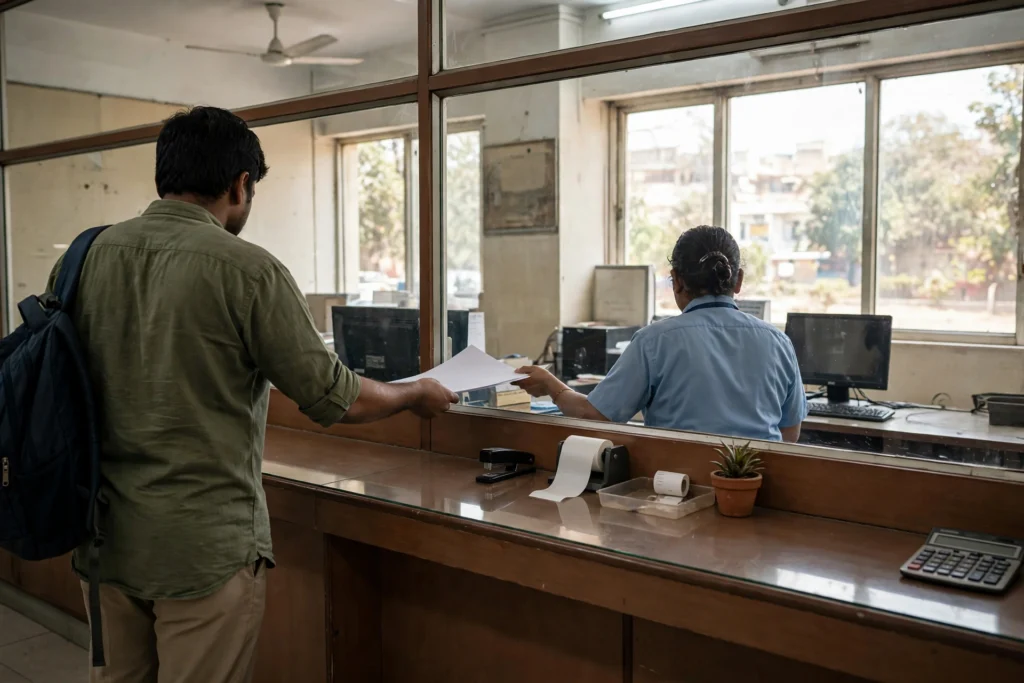
Under the framework cited by the Centre, clinical establishments need to place their full rate list where patients and attendants can see it without asking. That means display boards at reception or billing counters, in both English and the local language, covering consultation fees, room and ICU charges, procedure rates, diagnostics, ambulance fees and other facilities.
For hospital managements, this is not new law. It is enforcement of what the rules already require. The difference now is a direct push from the Union Health Secretary asking states to audit compliance and close the gaps. Hospitals that have been treating the display requirement as optional paperwork may find inspectors asking questions soon.
The fine print: states hold the keys
Because health is a state subject, the Centre cannot simply order every hospital in the country to comply. The letter is advisory, and the heavy lifting of enforcement sits with state governments and their health authorities. Patient rights groups have long argued that without regular inspections and penalties, rate display rules remain decorative.
Whether this round is different will depend on how seriously states take the compliance review. A rate board on the wall is a small thing, but for a family deciding between two hospitals in an emergency, it can be the difference between a manageable bill and a financial shock.
Frequently asked questions
Is this a new law?
No. The directive relies on the Clinical Establishments Act, 2010 and its 2012 rules, which already require hospitals to display their rates. The Centre is pressing states to enforce compliance.
Which hospitals does this cover?
Clinical establishments in states and UTs where the 2010 Act applies. In other states, hospitals fall under state-level frameworks, several of which have similar display requirements.
In which languages must rates be displayed?
Both English and the local language, at a conspicuous place in the establishment.
What happens if a hospital does not comply?
Enforcement is up to state and UT authorities. The Health Secretary has asked Chief Secretaries to ensure compliance through the authorities concerned.
How does this help patients?
Visible rates let families understand likely treatment costs, plan their spending, avoid billing surprises and hold hospitals accountable for what they charge.
The Centre has made its point. Now the rate boards need to go up, and stay up. Patients have waited long enough to see the price before they pay it.