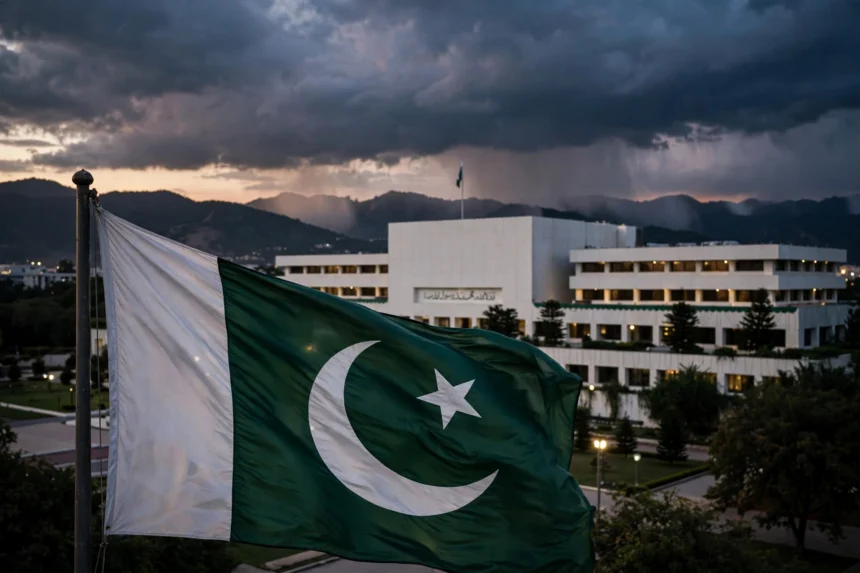
Pakistan woke up this week to one of the sharpest political escalations it has seen in years. On Sunday, October 11, President Asif Ali Zardari invoked Articles 232 and 234 of the Constitution to impose a state of emergency and governor’s rule in Khyber Pakhtunkhwa, suspending the provincial government led by jailed former prime minister Imran Khan’s Pakistan Tehreek-e-Insaf (PTI) party.
The move, taken on the advice of Prime Minister Shehbaz Sharif and the federal cabinet, puts Pakistan’s northwestern province, which borders Afghanistan, under direct federal oversight for the first time in years. With the stroke of a pen, the chief minister, provincial ministers, advisers, special assistants and the advocate general were ordered to vacate their offices.
Why the federal government acted
The official reason is security. The presidential proclamation cited terrorist attacks of “unprecedented level of violent intensity” and accused the provincial government of a “deliberate disengagement from the fight against terrorism.”
The numbers behind the claim are stark. According to the Islamabad-based Pakistan Institute for Conflict and Security Studies, the country recorded 1,066 militant attacks in 2025, the highest on record. The pace has only quickened this year, with 1,232 attacks nationwide in the first nine months of 2026, the majority of them concentrated in Khyber Pakhtunkhwa and Balochistan.
At a press briefing in Islamabad, Information Minister Attaullah Tarar went further, alleging that the PTI-led provincial government was working hand in glove with militant groups. Interior Minister Mohsin Naqvi described a province where, in his words, residents in some districts no longer step out of their homes after evening.
What emergency and governor’s rule actually mean
The two constitutional provisions work together. Article 232 allows the president to declare an emergency when security is threatened by an internal disturbance beyond a provincial government’s power to control. Article 234 applies when the governor reports that a province can no longer be governed in line with the Constitution.
Under the proclamation:
- Governor Faisal Karim Kundi takes charge of the province’s administration, assisted by a newly formed 11-member technocratic KP Advisory Council.
- Dr Muhammad Fakhr Alam Irfan has been appointed chief secretary of Khyber Pakhtunkhwa, with senior officer Muhammad Yahya Akhunzada transferred into the provincial administration.
- The federal government has authorised the deployment of Pakistan Army troops and assets in aid of civil power.
- The Law Minister indicated the arrangement is expected to remain in place for about six months.
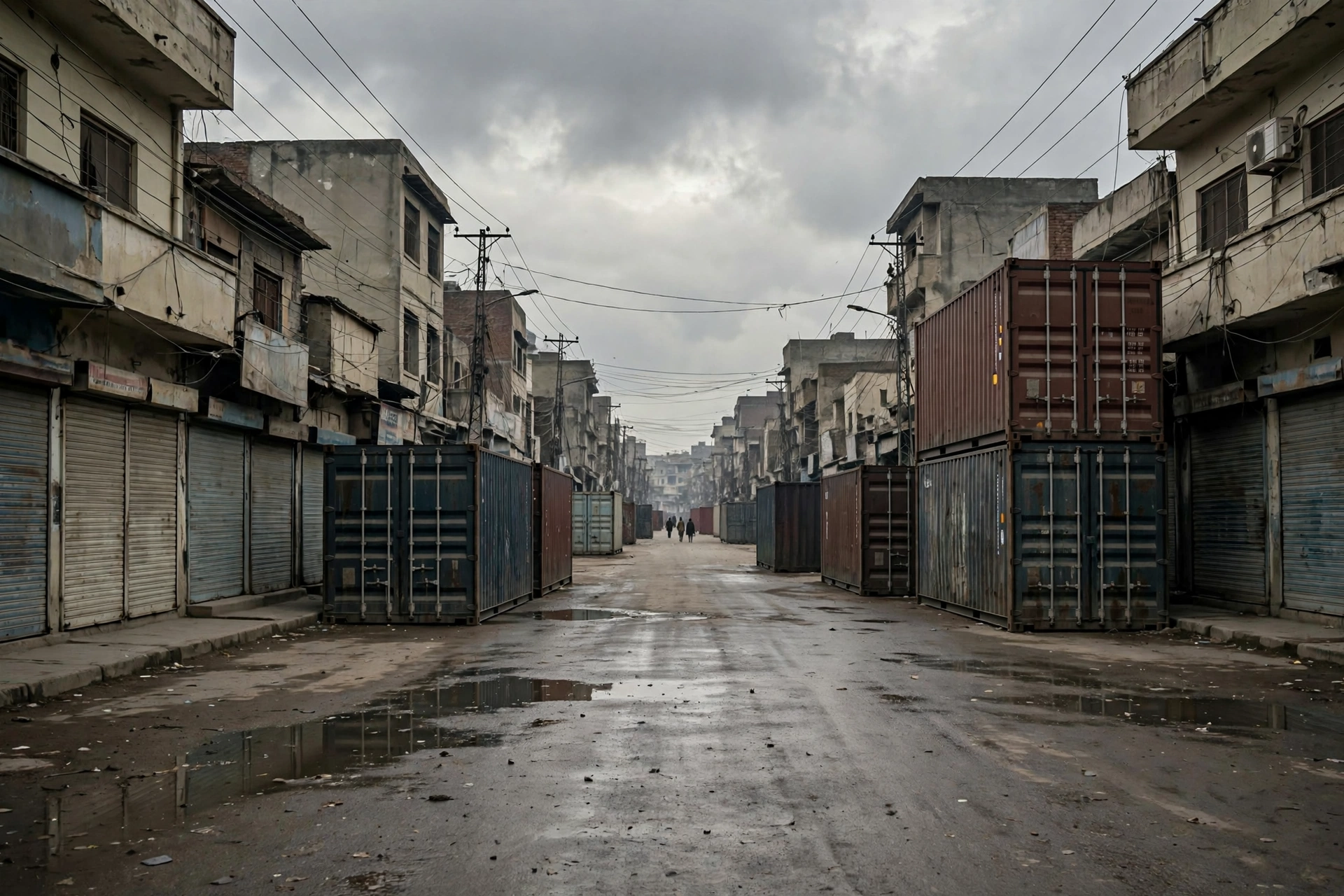
On the ground in Peshawar, shipping containers were placed to block roads amid a heavy police deployment, and telecom sources reported mobile and internet disruptions in selected areas. Internet watchdog NetBlocks confirmed a major disruption to connectivity in parts of the province as the emergency was imposed.
The PTI’s response
The PTI has rejected the decision outright. Party chairman Gohar Ali Khan called it an unconstitutional assault on provincial autonomy and the public mandate, and questioned the logic of applying emergency rule across the whole province. “If there is terrorism and an emergency is needed in 12 districts, then why is governor’s rule across the whole province?” he asked at a news conference in Islamabad.
The party has announced it will challenge the decision in court, in the assemblies and through public forums.
The timing is hard to separate from politics. The emergency came a day after Prime Minister Sharif met President Zardari to discuss the country’s security situation, and as PTI’s protest march led by KP Chief Minister Sohail Afridi, which began in Lakki Marwat on October 4, pressed toward Islamabad demanding Imran Khan’s release and access to medical treatment for him. The federal government had already said protesters would not be allowed to enter the capital.
Khan, Sharif’s main political rival, has been imprisoned since 2023 on corruption and other charges that he and his party describe as politically motivated. Even behind bars, he remains at the centre of Pakistan’s turbulent political landscape, and Khyber Pakhtunkhwa was the last province still under PTI’s rule.
What happens next
Governor Kundi has called for unity and promised what he described as a new chapter in the province’s development. But the fault lines are obvious. The PTI has framed the intervention as a constitutional coup dressed up as counterterrorism policy, while the federal government insists it could not let the provincial leadership derail economic stability or undermine security operations.
The courts will likely have the final word on the legality of the twin proclamations. With a six-month timeline on the table, street mobilisations continuing, and the internet throttled in parts of the province, this standoff is set to define Pakistan’s politics through the winter.
FAQs
Why did Pakistan impose emergency rule in Khyber Pakhtunkhwa?
The federal government cited a grave law and order situation and rising terrorist attacks, accusing the PTI-led provincial government of deliberate disengagement from counterterrorism efforts.
Which constitutional articles were invoked?
President Asif Ali Zardari invoked Article 232 (emergency) and Article 234 (governor’s rule) of Pakistan’s Constitution.
Who is running Khyber Pakhtunkhwa now?
Governor Faisal Karim Kundi is in charge, assisted by an 11-member technocratic advisory council and a new chief secretary, Dr Muhammad Fakhr Alam Irfan.
How long will the emergency last?
The Law Minister indicated the arrangement is expected to remain in place for about six months.
How has Imran Khan’s party responded?
PTI chairman Gohar Ali Khan called the move an unconstitutional assault on provincial autonomy and said the party will challenge it in court, in the assemblies and through public forums.
Stay with Informeia for continuing coverage of this developing story.