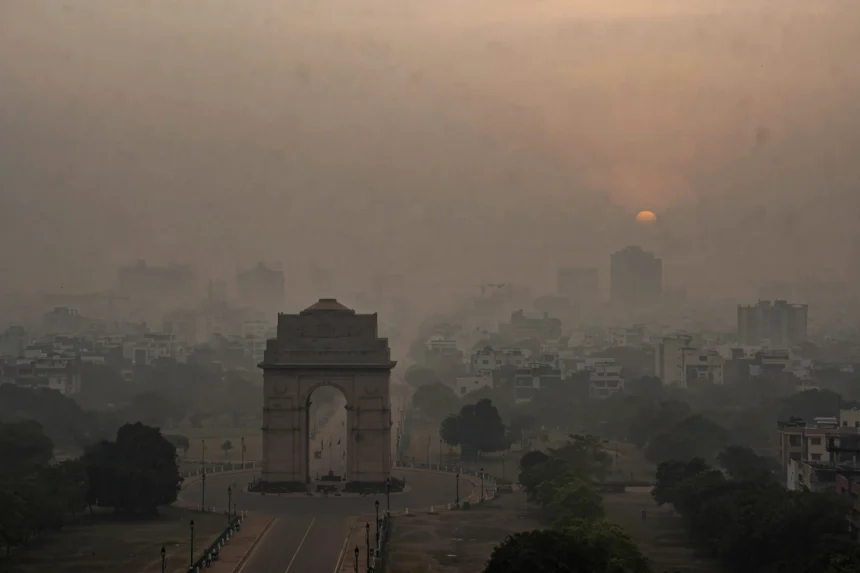
New Delhi: The air over much of India has quietly become one of the country’s deadliest killers, and the freshest data available paints a grimmer picture than most people imagine. Research released this month says more than two million Indians died in a single year from causes linked to air pollution, while the average Indian loses three and a half years of life simply by breathing.
The numbers arrive just as much of north India slips into its annual smog season. But researchers stress this is not a winter problem alone. It is a round-the-year public health emergency, and it is getting harder to ignore.
Two million deaths in a single year
The headline figure comes from the State of Global Air 2025 report, which attributed more than two million deaths in India in 2023 to air pollution. A separate analysis, the Lancet Countdown, estimated 1.72 million deaths in 2022 linked specifically to human-made PM2.5, the fine particulate matter that slips deep into the lungs and the bloodstream.
The damage is not limited to breathing troubles. Long exposure is linked to heart disease, stroke, lung disease and other non-communicable diseases. India’s average PM2.5 concentration stood at 48.9 micrograms per cubic metre in 2025, nearly ten times the World Health Organization’s annual guideline of 5. The country still ranked sixth most polluted among 143 nations in IQAir’s 2025 world report.
Five Indian cities among the world’s ten most polluted
The crisis is sharpest in urban India. Five of the world’s ten most polluted cities in 2025 were Indian, and 66 of the world’s 100 most polluted cities sit in the country. Loni in Ghaziabad ranked as the world’s most polluted city at 112.5 micrograms per cubic metre, more than 22 times the WHO guideline, while Byrnihat, Delhi, Ghaziabad and Ula also made the global top ten. New Delhi remained the world’s most polluted capital for the eighth straight year.
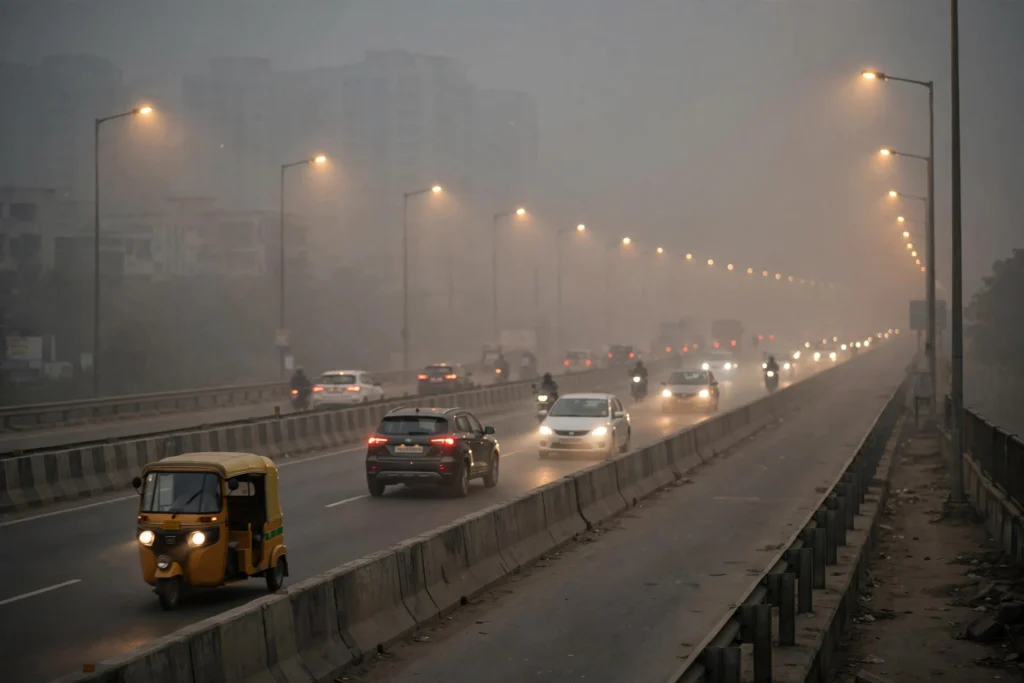
Winter readings are far worse than annual averages. Between October 2025 and February 2026, Ghaziabad’s average winter PM2.5 touched 172 micrograms, Noida recorded 166 and Delhi 163. Of 151 days analysed in Delhi that season, 105 were very poor or severe. Only seven qualified as good or satisfactory.
Life expectancy cut by 3.5 years
The Air Quality Life Index estimates the average Indian could live 3.5 years longer if the air met WHO standards. The loss is much deeper in the worst-hit regions: Delhi residents could gain 8.2 years, people in Bihar 5.6 years, Haryana 5.3 years and Uttar Pradesh five years.
Where the poison comes from
Fossil fuels remain the biggest single driver, accounting for 44 per cent of deaths linked to human-made PM2.5 in India in 2022. Coal-fired power plants were associated with about 298,000 deaths, while petrol used in road transport was linked to roughly 269,000. Other major contributors include biomass burning in homes and farm fields, open waste burning, industrial emissions and dust. Winter inversions trap all of this close to the ground, but experts underline that the weather does not create the pollution. It only reveals what is pumped into the air year round.
The economic toll, and where the money went
The Lancet Countdown valued premature deaths from outdoor air pollution in India at $339.4 billion in 2022, equal to 9.5 per cent of the country’s GDP. Rs 13,415 crore has been released since 2019 under the National Clean Air Programme and air-quality grants, but analysis found about 68 per cent of the spending went towards road dust, with transport getting 14 per cent and waste and biomass burning 12 per cent. Monitoring and capacity building got just three per cent.
Some progress, but doubts remain
Punjab recorded 5,114 farm fires between mid-September and end-November 2025, down 53 per cent from the previous year, and over seven million tonnes of paddy straw was put to productive use. But satellite analysis suggests some burning may have shifted to later hours, casting doubt on the official counts.
Environmentalists say the response must move beyond emergency winter measures into year-round, source-specific action with stronger enforcement and transparent monitoring. Clean air spending, they argue, should be judged not by funds spent but by real reductions in exposure and measurable gains in public health.
Frequently asked questions
What is PM2.5?
PM2.5 refers to fine particulate matter smaller than 2.5 micrometres. These particles penetrate deep into the lungs, enter the bloodstream and raise the risk of heart disease, stroke and lung disease.
How many deaths in India are linked to air pollution?
More than two million deaths in India in 2023 were attributed to air pollution, according to the State of Global Air 2025 report.
Which are India’s most polluted cities?
Loni in Ghaziabad ranked as the world’s most polluted city in 2025. Byrnihat, Delhi, Ghaziabad and Ula also feature in the global top ten, and Delhi has been the world’s most polluted capital for eight consecutive years.
How does air pollution affect life expectancy?
The Air Quality Life Index estimates the average Indian loses 3.5 years of life to pollution. In Delhi, residents could gain 8.2 years if the air met WHO guidelines.
What is the government doing?
The National Clean Air Programme and related grants have released Rs 13,415 crore since 2019. However, experts say most spending went to road dust control and want year-round, source-specific action with stronger enforcement.
Informeia will keep tracking air quality through the winter smog season. Check back for updates.