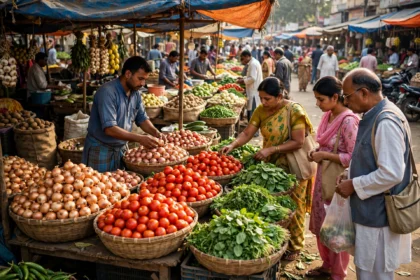
If your monthly grocery bill felt heavier in September, the government now has the numbers to back you up. India’s retail inflation climbed to 5.54 per cent in September, the highest reading in nearly two years, as a sharp spike in food prices pushed household budgets to the edge. The data, released by the Ministry of Statistics and Programme Implementation on Monday, shows headline inflation rising for the sixth month in a row, up from 4.83 per cent in August.
The September figure marks the highest inflation rate under the new Consumer Price Index series, which uses 2024 as its base year and has been in effect since January. It is also the fourth straight month that inflation has stayed above the Reserve Bank of India’s medium-term target of 4 per cent, though it remains inside the central bank’s 2 to 6 per cent tolerance band.
The onion shock: prices up 108 per cent
Food did most of the damage. Inflation in the Consumer Food Price Index surged to 7.74 per cent in September from 5.97 per cent in August, driven by a handful of kitchen staples that turned brutally expensive.
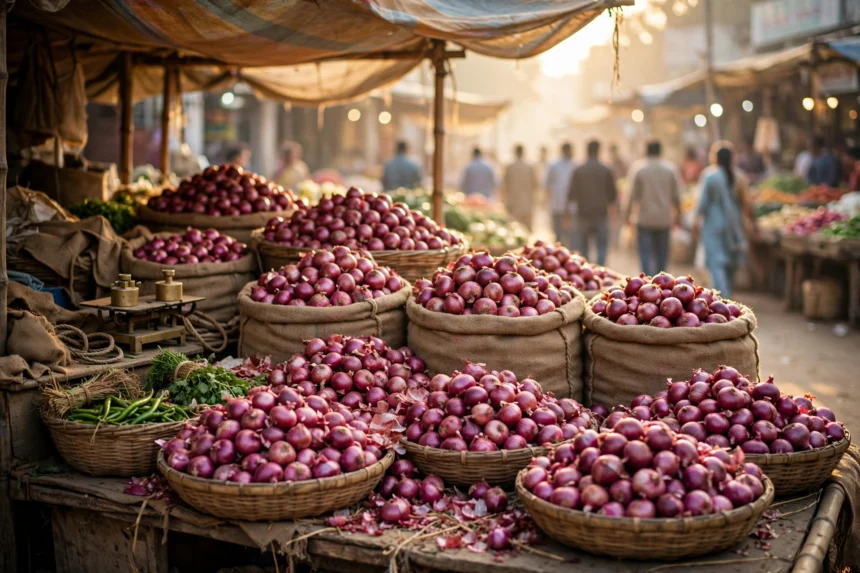
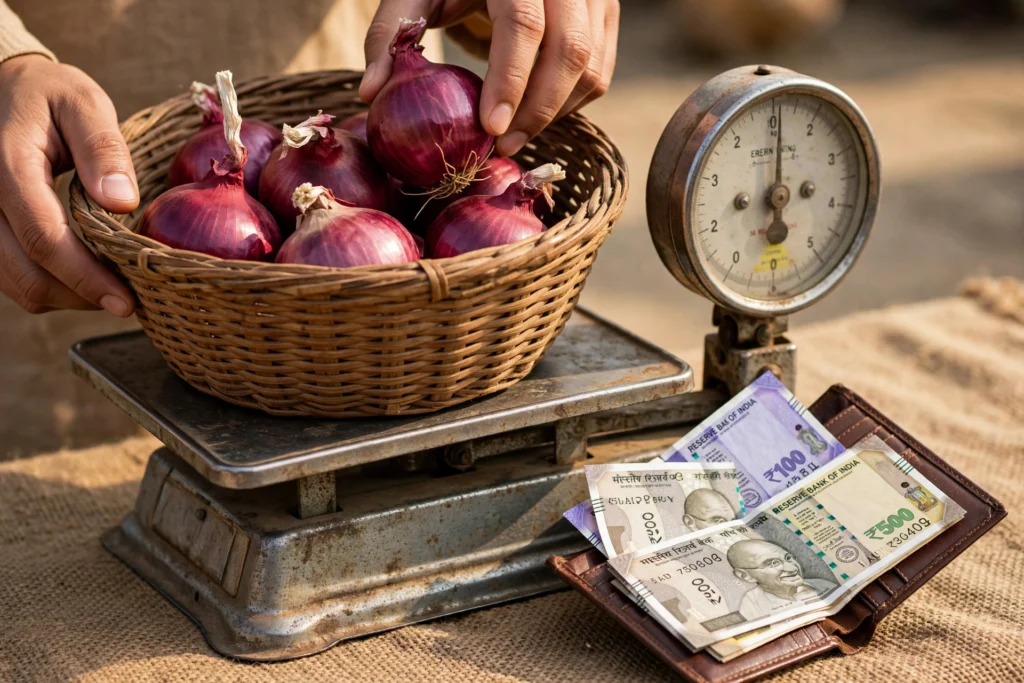
Onions led the charge with a staggering 108.09 per cent year-on-year jump, more than double the 48.78 per cent recorded in August. Garlic inflation climbed to 54.62 per cent, lemon shot up 36.41 per cent from 15.15 per cent, and ginger stayed elevated at 62.85 per cent.
The pain extends beyond the vegetable cart. Personal care, social protection and miscellaneous goods and services clocked inflation of 13.75 per cent, while restaurant and accommodation services rose 9.36 per cent. Transport inflation stood at 5.01 per cent, a reminder that fuel costs keep seeping into everyday prices.
Rural India is hurting the most
The headline number hides a sharp rural-urban divide. Rural inflation rose to 6.08 per cent from 5.24 per cent, breaching the RBI’s upper tolerance limit of 6 per cent. Urban inflation, by contrast, increased more modestly to 4.88 per cent from 4.31 per cent. The gap between the two widened to 1.20 percentage points, up from 0.93 in August.
State-wise data tells a similar story of uneven pressure. Tamil Nadu reported the highest inflation at 6.81 per cent, followed by Odisha at 6.70 per cent, Madhya Pradesh at 6.68 per cent, Telangana at 6.64 per cent and Andhra Pradesh at 6.29 per cent. When rural food inflation runs at 8.06 per cent against 7.18 per cent in urban areas, the spending power of the countryside takes a direct hit.
A few silver linings at the mandi
Not everything got costlier. Potatoes were 11.50 per cent cheaper than a year ago, tomatoes 8.62 per cent, and lady’s finger 4.48 per cent. Motor cars and jeeps also fell in price, down 4.51 per cent. Housing, water, electricity, gas and other fuels recorded inflation of just 2.74 per cent, and education services stayed contained at 3.94 per cent.
What this means for your EMIs
The timing could not be trickier for borrowers. Just last week, the RBI raised its benchmark repo rate by 25 basis points to 5.50 per cent, the first hike in nearly four years, and signalled that rate cuts are off the table for now. The central bank also raised its inflation forecast for 2026-27 to 5.2 per cent from 5 per cent, projecting that inflation will average 4.9 per cent in Q2, spike to 6.0 per cent in Q3 and settle at 5.7 per cent in Q4.
With price pressures spreading across commodities, the RBI says, further hikes cannot be ruled out. For households with floating-rate loans, the message is plain: rates are unlikely to fall any time soon.
Economists will now watch the October print closely. A good kharif harvest could bring relief, but with crude prices elevated and the rupee under pressure, imported inflation remains a live threat. For now, the September number is a wake-up call: inflation is back in the driver’s seat.
FAQs
What is India’s retail inflation rate in September 2026?
Retail inflation, measured by the Consumer Price Index, stood at 5.54 per cent in September 2026, up from 4.83 per cent in August. It is the highest reading in nearly two years.
Why did inflation rise so sharply in September?
Food prices drove the jump. Onions recorded 108.09 per cent annual inflation, while garlic, lemon and ginger also surged. Food inflation rose to 7.74 per cent from 5.97 per cent.
Is inflation above the RBI’s target?
Yes. The RBI targets 4 per cent inflation with a tolerance band of 2 to 6 per cent. At 5.54 per cent, inflation is above the target but still within the band. Rural inflation at 6.08 per cent has crossed the upper limit.
Will this affect interest rates?
Most likely. The RBI raised the repo rate to 5.50 per cent last week and has signalled that cuts are off the table. Persistently high inflation raises the chance of further hikes, which would keep EMIs elevated.
Which states have the highest inflation?
Tamil Nadu topped the list at 6.81 per cent, followed by Odisha at 6.70 per cent, Madhya Pradesh at 6.68 per cent, Telangana at 6.64 per cent and Andhra Pradesh at 6.29 per cent.
Inflation data is published monthly by the Ministry of Statistics and Programme Implementation. September figures are provisional and subject to revision.