
India’s climate promises got a failing grade on health this week. A new global scorecard assessing how countries weave health into their national climate plans has placed India among the lowest performers in the world, just weeks before the COP31 climate summit.
The 2026 Healthy NDC Scorecard, released on Wednesday by the Global Climate and Health Alliance, gave India and Japan only two points out of a possible 32. It evaluated 117 national climate plans covering 132 countries across eight categories, including health impacts, air pollution, health-sector action and climate finance.
What the scorecard found
According to the assessment, India’s climate commitment acknowledges health as a vulnerable sector but does not go much further. The plan says little about how climate action could improve public health, and it does not mention air pollutants at all, a glaring omission in a country that carries one of the world’s heaviest air-pollution death burdens.
Climate Action Tracker, which independently rates national climate targets, considers India’s current plan consistent with warming of less than 3 degrees Celsius, well above the Paris Agreement’s ambition of keeping temperature rise closer to 1.5 degrees.
At the top of the ranking sat Colombia with 29 of 32 points, followed by Nigeria with 25 and Cambodia with 24. Interestingly, 19 of the 20 highest scores went to low and middle-income countries, which the Alliance says shows that weaker economies are often more honest about the health stakes of climate change.
Why air pollution is the headline
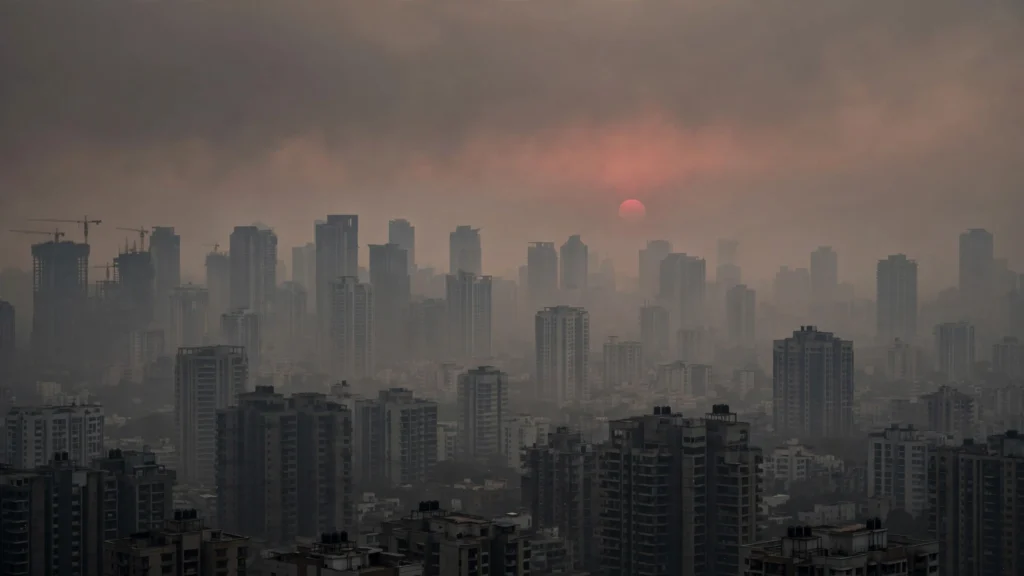
The report’s sharpest criticism of India centres on air quality. Despite years of severe winter smog in Delhi and other northern cities, and a documented toll of pollution-linked illness across the country, the national climate plan skips over air pollutants entirely.
The Alliance also flagged a wider global blind spot: black carbon, a pollutant that drives both climate warming and dangerous air pollution, gets little attention. Only five countries, Cambodia, Chile, Colombia, Costa Rica and Paraguay, have set targets to reduce it.
- India and Japan scored 2 out of 32 on the 2026 Healthy NDC Scorecard.
- Colombia led the ranking with 29 points; 19 of the top 20 scores came from low and middle-income countries.
- India’s updated climate plan (NDCs 3.0 for 2031-35) was approved by the cabinet in March this year.
- Only five countries worldwide have set black carbon reduction targets.
What India has actually committed
India’s latest climate commitment, its updated Nationally Determined Contributions (NDCs 3.0) covering 2031-35, was cleared by the cabinet in March. The headline pledges are ambitious on paper:
- Cut the emissions intensity of GDP by 47 per cent by 2035, compared with 2005 levels.
- Raise cumulative installed electricity capacity from non-fossil fuel sources to 60 per cent.
- Create an additional carbon sink of 3.5 to 4 billion tonnes of carbon dioxide equivalent through expanded forest and tree cover.
But the scorecard argues these numbers mean little for health if the plan ignores the diseases, heat stress and pollution that climate change brings. “India’s limited discussion on health is reflected in its emissions reduction ambition, which is insufficient to protect health,” the assessment noted, pointing specifically to the absence of any mention of air pollutants given the country’s high air-pollution death rate.
The call ahead of COP31
With COP31 opening next month, the Alliance urged the world’s biggest current and historical emitters to cut emissions fastest, arguing that doing so maximises health benefits at home and slows escalating climate-linked health damage worldwide. It also called on developed countries to provide climate finance in line with the Paris Agreement so developing nations can fully carry out plans that protect their people.
For India, the message is a reminder that climate policy and public health policy can no longer run on separate tracks. As northern India heads into another smog season, the gap between the two is likely to be measured in hospital admissions as much as in emission tonnes.
FAQs
What is the Healthy NDC Scorecard?
It is a 2026 assessment by the Global Climate and Health Alliance that scores national climate plans on how well they integrate health, covering 117 plans from 132 countries across eight categories.
How did India score?
India scored 2 out of 32 points, placing it among the lowest performers globally, alongside Japan.
Which countries scored highest?
Colombia topped the ranking with 29 points, followed by Nigeria with 25 and Cambodia with 24. Most top scorers were low and middle-income countries.
What are India’s current climate commitments?
Under its NDCs 3.0 for 2031-35, India aims to cut GDP emissions intensity by 47 per cent by 2035, reach 60 per cent non-fossil electricity capacity, and add 3.5-4 billion tonnes of CO2 equivalent in forest carbon sinks.
When is COP31?
The next major UN climate summit, COP31, begins next month and will be a key test of whether countries strengthen the health dimension of their climate plans.
New Delhi, October 15, 2026. A low score on health in India’s climate plan, released ahead of COP31, puts air pollution and public health at the centre of the climate debate. We will keep tracking the policy response.