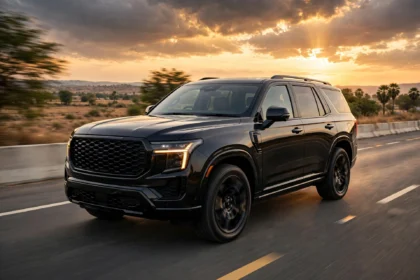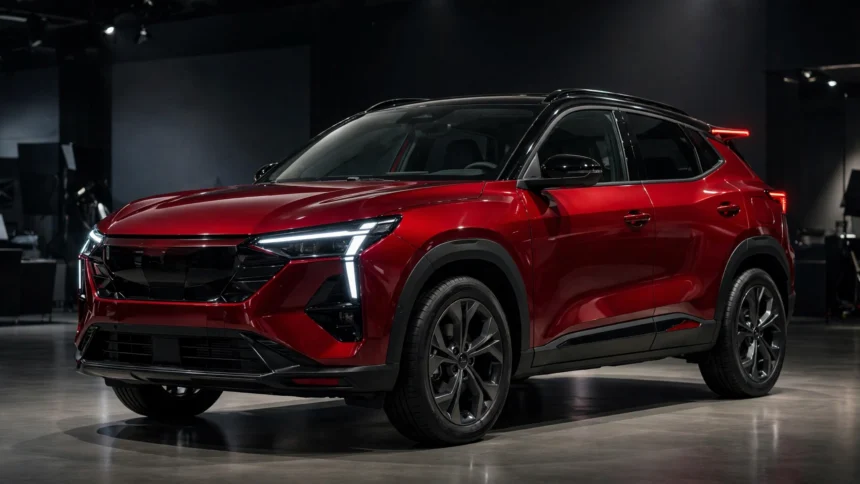
Mahindra has finally put a price on its long-teased CNG SUV. The XUV 3XO ZNG went on sale in India today, October 15, 2026, at a starting price of Rs 9.99 lakh (ex-showroom), and with it Mahindra enters the mainstream factory-fitted CNG passenger car market for the first time. Test drives begin today, and bookings along with deliveries open on October 20 at dealerships and through the company’s website.
The timing is sharp. CNG demand in India is climbing fast as buyers hunt for lower running costs, and the compact SUV space already has two established gas-powered rivals in the Tata Nexon iCNG and the Maruti Suzuki Brezza CNG. Mahindra’s pitch is simple: the same turbocharged SUV feel, without the CNG compromise.
XUV 3XO ZNG price and variants
The ZNG comes in four variants, and the price spread is tight enough that the top model stays under Rs 12.3 lakh. All prices are ex-showroom:
- MX Edge: Rs 9.99 lakh
- REVX Edge (O): Rs 10.79 lakh
- AX5: Rs 11.19 lakh
- REVX A: Rs 12.27 lakh
The range is manual-only, which is the norm for factory CNG cars in India. Buyers choosing the base MX Edge still get a 26.03 cm HD touchscreen, wireless Android Auto, wired Apple CarPlay, cruise control, rear AC vents, a 60:40 split rear seat and a rear-view camera. Step up to the REVX Edge (O) and you add a single-pane Skyroof, roof rails, automatic headlamps and wipers, keyless entry and push-button start. The AX5 brings twin 26.03 cm screens, a sunroof, LED projector headlamps, dual-zone climate control and connected-car functions. The range-topping REVX A adds Dolby Atmos audio, black leatherette seats, a dual-tone roof and 16-inch black alloys.
Same power on CNG and petrol
This is where Mahindra is making its biggest claim. The ZNG uses the 1.2-litre mStallion TCMPFi turbocharged engine and produces the same output in both modes: 82 kW of power and 200 Nm of torque, with peak torque available from 1,500 to 3,500 rpm. That, Mahindra says, is the highest torque figure among CNG passenger vehicles in the country.
Traditional CNG cars lose a chunk of performance the moment you switch to gas. Mahindra says it has engineered around that with higher-capacity injectors running at 10-bar injection pressure, a segment first, plus recalibrated turbocharger and ECU mapping so the switch between fuels is invisible to the driver. The certified efficiency stands at 24.7 km/kg in CNG mode, and the company claims 0-60 km/h in 4.9 seconds and 0-100 km/h in 11.8 seconds on CNG.
The system is fully dual-fuel. When the CNG tank runs low, the car switches to petrol automatically. There is also an integrated gas-leak detection system that can trigger a switch to petrol if it senses a leak, and the dashboard gets a dedicated CNG-petrol button above the engine start-stop control.
No boot sacrifice, thanks to twin cylinders
The single biggest complaint with aftermarket and early factory CNG kits has always been the boot. One fat cylinder swallows the luggage space. Mahindra has taken the Tata route: twin CNG cylinders tucked beneath the luggage area, leaving a flat loading floor and a usable 270 litres of boot space. The spare wheel stays mounted under the body.
It is a packaging detail, but it matters. A CNG SUV that cannot carry luggage is not much of an SUV, and Mahindra has clearly been watching the Nexon iCNG’s playbook. Average and instantaneous fuel-economy displays, plus an NGV fast-filling valve, round out the fuel-specific kit.

Safety kit as standard
Every ZNG variant gets six airbags, electronic stability control and ISOFIX child-seat mounts as standard. The regular XUV 3XO already carries a 5-star Bharat NCAP rating for both adult and child occupant protection, and Mahindra says the ZNG is engineered to the same standard.
The safety story is becoming a segment badge of honour. CNG buyers are no longer choosing gas at the cost of everything else, and Mahindra knows it. The company’s Dr Velusamy R, President of the Automotive Business, described the car’s promise as “zero compromise”: the space, technology and driving experience of an SUV with the running costs of CNG.
Why this launch matters for Mahindra
The XUV 3XO has been a strong seller, crossing cumulative sales of 2.5 lakh units in under two and a half years, according to Mahindra. Adding CNG as a fourth fuel option, alongside petrol, diesel and electric, widens the model’s catchment right at the start of the festive season when showrooms are busiest.
The fight now moves to running costs. With fuel prices where they are, a factory-backed CNG SUV with turbo power and a proper boot is a hard combination to argue with. The Nexon iCNG and Brezza CNG have had this ground to themselves; from October 20, they have company.
FAQs
What is the starting price of the Mahindra XUV 3XO ZNG?
The MX Edge variant starts at Rs 9.99 lakh (ex-showroom). Prices go up to Rs 12.27 lakh for the top REVX A variant.
When do bookings open for the XUV 3XO ZNG?
Test drives begin on October 15, 2026. Bookings and deliveries start on October 20 at authorised dealerships and on Mahindra’s website.
What mileage does the XUV 3XO ZNG deliver?
Mahindra claims a certified fuel efficiency of 24.7 km/kg in CNG mode.
Is the power output the same on CNG and petrol?
Yes. The 1.2-litre turbocharged engine makes 82 kW and 200 Nm of torque in both CNG and petrol modes, thanks to a 10-bar CNG injection system.
How much boot space does the XUV 3XO ZNG offer?
The twin-cylinder layout sits beneath the luggage area, leaving a flat floor and 270 litres of usable boot space. The spare wheel is mounted under the body.
Mahindra is calling the ZNG its first mainstream CNG passenger vehicle, and that word matters. The brand has dabbled with gas before, but never pushed it as a headline product. This time the full marketing weight is behind it, and with the festive season underway, the October 20 booking date gives the launch a clear runway. The CNG SUV fight just got a lot more interesting.