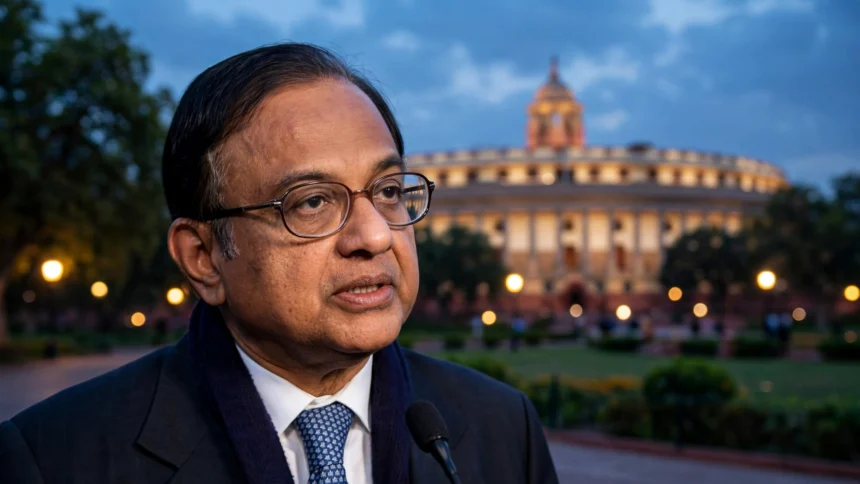
New Delhi: Senior Congress leader P Chidambaram on Saturday entered the raging political debate over the phrase “regime change,” defending it as a normal and legitimate expression in a democracy and accusing the BJP of reacting with what he called feigned rage.
The former Union minister’s comments, posted on X, come a day after the BJP sharply attacked senior advocate Prashant Bhushan for using the phrase during a press conference held amid protests against Chief Election Commissioner (CEC) Gyanesh Kumar. The exchange has quickly grown into a full-blown political confrontation, with both sides accusing the other of misreading the Constitution.
What Chidambaram actually said
Chidambaram framed the issue as a basic question about the Opposition’s role in a democratic system. Questioning why the BJP was upset at all, he wrote that “regime change” is normal in a democracy, and argued that the Opposition exists precisely to challenge the government of the day.
He summed up the Opposition’s duty in three words: “oppose, expose and depose.” As he explained it, that means opposing in politics, exposing in Parliament, and deposing the government through elections. The message was clear: seeking to replace a government is what opposition parties are supposed to do, and doing it through the ballot box is the essence of democracy, not a threat to it.
The Congress veteran also took a dig at the BJP’s record, pointing out that the party has itself led movements demanding a change of government in the past. The suggestion was that the ruling party cannot claim the phrase is dangerous when its own history is full of it.
The Bhushan remark that set it all off
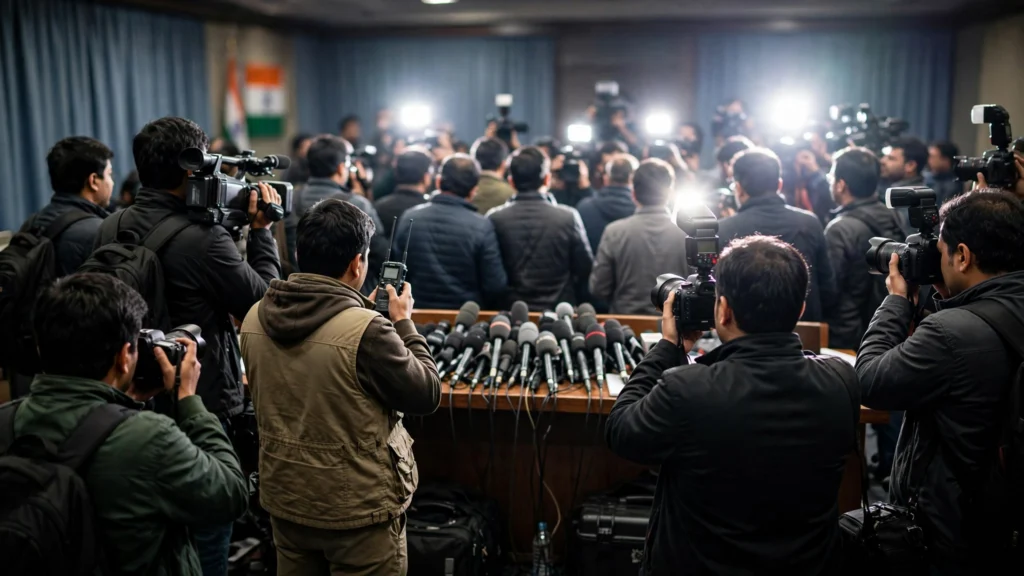
The controversy began at a press conference on Thursday evening, where Bhushan spoke alongside All India Students’ Association (AISA) activist Neha Bora and Cockroach Janta Party (CJP) founder Abhijeet Dipke, amid ongoing protests against the Chief Election Commissioner.
Bhushan did not mince words. He openly declared that the protesters do want regime change, and argued that there is nothing wrong in saying so in a democracy. He said the protesters were fighting to ensure elections are conducted properly, and warned that continued heavy-handedness would make regime change a certainty rather than a slogan.
His remarks landed at a sensitive moment. The protests against the CEC and the wider opposition campaign around the Election Commission and voter lists have been gathering steam for weeks, and the BJP has been framing the agitation as politically motivated rather than issue-based.
BJP’s counter-attack: Sarma and Rekha Gupta lead the charge
The BJP’s response was swift and sharp. Assam Chief Minister Himanta Biswa Sarma alleged that forces unable to win an electoral mandate were now on the streets trying to engineer what he called a regime change operation through street mobilisation.
Sarma described the protesters as anti-national forces, insisting that India’s democracy is robust and runs on the will of the people, a will he said firmly stands with Prime Minister Narendra Modi. He added that the people of India would fight such forces and give them a strong answer.
Delhi Chief Minister Rekha Gupta also targeted Bhushan directly, claiming his remarks had exposed the real agenda behind the protests. In a post on X, she wrote that the game was over, declaring that the protests were never about protest at all and were all about regime change.
Other BJP leaders have accused the protesters of going beyond demands for electoral reform and the allegations against the Election Commission, and of pursuing a larger agenda to overthrow the elected government.
The wider picture: protests against the CEC
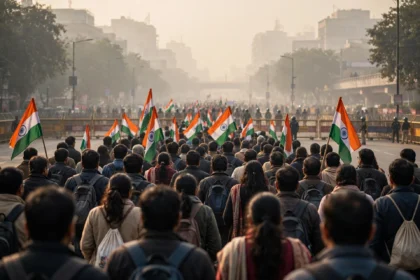
The row sits on top of a much bigger standoff. The ‘Lehra Do Tiranga’ march and related demonstrations in Delhi have kept the national capital’s politics on edge. Ahead of Friday’s march at Connaught Place, Delhi Police took Dipke and Neha Bora into preventive custody, a move that drew sharp criticism from opposition leaders, including West Bengal Chief Minister Mamata Banerjee and AAP leader Arvind Kejriwal.
Opposition parties have been alleging large-scale irregularities around voter lists, with the figure of 130 million deleted names, including 28 million people who had died, 63 million who relocated, and 30 million who could not be traced, becoming a flashpoint. The Election Commission and the BJP reject the opposition’s charge that the deletions targeted specific communities.
Defence Minister Rajnath Singh has accused the Congress and its allies of using youth energy to fuel political confrontation, even drawing parallels with Bangladesh. That comparison has added another layer of heat to an already charged atmosphere.
Why this row matters
At its heart, the debate is about language and what it reveals. For the Opposition, “regime change” is shorthand for the democratic hope of winning the next election. For the BJP, the same words suggest something darker: a plan to dislodge a government without waiting for the ballot box.
Chidambaram’s intervention gives the controversy a constitutional framing that the Congress will likely carry into Parliament and onto the campaign trail. The BJP, for its part, has shown no sign of letting go, treating Bhushan’s words as an admission that confirms its worst suspicions.
With protests continuing and the confrontation between the ruling party and the Opposition showing no sign of cooling, the regime change row looks set to stay at the centre of India’s political conversation in the days ahead.
Frequently asked questions
What did P Chidambaram say about regime change?
On Saturday, Chidambaram wrote on X that “regime change” is normal in a democracy and questioned the BJP’s anger over the phrase. He said the Opposition’s duty is to “oppose, expose and depose” the government through politics, Parliament and elections.
What did Prashant Bhushan say that started the row?
At a Thursday press conference amid protests against the Chief Election Commissioner, Bhushan openly declared that the protesters want regime change, arguing that demanding a change of government is not a crime in a democracy.
How did the BJP respond?
BJP leaders accused the protesters of seeking to overthrow the elected government. Assam CM Himanta Biswa Sarma alleged a street mobilisation to engineer regime change, while Delhi CM Rekha Gupta said Bhushan’s words had exposed the protest’s real agenda.
What are the protests about?
The demonstrations, including the ‘Lehra Do Tiranga’ march in Delhi, target Chief Election Commissioner Gyanesh Kumar and the Election Commission over alleged irregularities in voter lists and electoral processes. The BJP and the Commission reject the allegations.
Why is the phrase so politically sensitive?
The Opposition uses it to mean winning power through elections, a normal democratic goal. The BJP reads it as a signal of an extra-constitutional agenda to remove the government without a mandate, which is why both sides are fighting over two words.
That is the state of play for now. Stay with Informeia for the latest updates from New Delhi.