Finland has done what no country in the world has managed in seven decades of nuclear power. On Thursday, the Finnish government granted an operating licence to Onkalo, the world’s first permanent underground repository for spent nuclear fuel, finally giving the planet’s most stubborn waste problem a real address.
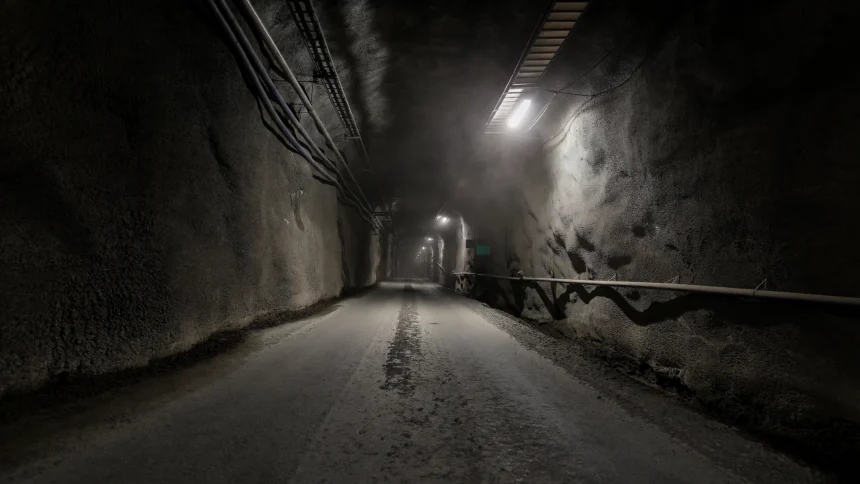
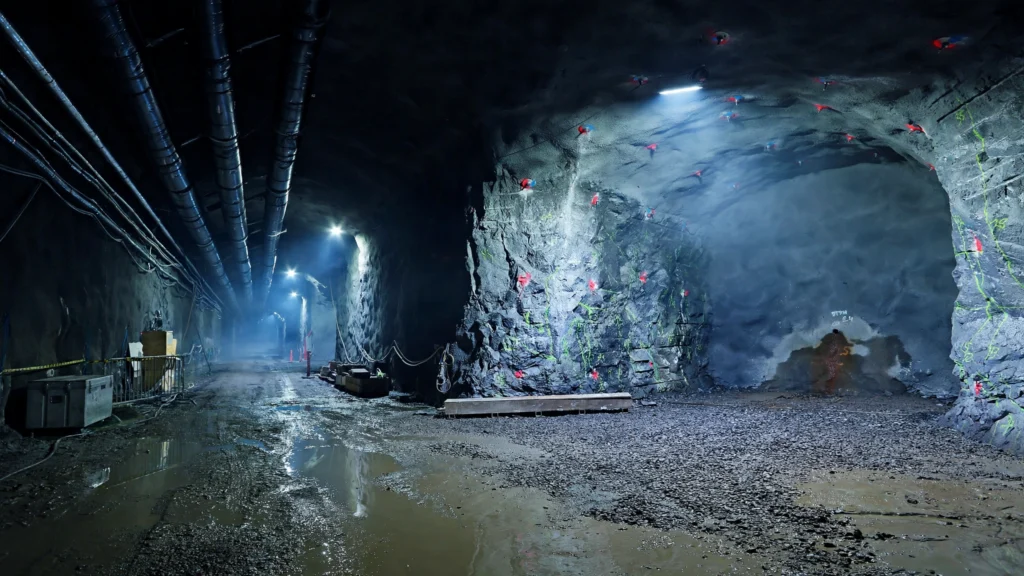
The announcement came from Posiva, the Finnish waste management company that has spent 22 years blasting and drilling the facility into some of the oldest rock on Earth. The site sits near Eurajoki in southwestern Finland, and its name, Onkalo, simply means “cave” in Finnish.
“This is a great and historic day for both Posiva and Finland,” said Ilkka Poikolainen, Posiva’s chief executive. For once the word historic is not marketing: almost all of the world’s spent fuel still sits in temporary storage, waiting for a permanent answer that kept being postponed.
A cave drilled for 100,000 years
Onkalo is carved into bedrock estimated to be 1.9 billion years old, rock stable enough that engineers trust it with material that stays dangerous for longer than human civilisation has existed. It has space for 6,500 tonnes of uranium, the spent fuel from Finland’s five reactors.
The disposal plan reads like an engineering ritual built for eternity. Spent fuel assemblies will first be encapsulated in copper canisters, chosen because copper resists corrosion for millennia. Those canisters will be lowered into holes drilled into the bedrock tunnels, packed around with bentonite clay that swells shut when wet, and the whole thing will finally be sealed behind steel-reinforced concrete plugs.
The fuel inside will remain harmfully radioactive for tens of thousands of years. According to Posiva, after about 100,000 years the radiation levels will have decayed to roughly the same as the natural uranium ore the fuel was made from. It is a timeline that makes every other construction project on the planet look like a sandcastle.
Not quite open for business yet
Before anyone declares the waste problem solved, there is an important asterisk. Posiva said the facility is expected to start operations soon, but it has given no exact date. First comes the commissioning stage: a battery of tests and inspections that must be verified and approved by STUK, the Finnish Radiation and Nuclear Safety Authority.
“No detailed schedule is given at this point for the start-up,” Posiva said. “Before final disposal begins, Posiva will finalize the commissioning stage, carrying out the necessary tests and inspections which STUK also needs to verify and approve.”
That caution is understandable. No country has ever closed the loop on nuclear waste at this scale, and the regulator’s sign-off on the actual disposal is the final gate. What Finland has licensed is the facility’s operation; the first canisters are still a few steps away.
Why the world is watching
For India and the rest of the nuclear world, Onkalo matters far beyond Finland’s borders. Consider the numbers:
- More than 430 nuclear reactors are operating worldwide, and every one of them produces spent fuel.
- Almost all of that fuel is currently parked in temporary storage, cooling pools and dry casks that were never meant to be permanent.
- Sweden’s planned Forsmark repository and France’s Cigéo project are the next closest to reality, but both are years behind Onkalo.
- Finland generates roughly a third of its electricity from nuclear power, and the Olkiluoto 3 reactor is among Europe’s largest.
The Finnish model, deep geological disposal with multiple engineered barriers, is now the global blueprint. Countries from Canada to Japan are studying Onkalo’s methods, and several have sent delegations to walk the tunnels.
The bigger argument
The timing is not accidental. As countries chase net-zero targets and electricity demand surges, nuclear energy is enjoying its strongest revival in decades. But every debate about new reactors eventually runs into the same wall: what do we do with the waste?
Onkalo gives proponents something they have never had before: a working answer. Finland started planning this in the 1980s, picked the site in 2000, and began construction in 2004. That is the real timescale of the nuclear waste question.
The repository also reframes what “long-term planning” means. Engineers designed a facility that must outlast every government on Earth today, with a message to the year 102026 written in engineering rather than words.
Frequently asked questions
What is Onkalo?
Onkalo is the world’s first permanent geological repository for spent nuclear fuel, built by Finnish company Posiva near Eurajoki in southwestern Finland. It has just received an operating licence from the Finnish government.
How will the nuclear waste be stored?
Spent fuel will be sealed in corrosion-resistant copper canisters, placed in holes drilled into bedrock tunnels, surrounded by bentonite clay, and sealed with steel-reinforced concrete plugs.
How long will the waste stay dangerous?
The fuel remains harmfully radioactive for tens of thousands of years. Posiva estimates that after about 100,000 years, radiation levels will fall to roughly those of natural uranium ore.
When will Onkalo start operating?
No exact date has been set. Posiva must first complete commissioning tests and inspections, which Finland’s nuclear safety authority STUK must verify and approve.
Why is this a world first?
No country has ever licensed a permanent underground repository for spent nuclear fuel before. Nearly all of the world’s spent fuel is still held in temporary storage facilities.
Finland waited 22 years for this Thursday. The rest of the world has been waiting since the 1950s. Now, at last, somebody has an answer.