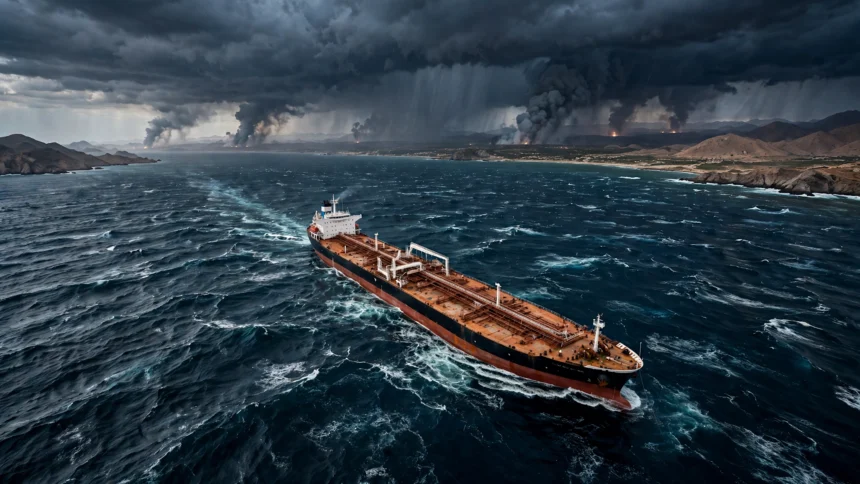
Tehran/New Delhi: Seven oil tankers caught fire or were damaged in the Strait of Hormuz overnight after being hit or striking naval mines, Iran said on Thursday, in what is one of the sharpest single-night escalations in the eight-month-old US-Iran war. The claim, carried by Iranian state television citing the Revolutionary Guard Corps navy, could not be independently confirmed, but it was enough to send global oil markets sharply higher, with Brent crude crossing $112 a barrel.
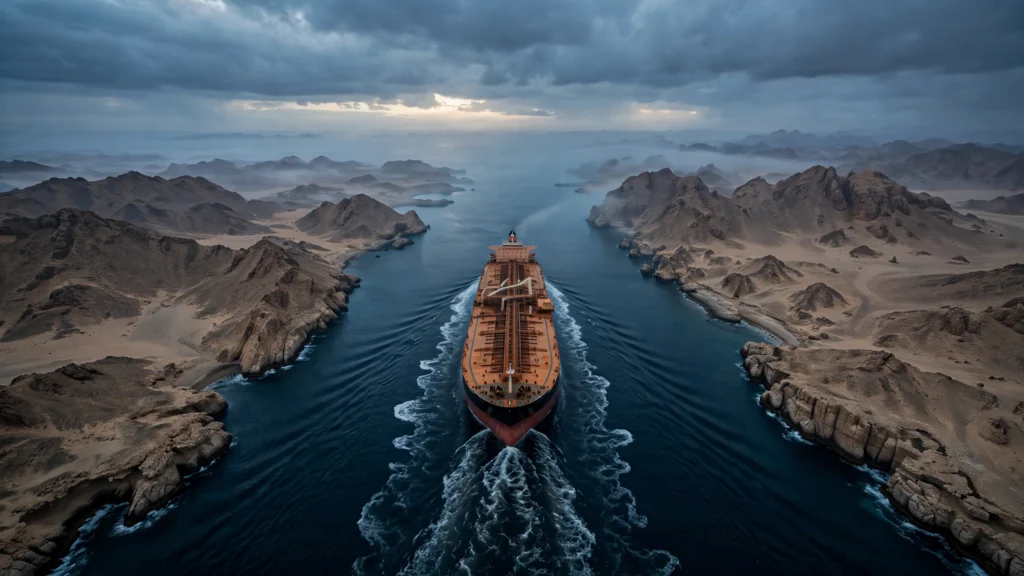
The Strait of Hormuz is the narrow waterway between Iran and Oman through which roughly a fifth of the world’s oil and gas supplies normally pass. Any threat to shipping there is an immediate worry for India, which imports nearly 90 per cent of its crude oil and buys a large share of it from the Gulf.
What Iran claims happened
According to Iranian state television, the seven tankers were hit overnight and some caught fire. The report cited the Revolutionary Guard Corps navy and did not mention any casualties. The Associated Press said it could not independently verify the claims, and the British military monitor UK Maritime Trade Operations did not report the attacks.
That silence from UKMTO does not settle the matter either way. Monitors have noted in recent days that some shippers are reluctant to report incidents, possibly fearing higher insurance costs or retaliation. October has already seen the most reported attacks on commercial shipping since March, shortly after the war began in late February.
Along with the claim, the Guard navy repeated its threat to strike US military bases in the region if Washington keeps escorting or guiding commercial ships through the strait. Iran still asserts control over the waterway, and Tehran is treating that leverage as central to any future talks with the United States.
Markets rattled: oil above $112, shipping costs up sevenfold
The market reaction was swift. Brent crude, the international benchmark, crossed $112 a barrel on Wednesday and Thursday, while US crude WTI traded near $99. Since the war began in February, Brent is up more than 80 per cent this year, a surge that is straining every oil-importing economy.
For India, the deeper shock may be in shipping costs. Goldman Sachs says the global average crude freight rate has surged above $20 a barrel, up from about $3 a barrel a year ago, a sevenfold jump. More than half of that increase comes from Hormuz war risk and ships switching to riskier ship-to-ship transfers outside the Persian Gulf. Singapore marine fuel, which powers the tankers, has more than doubled from $428 to $919 a tonne.
Jefferies estimates that Indian oil marketing companies are sitting on marketing losses of around Rs 28 per litre on petrol and Rs 34 per litre on diesel, although actual losses depend on procurement costs, inventories and the government’s pricing decisions. Retail fuel prices have not moved in line with input costs so far.
Why fears of a wider war are growing
- Israel votes on October 27: Prime Minister Benjamin Netanyahu could lose power in Tuesday’s close election, and there are concerns that renewed US-Israeli military action against Iran could follow before or after the vote. Israeli security researcher Danny Citrinowicz told AP that a clear Netanyahu victory makes another attack almost guaranteed, and that the region is on a one-way road toward another escalation.
- US buildup: Washington is sending a third aircraft carrier and thousands of troops to the region, joining the largest force of American warships and aircraft in the Middle East in decades.
- Iran’s warnings: Tehran says it has learned military lessons from the war that began with US and Israeli attacks on February 28, and has indicated it could expand targets to undersea internet cables and data centres, not just ships.
- Diplomacy, but on edge: Iran’s top diplomat Abbas Araghchi said on Wednesday that a wary Tehran remains open to diplomacy but is ready to defend itself.
What it means for India
India’s exposure is direct. Reuters reported this week that Indian Oil Corporation, the country’s biggest refiner, plans to trim its crude purchases from the Middle East under annual deals for 2027-28 because the war has made Gulf supplies unpredictable. Refiners have instead turned to spot purchases and, earlier this year, increased buying of Russian oil to fill the gap.
The immediate pain flows through three channels: a higher import bill, pressure on the rupee and inflation, and tighter margins for refiners and fuel retailers. With refined petroleum product shipments also facing disruptions even as crude flows have partly recovered, the risk premium on oil is unlikely to fade soon. The International Energy Agency has warned that energy markets may not normalise even in 2027.
FAQs
Q: How many tankers were attacked in the Strait of Hormuz?
A: Iran claims seven oil tankers caught fire or were damaged overnight after being hit or striking naval mines. The claims were reported by Iranian state television on Thursday and have not been independently verified.
Q: How high did oil prices go?
A: Brent crude crossed $112 a barrel on Wednesday and Thursday, while WTI traded around $99. Brent is up more than 80 per cent since the US-Iran war began in February.
Q: Why does this matter for India?
A: India imports nearly 90 per cent of its crude, much of it from the Gulf via Hormuz. Higher oil and shipping costs raise the import bill, pressure the rupee and inflation, and squeeze refiners and fuel retailers.
Q: Is petrol price going to rise in India?
A: Jefferies estimates OMCs are absorbing marketing losses of about Rs 28 per litre on petrol and Rs 34 per litre on diesel at current costs. Whether retail prices rise depends on crude costs, inventories and government pricing decisions.
Q: Could the war escalate further?
A: Analysts see a real risk. Israel votes on October 27, the US is adding a third aircraft carrier to the region, and Iran has threatened to widen its target list to undersea cables and data centres.
The coming days will show whether Thursday’s tanker claims were a single sharp escalation or the start of a new, more dangerous phase. For India, already counting the cost in fuel bills and freight rates, every barrel passing through Hormuz now carries a war premium. Watch this space.