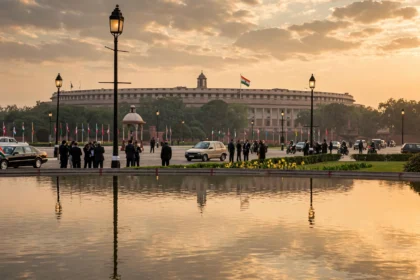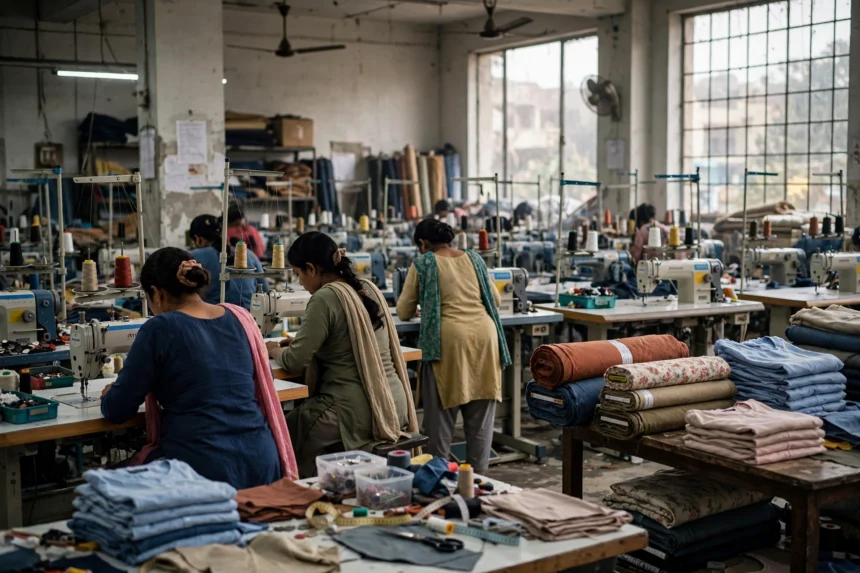
Varanasi woke up to a new kind of headline on Sunday. Prime Minister Narendra Modi inaugurated Arvind Limited’s new garment manufacturing facility in the Mirzamurad area of the city, a plant that already employs around 1,000 people and is set to take total direct employment to about 2,000 as hiring continues. For a city better known for silk looms and ghats than export factories, it is a significant moment, and the jobs story is deliberately built around local women.
Modi, who represents Varanasi in Parliament, visited the facility on Sunday morning, October 25, 2026, inspected the production lines and interacted with women workers on the shop floor. He was accompanied by Uttar Pradesh Governor Anandiben Patel and Chief Minister Yogi Adityanath. Later the same day, he attended the Indian Air Force’s aerial display, Wings over Ganges, at Namo Ghat to mark the force’s 94th anniversary.
What opened in Mirzamurad
The new unit is Arvind Limited’s first manufacturing facility in Uttar Pradesh. The Ahmedabad-based textile group has invested around Rs 150 crore in the plant, which has a built-up area of about 65,000 sq ft. The company estimates the facility has a revenue potential of around Rs 250 crore, with garments produced here headed for global markets.
Company vice chairman Kulin Lalbhai said the unit was completed in two to three years and that its workers are drawn from local Varanasi communities. That local-first hiring is central to the project’s pitch: rather than importing a workforce, the plant is meant to absorb skilled and trainable labour from the region itself.
The jobs: 1,000 now, 2,000 soon
The employment numbers are the part that matters most to job seekers. The facility currently employs approximately 1,000 workers, and the company has firm plans to recruit around 1,000 more, taking total direct employment to roughly 2,000. Women form the core of the workforce, in line with the government’s emphasis on women-led development.
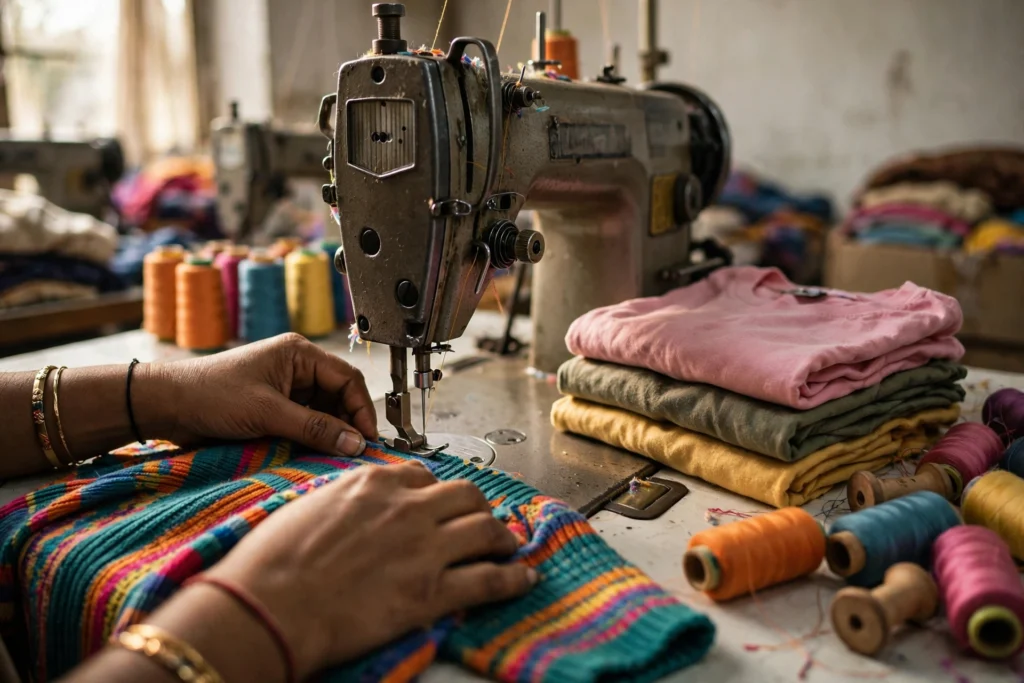
The work itself is largely sewing-based. Operators are trained in garment assembly and finishing, the two skills on which a knitwear and apparel unit runs. Around those core roles sit the usual factory ecosystem: quality checking, cutting support, packing, maintenance and logistics. The company has also pointed to indirect employment beyond the factory gates, in supply chains, transport and local services that grow around a plant of this size.
For young people in and around Varanasi, the practical takeaway is simple. Large garment units hire in phases, not all at once, so the second wave of roughly 1,000 jobs is the one to watch. Candidates with basic stitching skills, or
a willingness to be trained on industrial sewing machines, are typically the first in line for such roles.
Why Varanasi, and why now
Varanasi already has a deep textile identity. Its handloom weavers are known across the world, but modern, export-linked garment manufacturing has been thin on the ground in Purvanchal. The Arvind plant plugs that gap: it connects local labour to international supply chains, with finished garments moving from a Varanasi factory floor to buyers abroad.
The timing also fits Uttar Pradesh’s broader manufacturing push. The state government has been courting industrial investment with the argument that its large workforce, improving infrastructure and central location make it a natural factory base. A marquee inauguration by the Prime Minister in his own constituency sends that message louder than any brochure.
What the plant will make
The facility produces everyday knitwear and apparel. Its range includes T-shirts, shirts, jackets, trousers, sherwanis, men’s boxers and women’s leggings, made with automated sewing technology. The mix matters for job seekers too: a plant making many product types needs many kinds of operators, checkers and finishers, rather than a single narrow skill.
Officials at the inauguration stressed that the project is about more than one factory. It is meant to strengthen the region’s textile and apparel sector, raise incomes for working women, and show other manufacturers that eastern Uttar Pradesh can host modern production. Whether that demonstration effect follows will depend on how smoothly this first unit scales to its full 2,000-strong workforce.
FAQs
How many jobs will the Arvind Varanasi plant create?
About 1,000 people work there now, and the company plans to add around 1,000 more, taking total direct employment to roughly 2,000.
Where is the plant located?
In the Mirzamurad area of Varanasi, Uttar Pradesh. It is Arvind Limited’s first manufacturing unit in the state.
How much was invested in the facility?
Around Rs 150 crore, with an estimated revenue potential of about Rs 250 crore.
What kind of work is available there?
Mostly sewing-based roles: garment assembly and finishing, plus quality checking, packing and support functions. Workers are largely hired from local communities.
Are the jobs mainly for women?
Yes, the facility prioritises employment for local women, and the Prime Minister interacted with women workers during his visit on October 25.
The Mirzamurad plant will be judged, in the end, not by its inauguration-day photographs but by its payroll a year from now. If the second thousand jobs arrive as promised, Varanasi will have gained something its weavers never had: a large, modern factory floor where local women earn regular wages making clothes for the world.