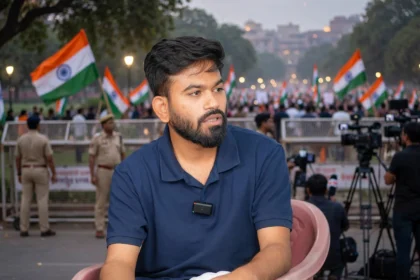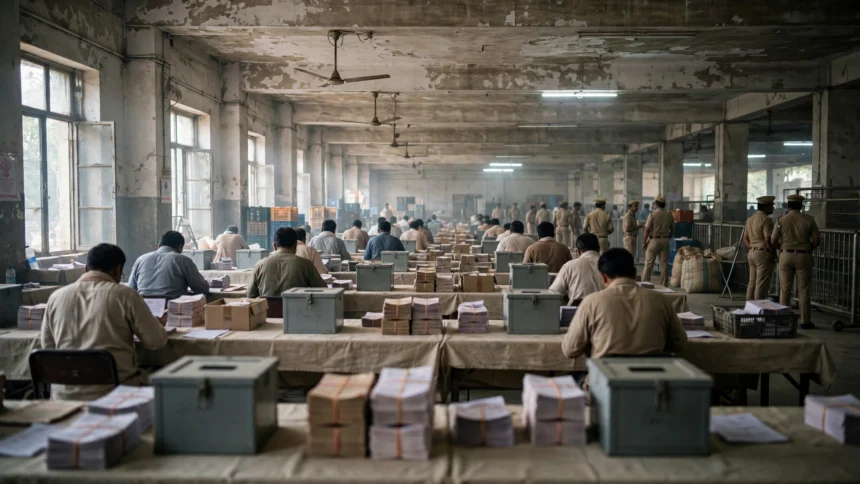
Vote counting began at 8 am on Tuesday for 28 Legislative Council seats across four states, setting off a day of high-stakes political arithmetic in Uttar Pradesh, Bihar, Maharashtra and Karnataka. Polling for these seats was held on October 23, and the Election Commission is expected to declare the full results by Tuesday evening.
The seats belong to a distinctive corner of Indian democracy: graduates and teachers constituencies, where the voters are registered graduates and teachers rather than the general public. That narrow, informed electorate often produces results that parties read closely as a mood check ahead of bigger contests.
Uttar Pradesh: 11 seats, 152 candidates
The largest share of Tuesday’s counting is in Uttar Pradesh, where 11 Legislative Council seats are at stake. Five are graduates constituencies, Lucknow, Varanasi, Agra, Meerut and Allahabad-Jhansi, and six are teachers constituencies, Lucknow, Varanasi, Agra, Meerut, Bareilly-Moradabad and Gorakhpur-Faizabad.
A total of 152 candidates are in the fray, and 14,81,310 voters were registered across 72 districts. As many as 2,697 polling stations were set up for the exercise. Kanpur Nagar, Kanpur Dehat and Unnao were excluded from this round of elections.
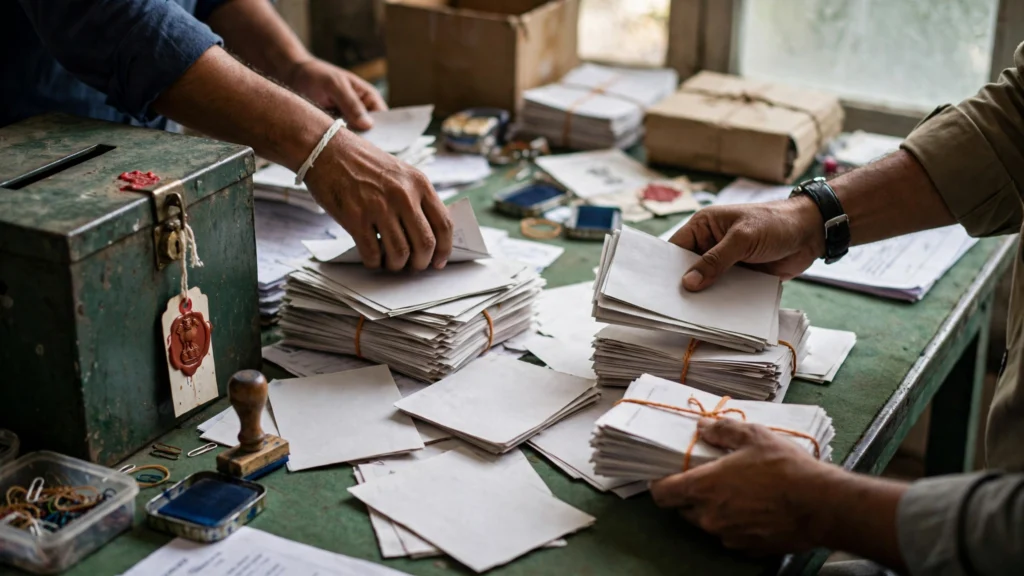
Counting is being held across seven cities, Lucknow, Varanasi, Agra, Meerut, Jhansi, Bareilly and Gorakhpur, under CCTV surveillance and videography. Because these elections use the single transferable vote system, officials have cautioned that the process may take longer than a straightforward first-past-the-post count.
The main contest in the state is between the ruling Bharatiya Janata Party and the Samajwadi Party, with Independents and party rebels also in the race. BJP Lucknow Graduates candidate Awanish Kumar Singh struck a confident note as counting began, saying party workers had facilitated a massive turnout and that a large number of ballots would go in the BJP’s favour. Samajwadi Party Teachers constituency candidate Sushil Kumar, meanwhile, urged the administration to protect the integrity and impartiality of the process, saying no external pressure from any quarter should be allowed to influence it.
Action before counting in Uttar Pradesh
The Election Commission had already acted on Monday over lapses during polling in the Agra Teachers constituency. Six supervisory officers were suspended, and disciplinary proceedings were initiated against five presiding officers and 16 police personnel over alleged dereliction of duty and supervisory lapses during the biennial election.
The action, announced a day before counting, underlined how closely the Commission is watching this round.
Bihar: teachers voted in big numbers
In Bihar, counting began at 8 am for eight seats, four graduates and four teachers constituencies, amid tight security. A total of 150 candidates are contesting, 90 in the graduates seats and 60 in the teachers seats.
The turnout figures told their own story. Teachers constituencies recorded an 82.85 percent turnout, while graduates constituencies saw 53.42 percent polling. Security at the counting centres was strict, with entry restricted to pass-holders and mobile phones barred inside.
The BJP and its ally, the Janata Dal (United), have fielded candidates for four seats each, while Prashant Kishor’s Jan Suraaj Party is contesting all eight. For the ruling alliance, the results will test its hold over an electorate that is educated, organised and vocal. For Jan Suraaj, a debut in these seats is a chance to claim a foothold in Bihar’s legislative politics.
Maharashtra and Karnataka complete the picture
In Maharashtra, 182 candidates are contesting five seats: three graduates constituencies, Pune, Nagpur and Chhatrapati Sambhajinagar, and two teachers constituencies in Pune and Amravati.
Karnataka is witnessing elections to four seats covering 17 districts, with the Congress facing the BJP-Janata Dal (Secular) alliance. Key seats include the Bengaluru and North-East Teachers constituencies and the West and South-East Graduates constituencies.
Why these results matter
Legislative Council results rarely grab prime-time headlines, but parties track them for good reason:
- They signal organisational strength: graduates and teachers seats reward parties with deep networks among professionals and educators, not just mass appeal.
- They shape the upper houses: the outcomes feed directly into the composition of state legislative councils.
- They set the narrative: with assembly and local body elections on the horizon, a strong showing on Tuesday will be claimed as momentum.
By Tuesday evening, the picture should be complete. Trends are expected within hours of counting, but the single transferable vote system means final numbers in closely fought seats may take time to settle.
FAQs
How many MLC seats are being counted on October 27?
Counting is underway for 28 Legislative Council seats across four states: 11 in Uttar Pradesh, 8 in Bihar, 5 in Maharashtra and 4 in Karnataka.
When was polling held for these seats?
Polling was held on October 23, 2026, and counting began at 8 am on Tuesday, October 27.
Who votes in graduates and teachers constituencies?
Only registered graduates vote in graduates constituencies, and only registered teachers vote in teachers constituencies. These are special electorates within the Legislative Council system.
When will the full results be known?
Results are expected to be fully declared by Tuesday evening, though the single transferable vote system can slow down the final rounds in tight seats.
What happened in the Agra Teachers constituency before counting?
The Election Commission suspended six supervisory officers on Monday and initiated disciplinary proceedings against five presiding officers and 16 police personnel over alleged lapses during polling.
Counting continues through the day, and the final tally from all four states will set the tone for the next round of political debate in each of them.