India now has a bigger footprint than ever before in Asia’s most watched university rankings, but the climb has got tougher at the top. The QS World University Rankings: Asia 2027, released on November 3, 2026, list 325 Indian universities, including 34 first-time entrants. That makes India the second most represented higher education system in Asia, behind only mainland China.
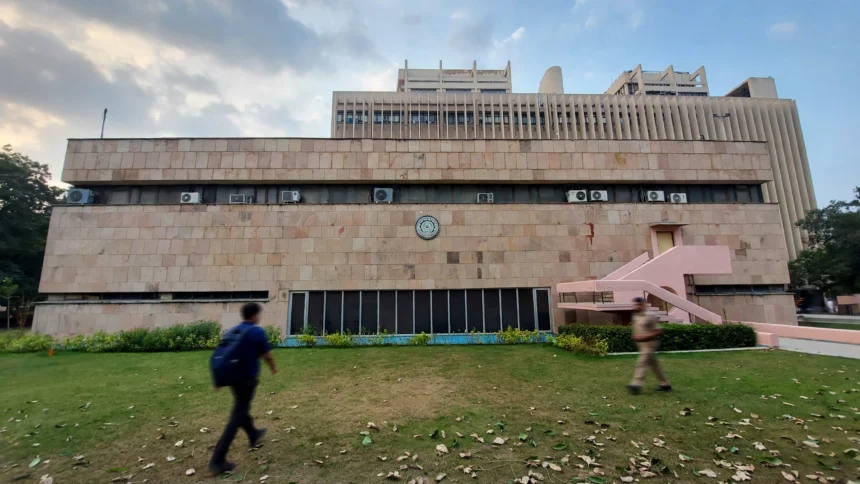
The headline, though, is mixed. Of the universities ranked last year, 71 per cent slipped down the list, 18 per cent improved and 11 per cent held steady. IIT Delhi remains India’s highest-ranked institution, but it too moved down, from 59th to 66th.
For students and universities, the message is twofold: Indian higher education is expanding fast, yet regional competition is rising even faster.
A bigger footprint, a tougher climb
The scale of growth is striking. In 2016, only 24 Indian institutions featured in the QS Asia list. This year’s 325 is more than a 13-fold increase, and the 34 new entrants are second only to mainland China’s additions.
The new entrants include SRM University in Andhra Pradesh, Malaviya National Institute of Technology Jaipur and Shobhit University, a sign that the expansion is reaching beyond the older, established names.
The latest edition covers 1,722 universities across 26 higher education systems in Asia, with 195 institutions joining for the first time.
QS itself has urged readers not to misread the 71 per cent figure. Senior Vice President Ben Sowter said it refers to the share of institutions that moved down the list, not a 71 per cent fall in performance. With more universities entering and Asian rivals improving, holding a rank has become harder even for institutions that are doing better in absolute terms.
Where India’s top institutions stand
All six of India’s highest-ranked institutions slipped in the 2027 edition, and all six that featured in the Asian top 100 last year are still there, but lower down:
- IIT Delhi: 66th, down from 59th, still India’s best
- IISc Bengaluru: 79th, down from 64th
- IIT Bombay: 83rd, down from 71st
- IIT Kanpur: 97th, down from 77th
- University of Delhi: 106th, down from 95th, and out of the regional top 100
IIT Madras and IIT Kharagpur also slipped, completing a clean sweep of falls among India’s leading names.
There is one encouraging counterpoint at the top end. India now has 21 institutions in the Asian top 200, up from 20 last year and 17 in 2018, which suggests the depth below the very top is improving even as the leaders feel the pressure.
The research bright spot
If there is one area where India clearly leads Asia, it is research output. India emerged as the region’s strongest performer for research output relative to academic staff, measured by the Papers Per Faculty indicator.
Five Indian universities feature in the regional top 10 on that measure, more than any other education system, with IISc Bengaluru securing the top position. IIT Madras, IIT Delhi, IIT Roorkee and IIT Ropar are also in that top 10.
The rankings also weigh academic and employer reputation plus international engagement, where India trails the big city universities of Singapore, Hong Kong and China.
What the numbers mean for students
For aspirants, the rankings are best read as a guide, not a verdict. A seven-place slip for IIT Delhi does not make it weaker overnight, and a new entrant is not automatically better than an unranked college with strong teaching.
What the 2027 list does show is worth noting while shortlisting colleges:
- Research strength is a genuine Indian advantage, especially at the IITs and IISc, which matters for students eyeing research careers or higher studies abroad.
- More ranked options now exist outside the traditional metros, as new entrants from states like Andhra Pradesh and Rajasthan join the list.
- Employer reputation remains strong for the older IITs, with IIT Bombay and IIT Delhi continuing to feature in the regional top 10 on that indicator.
Students should still weigh course quality, faculty, placements, fees and location alongside any ranking.
What to watch next
The question for next year is whether India’s breadth can turn into height. Adding ranked universities faster than almost anyone is one thing; converting that scale into more top-100 places will need progress on international faculty and student mix, and reputation scores that move slowly.
For now, the 2027 list tells a story of a system growing wider at speed while its leaders fight to hold ground in an increasingly crowded Asian field.
FAQs
How many Indian universities are in the QS Asia Rankings 2027?
325, including 34 first-time entrants. India is the second most represented system in Asia, after mainland China.
Which is the highest-ranked Indian university in QS Asia 2027?
IIT Delhi, at 66th place in Asia, down from 59th last year.
Why did 71 per cent of Indian universities slip in the rankings?
QS says the figure is the share of returning institutions that moved down, not a 71 per cent drop in quality. Rising competition across Asia, with 195 new entrants in the edition, pushed many ranks down.
How many Indian institutions are in the Asian top 200?
21, up from 20 last year and 17 in 2018.
When were the QS Asia University Rankings 2027 released?
On November 3, 2026, by Quacquarelli Symonds.
India’s universities are growing in number and research strength, even as Asia’s ranking race gets tougher.