The Ministry of Education has extended the registration deadline for the Seva First Innovation Challenge 2026, giving schools, colleges and technical institutes a few more days to get their entries in. Registrations will now remain open until 6 November 2026 through the official portal, sevafirst.mic.gov.in. The first round of screening by National Institutes of Technology (NITs) is scheduled to begin on 7 November, so institutions that have been sitting on an idea should move quickly.
The challenge is aimed at a simple, practical goal: getting young Indians to look at the problems around them and build real solutions for them. It is not a quiz or a paper-writing contest. Participants are expected to identify a genuine issue in their village, town or community, and design something that could actually work on the ground, at a cost people can afford.
What is the Seva First Innovation Challenge?
Launched on 25 September 2026 at the Indian Institute of Science (IISc), Bengaluru, by Union Education Minister Pralhad Joshi, the Seva First Innovation Challenge (SFIC) 2026 invites students to turn local problems into working innovations. The South Zone edition covers five states and three Union Territories: Karnataka, Tamil Nadu, Kerala, Andhra Pradesh, Telangana, Andaman and Nicobar Islands, Lakshadweep and Puducherry.
The initiative is built around three participant tracks. School students form one track, ITI and polytechnic trainees form the second, and undergraduate students and those pursuing higher studies form the third. The focus areas differ across the tracks, but the core idea stays the same: spot a problem, build a solution, and show that it can work in the real world.
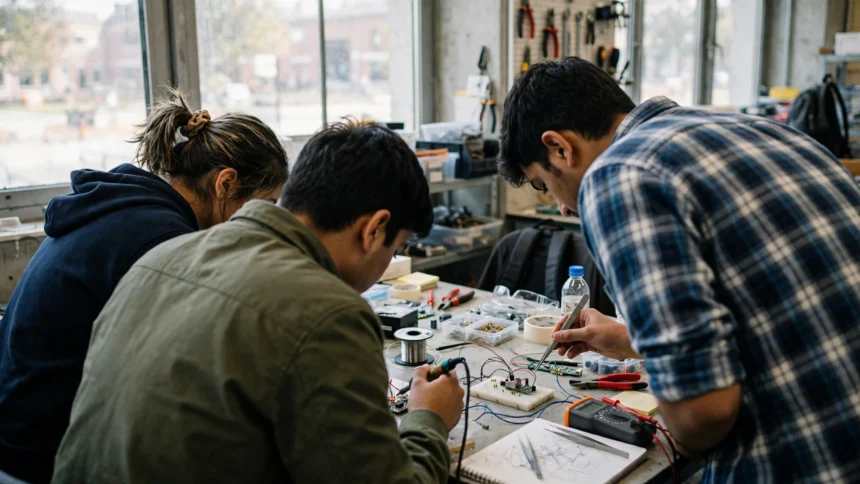
Selected participants will receive expert mentorship, access to laboratories and fabrication facilities, and incubation support. The best ideas will also get help in developing and testing their concepts through pilot projects, along with opportunities to showcase their innovations and explore adoption by industry and government organisations. Prizes and potential investment support are also part of the package.
Five national themes to choose from
Every entry must sit under one of five national themes set by the Ministry of Education:
- Swachh and Sustainable Bharat: ideas around cleanliness, waste management, clean water and greener living.
- Samriddh Annadata Samriddh Bharat: solutions that help farmers, improve agricultural productivity and strengthen rural incomes.
- Swasth and Samavesh Bharat: innovations in health, wellbeing and inclusive access to services.
- Shikshit and Kaushal Bharat: ideas that improve learning, teaching and skill development.
- Surakshit Bharat: solutions focused on safety, security and disaster preparedness.
How registration works
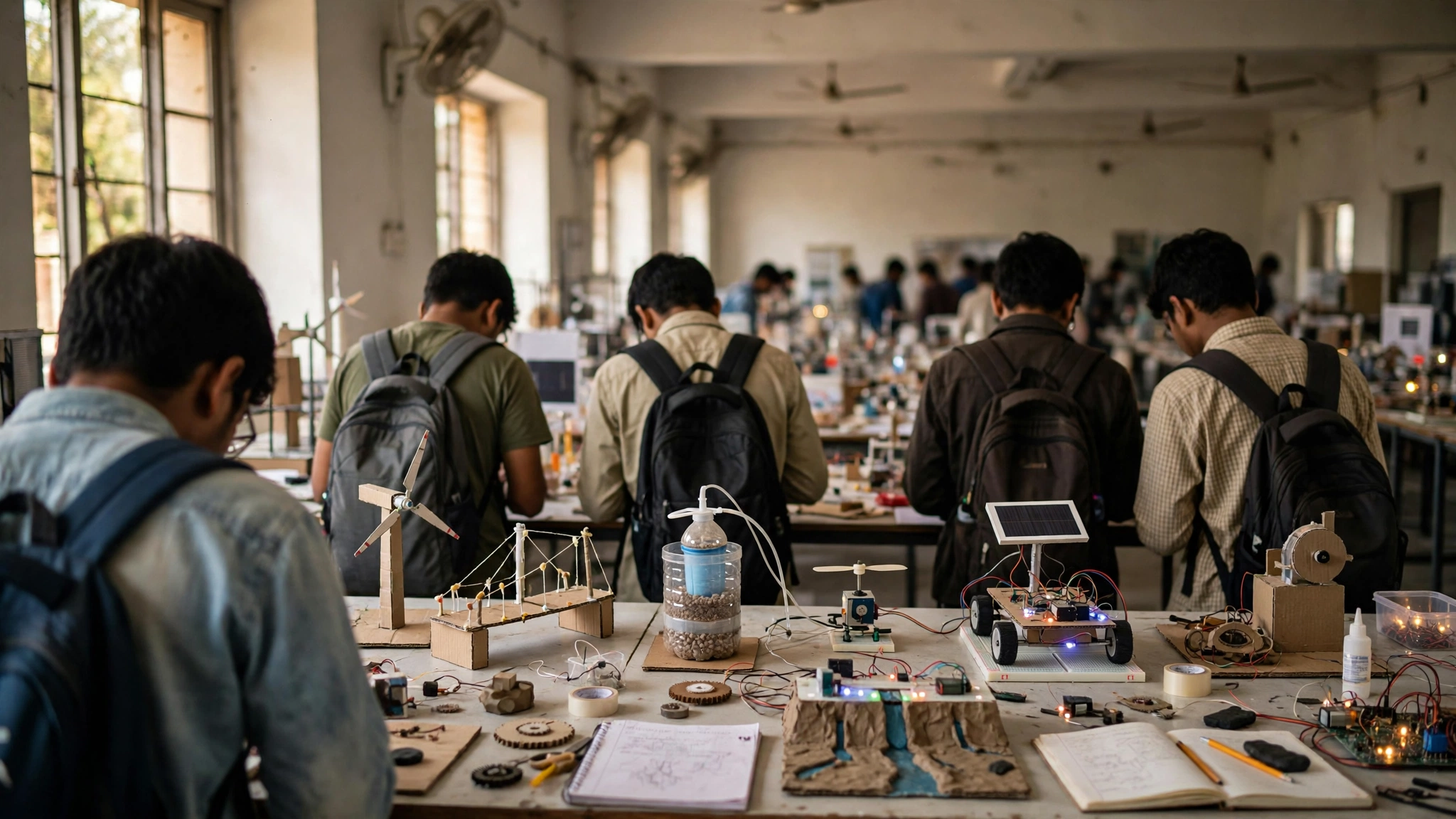
One point students often miss: registration is institution-based. Individual students cannot register on their own. Educational institutions must nominate a coordinator, complete the institution registration on sevafirst.mic.gov.in, and submit student entries through the portal. That means a student with an idea needs to approach their school, college or institute first, and the institute handles the formal submission.
The steps, in brief, are:
- Visit the official portal, sevafirst.mic.gov.in.
- Choose the institution registration option and enter the institute details, including the institute identification number.
- Nominate a coordinator who will manage the entries.
- Submit student ideas under the relevant theme and track before 6 November 2026.
With the deadline now days away, institutions that have not yet registered should not wait for the last evening. Portal traffic typically spikes on the final day, and any error in the institute details could cost a team its chance.
What happens after 6 November?
Once registrations close, entries will be categorised state-wise, theme-wise and track-wise for screening. The first round of screening by NITs and designated technical institutions begins on 7 November. Entries will be evaluated against a common framework covering relevance, originality, feasibility, cost, potential impact, scalability and overall quality of the proposed solution.
In plain terms, judges will ask: does this solve a real problem, is it new, can it actually be built, can people afford it, and can it grow beyond one classroom or one village?
Why this challenge matters
India has no shortage of student talent, but good ideas often stay trapped in notebooks and science exhibitions. The Seva First challenge tries to close that gap by connecting students with mentors, labs and pilot opportunities, so a promising prototype gets a real shot at reaching the people it was built for. The window closes on 6 November, screening starts the very next day, and there will be no further extension once evaluation begins. If your institution has an idea worth backing, this is the week to submit it.
FAQs
What is the last date to register for the Seva First Innovation Challenge 2026?
The registration deadline has been extended to 6 November 2026. Entries must be submitted through sevafirst.mic.gov.in before the window closes.
Can students register individually for the challenge?
No. Registration is institution-based. Students must apply through their school, college, ITI or polytechnic, which nominates a coordinator and submits the entries.
Who can participate in the Seva First Innovation Challenge?
School students, ITI and polytechnic trainees, and undergraduate and higher-study students can take part, under three separate tracks.
What are the five themes of the challenge?
Swachh and Sustainable Bharat, Samriddh Annadata Samriddh Bharat, Swasth and Samavesh Bharat, Shikshit and Kaushal Bharat, and Surakshit Bharat.
When does screening of entries begin?
The first round of screening by NITs and designated technical institutions is scheduled to begin on 7 November 2026.
For the latest education news and deadline updates, keep reading Informeia.