
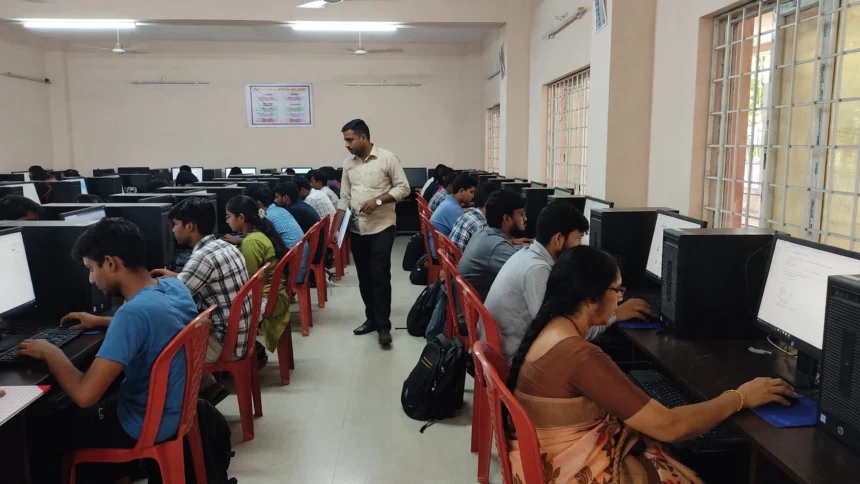
Students appearing for JEE Main, NEET-UG, CUET and other national entrance tests may soon find an exam centre much closer to home. The National Testing Agency (NTA) has invited schools, colleges and testing providers across the country to apply to become empanelled exam centres, as part of a plan by the Union Education Ministry to set up at least one standardised exam centre in every district.
The move, reported on November 12, is aimed at sparing lakhs of candidates the long journeys they now make to reach a test centre. Applications for empanelment close on December 6, 2026, and institutions can apply through the NTA portal at eoi.nta.gov.in.
One standard centre in every district
The Education Ministry has started work on a nationwide network of standardised examination centres. The plan is to have at least one facility in every district, with backup centres nearby so that a last-minute problem at one venue does not derail an examination.
The NTA, which conducts examinations in more than 500 cities, has invited applications from educational institutions and testing service providers to expand its network. The centres will support both computer-based tests and pen-and-paper examinations.
The two exams most students know, JEE Main and NEET-UG, are among the tests the NTA conducts, along with UGC-NET, CSIR-NET and CUET. A wider network of inspected centres would mean more cities, more shifts and shorter travel for candidates, especially those from smaller towns and rural districts who currently travel hours to reach the nearest centre.
What a centre needs to qualify
The NTA has set clear minimum standards in its Expression of Interest dated November 7. A standard computer-based test centre must have at least 285 functional computer workstations per shift, including buffer capacity. A pen-and-paper centre must be able to seat at least 250 candidates.
Submitting an application does not guarantee empanelment. The NTA will evaluate applications and may inspect the premises before listing a centre. Approved centres will be listed for one year, extendable on the basis of performance, and listing alone does not guarantee that examinations will be held there.
The standards cover more than just computers and chairs. Centres are expected to have CCTV coverage, webcasting, power backup and the infrastructure needed to run a high-stakes examination without disruption.
A permanent pool of independent observers
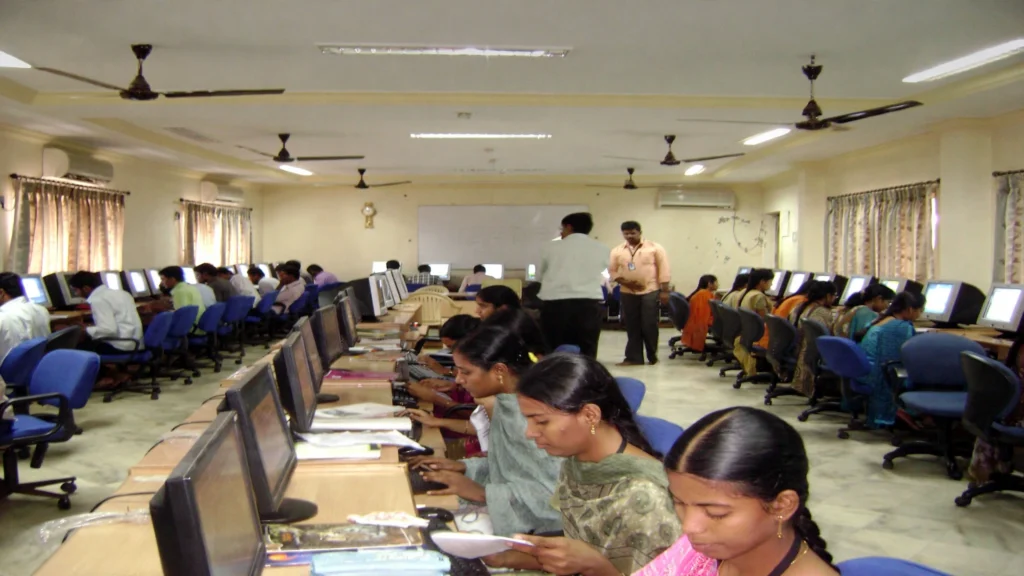
Alongside the centre network, the NTA is building a permanent pool of independent observers to monitor examinations. The pool will include retired central and state government officers, retired armed forces and paramilitary personnel, and serving or retired teachers and professors from government schools, colleges and universities.
An observer is the NTA representative at a centre on exam day, distinct from the city coordinator and the centre superintendent. The observer watches the conduct of the examination, checks identity verification and frisking, monitors seating and the handling of question papers, and reports any irregularity directly to the agency.
Applications for the observer pool also close on December 6. The empanelment will be valid for two years, though being on the panel does not guarantee deployment in every examination cycle.
Why the overhaul is happening now
The twin moves follow repeated security breaches and disruptions in large-scale examinations, including the NEET-UG paper leak earlier this year. The NTA has been under pressure to tighten both the physical infrastructure of test centres and the supervision inside them.
The overhaul also comes as the government considers moving NEET-UG to computer-based mode. No decision has been announced yet, but a shift to computer-based testing would need far more computer labs than a pen-and-paper examination, which is one reason the centre network is being expanded now.
Nothing changes for examinations already scheduled. JEE Main in January 2027 and the UGC-NET and CSIR-NET examinations in December 2026 will go ahead as planned.
What it means for students
- Shorter travel: A centre in every district would cut the overnight journeys many candidates currently make, along with the cost of travel and stay.
- More exam cities: A bigger network of approved centres gives the NTA room to offer more cities and shifts in future examination cycles.
- Tighter security: Inspected centres with CCTV and webcasting, plus a trained observer at every venue, should make malpractice harder.
- Backup options: Nearby backup centres mean a venue problem on exam day is less likely to force a postponement.
For institutions, the empanelment is a chance to put their infrastructure to use and earn from hosting national examinations. For students, the real test will be how quickly the network actually reaches their district, and whether the next examination cycle offers a centre close to home.
FAQs
What is the last date to apply to become an NTA exam centre?
Institutions must apply by December 6, 2026, through eoi.nta.gov.in. The Expression of Interest was issued on November 7, 2026.
How many computers does a computer-based test centre need?
At least 285 functional computer workstations per shift, including buffer capacity. A pen-and-paper centre must seat at least 250 candidates.
Which examinations will these centres host?
The NTA conducts JEE Main, NEET-UG, CUET, UGC-NET, CSIR-NET and other national examinations across more than 500 cities.
Who can apply to become an NTA observer?
Retired central or state government officers, retired armed forces or paramilitary personnel, and serving or retired teachers and professors from government institutions. Applications also close on December 6.
Will NEET-UG become a computer-based test?
The government is considering the move, but no decision has been announced. The centre expansion is partly aimed at preparing the infrastructure such a shift would need.
The NTA will share further details, including payment terms for centres, separately. Students and institutions should check nta.ac.in for official updates.