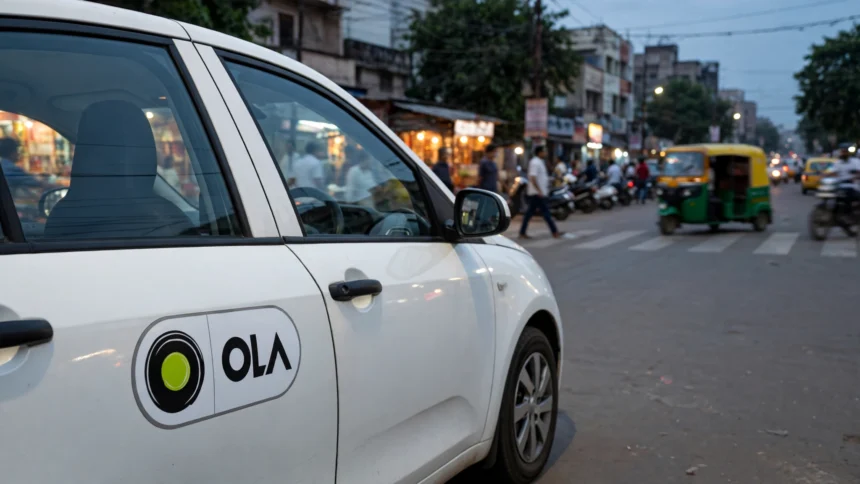
Ride-hailing platform Ola has been fined Rs 10 lakh by the Central Consumer Protection Authority (CCPA) for nudging passengers to pay extra before their ride was even confirmed. The regulator called the pre-ride tip prompts a dark pattern, an unfair trade practice and a misleading advertisement, and ordered the feature to be stopped immediately.
The order, dated 10 November, was made public on Friday, 13 November. It was passed by CCPA Chief Commissioner Nidhi Khare and Commissioner Anupam Mishra in a case against ANI Technologies Pvt Ltd, the company that runs Ola.
What the regulator found
When a passenger booked a cab on Ola, the app showed prompts while it searched for a driver, suggesting that paying a little extra could help get a ride faster. The prompts appeared before any driver had accepted the booking, and before the journey had even begun.
The CCPA said this created a false impression. A tip, the regulator noted, is normally paid to reward a service that has already been given. Here, passengers were being asked to pay more for a service that had not started, on the suggestion that it would improve their chances of getting a cab.
Ola later renamed the feature from a tip to an add-on, but the regulator found the practice unchanged. The order covers prompts described as a tip, an add-on, an additional fare or by any other name, and directs Ola to stop all messages, pre-set amounts and interface designs that push passengers to pay anything over the upfront fare before the journey is complete.
The authority examined the feature under the Consumer Protection Act, 2019, the Guidelines for Prevention and Regulation of Dark Patterns, 2023, and the guidelines against misleading advertisements. It held that the interface used a prohibited dark pattern known as confirm shaming, which pressures users into a choice by making the other option look worse.
Ola’s own numbers worked against it
Perhaps the most damaging part of the order is that Ola’s own data did not support its claim. The CCPA looked at the company’s figures for 1 to 15 June 2026 and found that ride requests carrying an add-on were actually accepted less often than requests without one.
In Bengaluru, for example, 39 per cent of requests with an add-on were accepted, compared with 68 per cent of requests without one. The numbers cut directly against the suggestion that paying extra would help a passenger get a ride faster.
The suggested amounts also kept climbing. They started at Rs 10 to Rs 40 in May 2025 and rose to as much as Rs 140, the regulator noted. The feature had been live since 27 April 2025, and the prompts were shown until 22 May 2025. Even so, the feature was still being demonstrated before the CCPA itself on 24 June 2026.
The order also records that Ola’s standalone revenue from operations in 2024-25 was about Rs 1,060 crore, which makes the Rs 10 lakh penalty less than 0.01 per cent of that figure. The penalty is the maximum prescribed for a first contravention.
Not just Ola
The CCPA has been looking at the whole cab aggregator industry, not just Ola. It has taken suo motu action against other platforms over the same practice, and it had earlier passed an order against Rapido, imposing a penalty of Rs 10 lakh for similar prompts.
The Ministry of Road Transport and Highways had also stepped in. In a letter dated 11 August 2026 to all motor vehicle aggregators, it clarified that no prompt suggesting an additional payment may improve ride confirmation should be shown before the ride is completed.
Consumer Affairs Minister Pralhad Joshi shared the CCPA order on X, saying the authority had imposed the penalty on Ola for misleading pre-ride payment prompts and directed that the feature be discontinued.
What happens now
Ola must pay the Rs 10 lakh penalty and submit a compliance report within 15 days of receiving the order. It must also ensure strict compliance with the Consumer Protection Act, the dark patterns guidelines and the misleading advertisements guidelines going forward.
For passengers, the practical effect is simple. The fare shown at the time of booking is the fare. No app should ask for extra money before a driver accepts the trip, or suggest that paying more will get a cab faster. If it does, the CCPA has now made clear that it counts as a dark pattern, and it is willing to fine platforms for it.
The order is a reminder that the small prompts inside an app are not a grey area any more. Regulators are reading them closely, and when the numbers behind a claim do not add up, the claim itself can cost a company.
FAQs
Why was Ola fined Rs 10 lakh?
The CCPA found that Ola’s pre-ride tip or add-on prompts misled passengers, amounted to an unfair trade practice and used a prohibited dark pattern. The prompts suggested paying extra could get a ride confirmed faster, which Ola’s own data did not support.
What exactly was the tip feature?
While the app searched for a driver, it prompted passengers to add a tip or add-on over the upfront fare, suggesting it might help get a ride faster. The suggested amounts ranged from Rs 10 to Rs 140.
Has Ola been told to remove the feature?
Yes. The CCPA has directed Ola to immediately discontinue all prompts, messages, pre-set amounts and interface designs that solicit any payment above the upfront fare before the journey is completed, whatever the payment is called.
Was any other cab aggregator fined?
Yes. The CCPA had earlier imposed a Rs 10 lakh penalty on Rapido for the same practice, and it has taken suo motu action against other cab aggregators as well.
What should passengers do if they see such a prompt?
Passengers can refuse to pay anything above the fare shown at booking. Complaints about misleading prompts can be raised with the CCPA, which has shown it will act on this kind of practice.
The fine may be small next to Ola’s revenue, but the message is clear. In India’s ride-hailing market, the price you see at booking is the price you should pay, and no prompt should tell you otherwise.