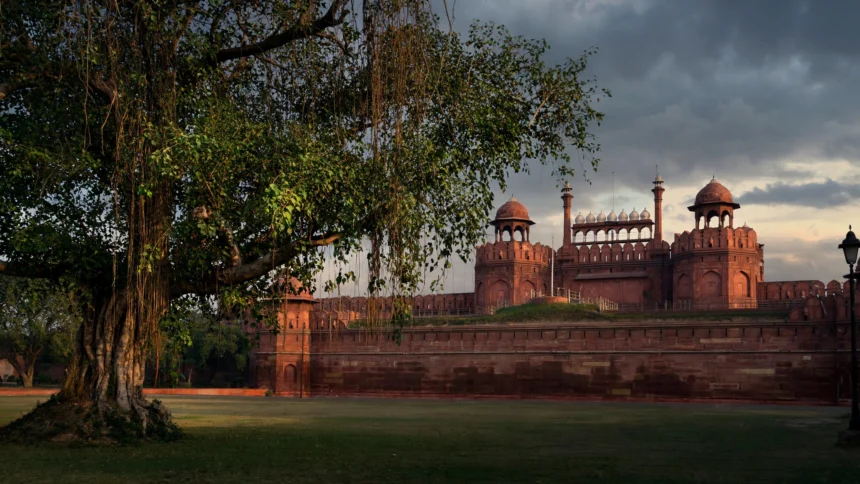
On Tuesday, November 10, Delhi marked one year since the car blast near the Red Fort that shook the national capital. Security was tightened around the historic monument through the day, a year after an explosion at a traffic light there killed 11 people in what investigators call the first terror attack in Delhi in 14 years. A year on, the case has moved from the blast site to a special courtroom in the capital, but one key accused is still out of reach, believed to be in Afghanistan.
The anniversary is a moment to take stock. The National Investigation Agency (NIA) says it has cracked the conspiracy, filed two chargesheets and named 13 accused. Yet the trial has not begun in earnest, and the man investigators describe as a central figure in the plot has not been arrested. Here is where the case stands, what the probe found, and what happens next.
What happened on November 10, 2025
At 6:52 pm on November 10 last year, a slow-moving white Hyundai i20 came to a halt at the traffic light near the Red Fort and exploded. At first, eyewitnesses and police personnel on the spot thought it might be a CNG cylinder blast. Within hours, it became clear that something far more serious had happened.
The explosion killed 11 people and injured several others, besides causing extensive damage to property in one of the busiest parts of old Delhi. The NIA later said the car carried a high-intensity vehicle-borne improvised explosive device, and that the blast was a suicide attack. Forensic tests found traces of TATP and ammonium nitrate at the site.
The man inside the car was identified as Dr Umar Un Nabi, an assistant professor at Al Falah University in Faridabad, Haryana. DNA from biological material recovered at the site confirmed that Nabi died in the blast, and investigators say the device was triggered from inside the vehicle through a command mechanism.
The NIA investigation: a doctor module
What set this case apart was the profile of the accused. The NIA probe describes a network of medically trained professionals, a group investigators have called a doctor module, linked to Ansar Ghazwat-ul-Hind (AGuH) Interim, an offshoot of Al-Qaeda in the Indian Subcontinent (AQIS).
According to the chargesheets, the accused reorganised as AGuH Interim after the original leadership of Ansar Ghazwat-ul-Hind was neutralised by 2022. The probe claims the group believed Afghanistan, under Taliban rule, to be a pure Islamic state, and that some of the accused had travelled to Turkey in 2021, where they are alleged to have met overground workers of another terror outfit.
The investigation spanned Jammu and Kashmir, Haryana, Uttar Pradesh, Maharashtra, Gujarat and the Delhi-NCR region. Police also seized large quantities of explosive precursors during the probe, including about 2,900 kg of ammonium nitrate. A United Nations sanctions-monitoring report published in August this year said the Red Fort attack was officially attributed to AQIS, after an earlier assessment had cited a possible link to a different outfit.
The chargesheets and where the trial stands
The NIA filed its main chargesheet on May 14 this year, running to about 7,500 pages, and a supplementary chargesheet on June 27. Together, the two chargesheets name 13 accused, including Nabi, who died in the blast.
The prosecution case rests on a large body of material: 588 oral testimonies, more than 395 documents and over 200 seized exhibits, according to the agency. Among the accused named are Dr Muzamil Shakeel, Dr Shaheen Saeed, Dr Adeel Ahmed Rather, Dr Bilal Naseer Malla, Aamir Rashid Mir, Jasir Bilal Wani, Mufti Irfan Ahmad Wagay, Soyab and Yasir Ahmad Dar. The chargesheet alleges, among other things, that Saeed passed Rs 16 lakh in two tranches to a co-accused to fund the conspiracy. These are allegations in a prosecution document, and none of them has been tested at trial yet.
A special NIA court at Patiala House in New Delhi took cognisance of the chargesheet on August 29. The case is now at the stage of arguments on the framing of charges against the arrested accused, the step at which the court decides what charges each accused will face at trial.
The one accused still out of reach
The loose end in the case is Dr Muzafar Ahmad Rather, a paediatrician the NIA describes as a key accused. Investigators say Rather left India in August 2025, months before the blast, and is now in Afghanistan. A non-bailable warrant has been issued against him, and the NIA is hopeful that Interpol will soon issue a Red Notice, the international alert that would let other countries detain him for extradition.
Until Rather is brought back, the prosecution of the conspiracy will remain incomplete. International cooperation is now central to the case, because the one man investigators say can connect several threads of the plot is beyond the reach of Indian courts.
What changed in Delhi after the blast
The blast forced a rethink of security in the capital. In the weeks after the attack, police stepped up checks around crowded markets, monuments and transport hubs, and the investigation led to a wider crackdown on suspected terror modules and their support networks. On the anniversary itself, security around the Red Fort was heightened again, with extra deployment and checks in the area.
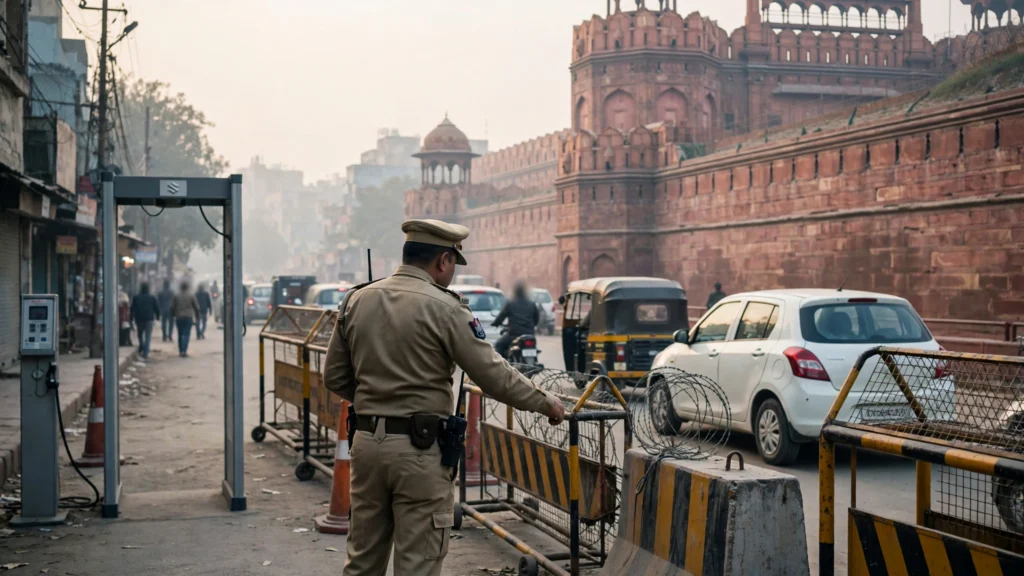
For the families of the victims, the anniversary was a quieter, grimmer marker. A year after losing their loved ones on an ordinary evening commute, they are still waiting for the trial to begin and for the case to reach a verdict.
Why the case still matters
The Red Fort blast matters for three reasons. First, it ended a 14-year gap without a major terror strike in the capital, and it showed that the threat had changed shape, with educated professionals allegedly drawn into a conspiracy rather than the usual foot soldiers. Second, the case tests whether India can prosecute a complex, multi-state terror conspiracy to a conclusion, including bringing back a fugitive from Afghanistan. Third, it is a reminder that the legal process is slow: a year after the blast, the court is still deciding the charges, and the trial itself is yet to start.
The next milestones are clear. The special court will complete arguments on framing of charges, the trial will open, and the NIA will press for the Red Notice against Rather. Until then, the Red Fort blast remains a case that is solved on paper but unfinished in court.
Frequently asked questions
When did the Red Fort blast happen?
On November 10, 2025, at 6:52 pm, when a car carrying an improvised explosive device exploded at the traffic light near the Red Fort in Delhi.
How many people were killed?
Eleven people were killed and several others were injured in the blast, according to the NIA and anniversary reports.
Who carried out the blast?
The NIA says Dr Umar Un Nabi, an assistant professor at Al Falah University in Faridabad, was the suicide bomber. He died in the explosion.
How many accused have been chargesheeted?
Thirteen people in total, across two chargesheets filed in May and June 2026. One of them, Dr Muzafar Ahmad Rather, is absconding and is believed to be in Afghanistan.
Where does the trial stand?
A special NIA court in Delhi took cognisance of the chargesheet on August 29, 2026. Arguments on the framing of charges are under way, and the trial is yet to begin.
One year on, the Red Fort blast is a case of a probe completed and a trial still waiting to start. The evidence is filed, the accused are named, and the court has the file. What remains is the harder part: a trial, a verdict, and one fugitive still to be brought home.