New Delhi: Union Minister for Communications Jyotiraditya M. Scindia met the Internet Service Providers Stakeholder Advisory Committee in New Delhi on Tuesday to take on two problems that have slowed India’s telecom buildout for years: right-of-way clearances for laying fibre and unreliable power supply to remote mobile towers.
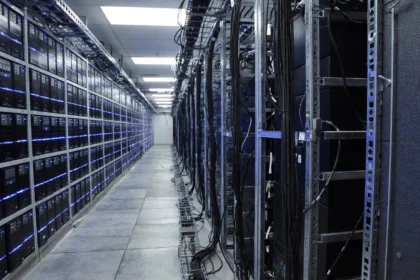
The meeting comes at a moment when India’s appetite for data is outrunning the pipes that carry it. According to the GSMA, the global body representing mobile network operators, Indians now consume 700 crore GB of mobile data every month. That surge has pushed the backhaul requirement for a single mobile tower site from 4 Mbps in the early days to 300 Mbps today, a 75-fold jump that fibre alone can support.
Scindia said after the meeting that the government remains committed to sorting out industry concerns through coordinated policy action. “We remain committed to address industry concerns through coordinated policy action and strengthen the telecom infrastructure for a digitally connected India,” he said.
Why laying fibre is still so hard
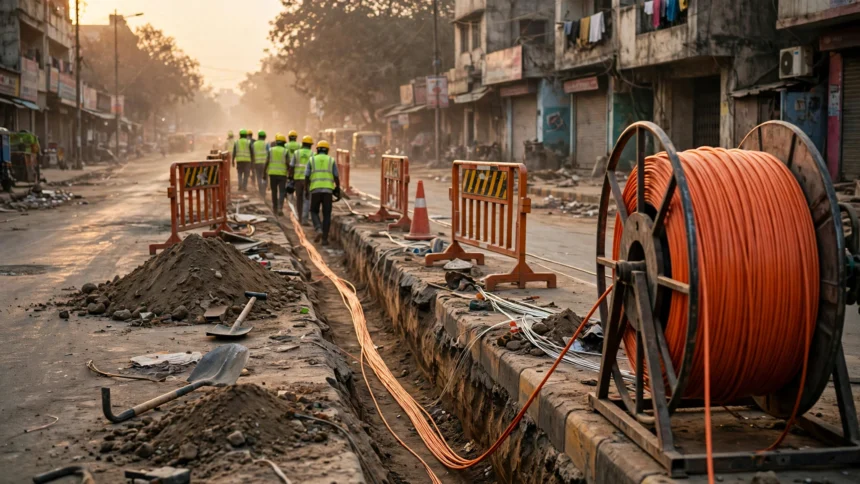
Laying underground optical fibre cable sounds simple. In practice, every stretch of road or land belongs to someone, and each owner wants its own permission. A single fibre route can need approvals from municipal bodies, the Ministry of Road Transport and Highways, the Railways and forest departments, each with its own forms, timelines and fees.
The Department of Telecommunications has issued central right-of-way rules to standardise the process, but implementation on the ground remains uneven. Many states and Union Territories still charge non-uniform, high fees and follow local bylaws that do not line up with the central framework. The GatiShakti Sanchar Portal was built to digitise and speed up right-of-way applications, yet several regional and municipal bodies still do not offer single-window clearances. Operators say they are forced into repeated re-applications, and in some cases receive unauthorised-construction notices even after the statutory deemed-approval window has passed.
That matters because fibre is the backbone of 5G. In the 5G era, networks need far more small cells and macro cells packed close together, a process called network densification. Without fibre reaching those sites, the promise of faster speeds and lower latency stays on paper. The government has linked this buildout to its larger goals, including Industry 4.0 and the Smart Cities mission.
Power gaps at remote towers
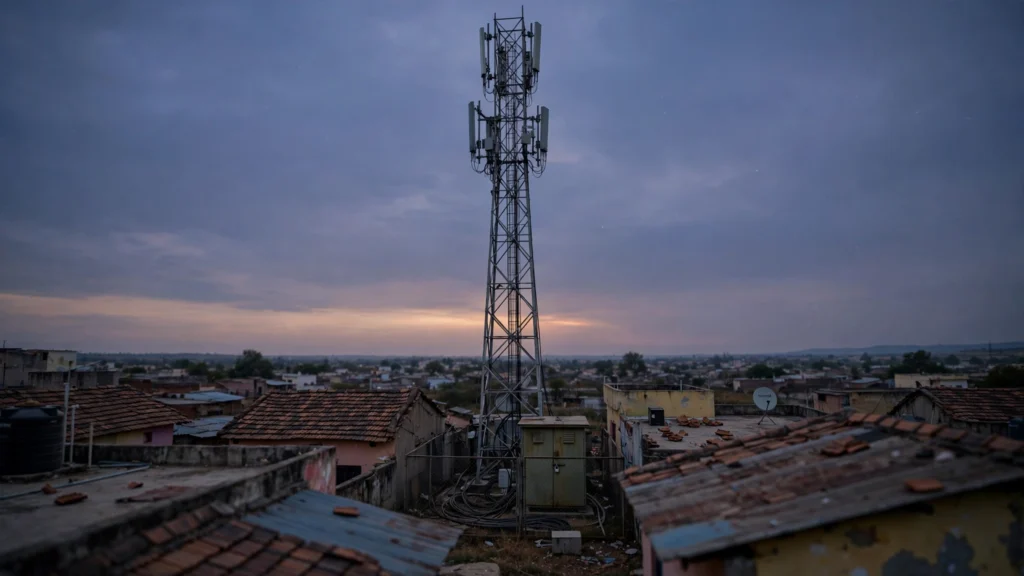
The second problem on the table was electricity. Rural and remote towers frequently run on erratic grid supply, with outages reportedly lasting 6 to 12 hours a day in some areas. Every hour a tower is down, calls drop and data stops in the villages it serves.
Operators have raised this repeatedly: diesel generators and battery backups add cost, and in far-flung locations even fuel delivery is a challenge. The committee discussed what coordinated action between the Centre, states and local bodies could look like to give towers steadier power.
What happens next
Tuesday’s meeting is part of an ongoing engagement between the government and telecom industry stakeholders through advisory committees set up by the Department of Telecommunications in July 2024. The ISP committee is one of several such panels that feed industry concerns directly to the ministry.
No new policy was announced after the meeting, and officials did not put a timeline on the fixes discussed. But the framing was clear: with data use at 700 crore GB a month and 5G densification still to come, the government sees fibre and tower power as the two chokepoints that decide how fast India’s digital infrastructure can grow.
For users, the stakes are practical. Smoother right-of-way approvals mean fibre reaches more neighbourhoods faster, and steadier tower power means fewer dead zones outside the big cities. Both are the unglamorous groundwork on which cheaper, faster connectivity depends.
FAQs
What is right-of-way in telecom?
Right-of-way is the permission telecom companies need to lay cables or put up towers on public land, such as roads, pavements and railway land. Without it, fibre cannot be laid legally.
Why is fibre important for 5G?
5G needs many more cell sites than 4G, and each site needs a high-capacity fibre link back to the core network. A single tower site now needs up to 300 Mbps of backhaul, up from 4 Mbps earlier.
How much data do Indians use every month?
According to the GSMA, India’s overall data consumption has reached 700 crore GB per month.
What is the GatiShakti Sanchar Portal?
It is a government platform that digitises right-of-way applications so telecom operators can seek clearances online instead of running between departments.
What did Scindia promise after the meeting?
He said the government remains committed to addressing industry concerns through coordinated policy action to strengthen telecom infrastructure for a digitally connected India.
India’s data boom is real, and the pipes underneath it need to catch up. Tuesday’s meeting was a step toward clearing the two biggest blockages in their path.