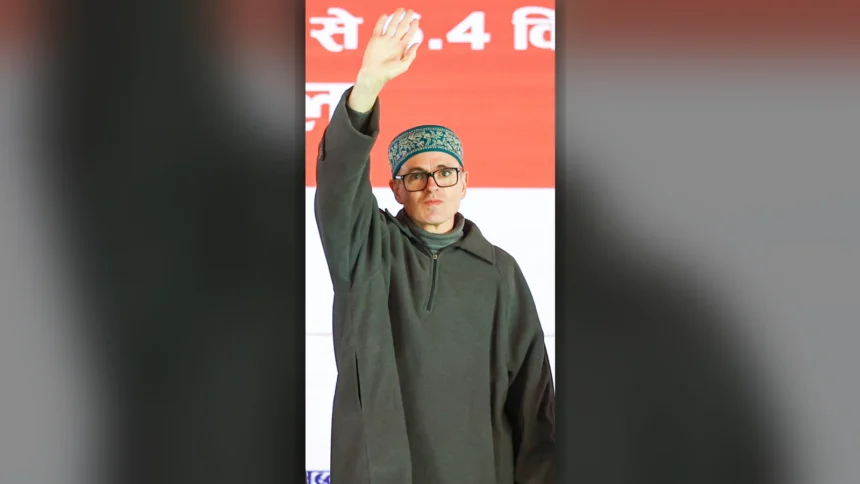
Srinagar is holding its breath. On Friday morning, Jammu and Kashmir Chief Minister Omar Abdullah and National Conference president Farooq Abdullah sit down with 25 disgruntled party MLAs who have given the government a 14-day ultimatum. Meet their demands, the rebels have warned, or they will withdraw support and bring the government down.
The meeting, expected in Srinagar, is the most important political conversation in the Union Territory in years. What happens in that room will decide whether Omar Abdullah’s government survives its first real crisis.
What the rebels want
Their charter of demands, set out in a 10-point memorandum submitted on Monday, calls for a complete overhaul of the government.
- Remove all sitting ministers and form an entirely new council of ministers.
- Remove the Chief Minister’s adviser, whose role the rebels say has shut elected MLAs out of decision-making.
- Transparent, merit-based selection of ministers, with every MLA consulted instead of a small circle of leaders deciding everything.
- A stronger push for the restoration of Article 370 and Article 35A, along with statehood and other constitutional safeguards for Jammu and Kashmir.
Sixteen MLAs have signed a formal resolution carrying these demands, and nine more are reported to back the faction but could not sign because they were out of town. If the demands are not met within 14 days, the rebels say they will approach Raj Bhavan and formally withdraw support.
The numbers that decide it
The Jammu and Kashmir Legislative Assembly has 95 seats, 90 elected and five nominated. All five nominated seats are vacant, so a majority needs 46 seats.
The ruling alliance currently holds 53 seats. If 25 MLAs resigned, the coalition would drop to 28, the effective strength of the House would fall to 65, and the new majority mark would be 33. A government with 28 seats would be in a clear minority.
The Abdullahs do not just need to calm tempers. Every MLA who walks out of that room still unhappy brings the government one step closer to the edge.
How the crisis built up
The trouble began with the cabinet expansion last week, when Omar Abdullah inducted four new ministers, Ali Mohammad Sagar, Mir Saifullah, Shamima Firdous and Altaf Ahmed Wani, taking the council from six to nine. Several senior legislators were left out, and they did not hide their anger.
Eidgah MLA Mubarak Gul was among the most vocal. He had expected a place in the cabinet and publicly expressed his displeasure. Farooq Abdullah later appointed Gul as the party’s general secretary, replacing Ali Mohammad Sagar, in what looked like an attempt to placate him. It did not end the discontent.
Between October 30 and November 5, the dissidents held five secret meetings in Srinagar. Around a dozen legislators also boycotted a dinner hosted by Farooq Abdullah after the reshuffle, a public signal that the rift ran deep.
Ruhullah’s exit raised the stakes
The crisis deepened on Tuesday, when Srinagar MP Aga Syed Ruhullah Mehdi resigned from the National Conference and his Lok Sabha seat. Addressing a gathering in Budgam, he ended a 24-year association with the party and accused the leadership of abandoning its 2024 promises on Article 370, statehood, reservation reforms and the release of political prisoners.
Ruhullah’s exit gave the dissident MLAs a powerful talking point. The party is now fighting on two fronts: a parliamentary seat lost and a legislative majority under threat, both in the same week.
What happens next
Party insiders describe Friday’s meeting as a reconciliation attempt, and there is hope a concrete outcome will emerge. Farooq Abdullah’s personal engagement with the dissidents is being read as a sign that the leadership is taking the threat seriously.
But the rebels have set a hard deadline, and the demands on the table are not easy to concede. Sacking an entire cabinet would be a humiliation for a Chief Minister barely a year into the job. Refusing, though, risks a floor test the government might not survive.
For now, all eyes are on Srinagar. Friday morning’s meeting will tell Jammu and Kashmir whether its government has bought itself time, or whether the 14-day countdown has truly begun.
Frequently asked questions
Why are 25 National Conference MLAs rebelling against Omar Abdullah?
They are unhappy with the cabinet expansion last week, the role of the Chief Minister’s adviser, and what they call unilateral decision-making. They also want a stronger push for the restoration of Article 370 and statehood.
What happens if the 25 MLAs withdraw support?
The ruling alliance would fall from 53 seats to 28 in the 95-member Assembly, leaving the government in a minority and likely forcing a floor test.
When does the 14-day ultimatum end?
The ultimatum was issued on Monday, so the deadline falls in mid-November. The rebels have said they will approach Raj Bhavan to withdraw support if their demands are not met by then.
Who is meeting the rebel MLAs on Friday?
Chief Minister Omar Abdullah and National Conference president Farooq Abdullah are meeting the dissident legislators in Srinagar on Friday morning.
Why did Aga Syed Ruhullah Mehdi quit the National Conference?
The Srinagar MP resigned on Tuesday, accusing the party leadership of abandoning its 2024 promises on Article 370, statehood, reservation reforms and the release of political prisoners.
The meeting in Srinagar is still under way, and this story will be updated as details emerge.