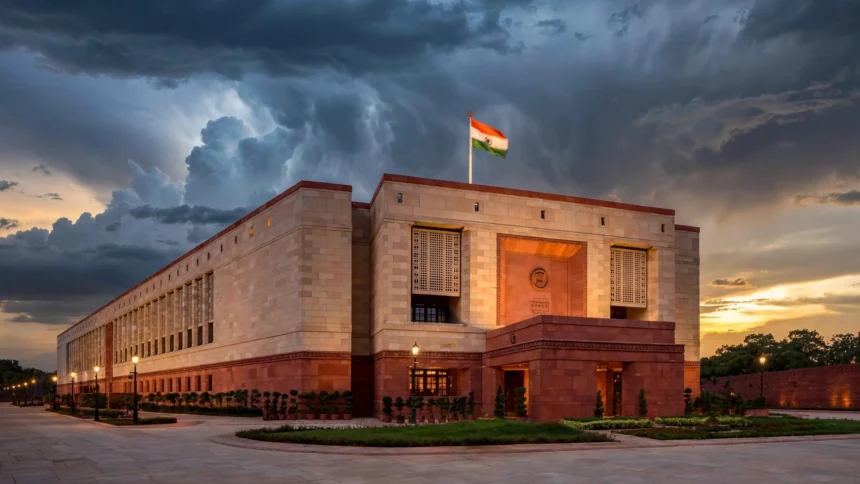
New Delhi: The Centre is likely to convene a special session of Parliament later this month to push the stalled constitutional amendment bills on delimitation and women’s reservation, government sources indicated on Friday. The move comes just six months after a dramatic defeat of the same legislation in the Lok Sabha and amid rising political heat over the Election Commission’s ongoing voter-roll revision.
According to reports, the government believes the numbers game in the Lower House has shifted in its favour since the April setback. With 20 Trinamool Congress MPs and six to seven Shiv Sena (UBT) MPs moving to the ruling side, the Centre is now confident of securing the two-thirds special majority a constitutional amendment requires.
What is on the agenda
The proposed special session would take up two linked pieces of legislation that have waited years for political consensus.
- Women’s reservation: The bill seeks to reserve one-third of seats in the Lok Sabha and state assemblies for women, a promise every major party has endorsed for decades but no government has yet converted into law.
- Delimitation: The exercise of redrawing parliamentary and assembly constituency boundaries based on population figures. A new proposal reportedly guarantees that every state’s seats will grow by about 50 per cent, so no state loses representation.
- The magic number: A constitutional amendment needs support of at least two-thirds of members present and voting. In a full 540-member Lok Sabha, that means roughly 360 votes.
Why the government thinks this time is different
When the delimitation-linked constitutional amendment bill was put to vote on April 17 this year, it failed to muster the required majority, dealing the Modi government a rare legislative embarrassment. Since then, the political map has changed.
The defection of 20 TMC MPs and a handful of Shiv Sena (UBT) MPs to the NDA fold has narrowed the gap considerably. Government sources say the Centre is also reaching out to regional parties that opposed the bill earlier, including the DMK, which walked out of the INDIA bloc after the Tamil Nadu elections, and smaller parties like the NCP (SP).
Senior NCP leader Supriya Sule had earlier hinted that several opposition parties were “willing to talk” if the 50 per cent seat-increase formula was guaranteed, a formula that addresses the biggest fear of southern states: that delimitation would shrink their share of power in favour of populous northern states.
Kharge’s letter: 64 days and counting
Congress president Mallikarjun Kharge fired off a sharp letter to Prime Minister Narendra Modi on Friday, flagging what he called the “unprecedented” 64-day delay in proroguing the Monsoon Session, which was adjourned sine die on August 13.
Kharge, writing for the fourth time since April, demanded an all-party meeting before any new delimitation proposals are finalised. “Please do not once again try and bulldoze a far-reaching Constitutional Amendment Bill through Parliament as you attempted earlier,” he wrote, referring to the April defeat.
He argued that all parties must get enough time to deliberate with stakeholders before such a sweeping change is pushed through.
Rajnath Singh’s counter-attack
Union Defence Minister Rajnath Singh hit back at the opposition at a press conference in Lucknow on Friday, calling the Delhi protests over the Special Intensive Revision of electoral rolls a “reprehensible attempt to derail India’s progress through anarchy”.
Singh accused the Congress of attempting a “regime change” on the lines of Bangladesh and listed what he called the party’s “four unforgivable crimes”: the 1975 Emergency, the 1984 anti-Sikh riots, the support to those who fired on Ram kar sevaks in 1990, and now “attacking the Constitution and constitutional institutions”.
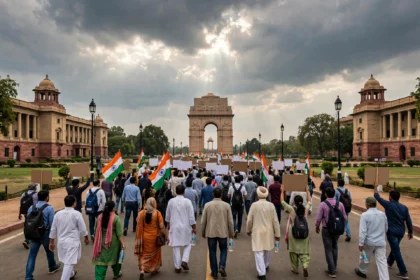
The remarks came as Delhi Police shut Central Park and barred gatherings around Connaught Place ahead of a planned protest by the Cockroach Janata Party demanding the resignation of Chief Election Commissioner Gyanesh Kumar over the SIR exercise.
What happens next
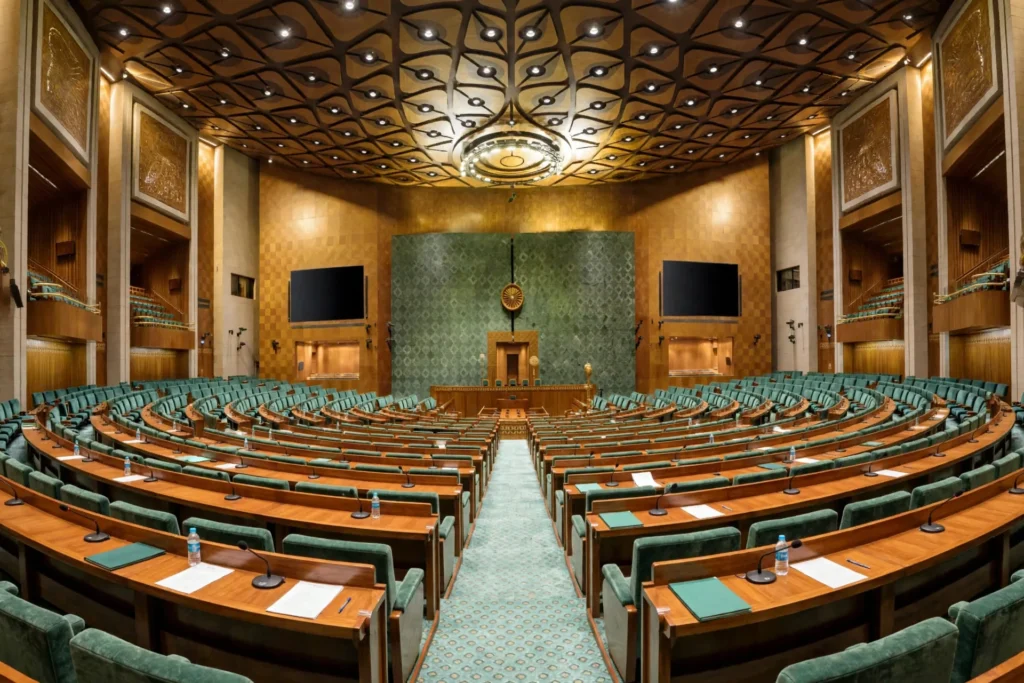
No official notification for the special session has been issued yet, and sources stress that the plan is still being weighed. But the political signalling is unmistakable: the government wants the bills back in the House before the end of October, and it believes the opposition’s resistance is softening.
The DMK remains the key swing factor. The party opposed delimitation bitterly in April, warning that Tamil Nadu would lose out. Whether the 50 per cent guarantee formula is enough to win it over will likely decide whether the government gets its special majority.
For now, both sides are sharpening their rhetoric. The opposition is framing the exercise as a power grab; the government calls it long-overdue reform. When Parliament’s doors open again, the numbers will tell the real story.
FAQs
What is the women’s reservation bill?
It proposes reserving one-third of seats in the Lok Sabha and state legislative assemblies for women. Though promised by every major party for decades, it has never become law.
What is delimitation?
It is the process of redrawing the boundaries of parliamentary and assembly constituencies, usually based on census population data, to keep representation roughly proportional to population.
Why did the bill fail in April?
The constitutional amendment needs a two-thirds special majority in the Lok Sabha. On April 17, the Modi government did not have the numbers and the bill was defeated.
When could the special session happen?
Government sources say it is likely later this month, though no official date has been announced yet.
What is the 50 per cent formula?
A proposed plan under which every state’s Lok Sabha seats would grow by about 50 per cent, for example Uttar Pradesh would go from 80 to 120 seats, so no state loses representation in the delimitation exercise.
Stay with Informeia for the latest updates from Parliament and beyond.