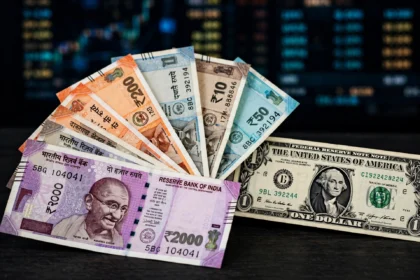
Mumbai woke up this week to a different kind of rupee battle. The Reserve Bank of India has quietly widened its defence of the currency well beyond its usual dollar sales, tightening monetary conditions across the board to make betting against the rupee expensive, according to a Reuters report citing two people familiar with the central bank’s thinking. The message from Mint Street is unmistakable: the fight for the rupee will no longer be fought only in the spot market.
The move follows a turbulent few months for the currency. The rupee, one of Asia’s worst performers this year with a loss of about 6 per cent, threatened to breach its previous low of 96.96 to the dollar earlier this month. It has since clawed back to around 94.71, helped by heavy intervention and a softer US dollar. But traders say the recovery is fragile, and the RBI knows it.
The toolkit is getting bigger
Since March, the RBI has mobilised roughly 150 billion dollars through special inflow measures, including a subsidised dollar-deposit scheme aimed at the Indian diaspora. On top of that, it has cut foreign exchange position limits for banks, imposed reserve requirements on large hedging transactions and opened a special window that lets government oil companies buy dollars directly from the central bank, taking pressure off the open market.
The October policy meeting added a new weapon: interest rates themselves. The Monetary Policy Committee raised the repo rate by 25 basis points to 5.5 per cent on October 7, the first hike in nearly four years, and shifted its stance to calibrated tightening. Alongside, the RBI has been draining liquidity through bond sales and nudging domestic bond yields higher. Yields have climbed 45 to 60 basis points since early September, and the cost of betting against the rupee has hit a five-year high.
“The central bank is in calibrated tightening mode and that means tightening across the board,” one source told Reuters, adding that the RBI would keep assessing whether further steps, including liquidity measures, were needed.

A quiet reversal at the top
Perhaps the most telling shift came from Governor Sanjay Malhotra himself. In an interview, he said monetary policy could not be entirely separated from financial stability, a clear reversal of the bank’s earlier position that interest rates would not be used to defend the currency. Traders took the hint immediately, ramping up bets on further rate hikes.
The swaps market is now pricing in the chance of an outsized move at the December policy review. HSBC expects a 50 basis point hike in December, joining State Bank of India’s call, and the sources say the MPC could formally put a 50 basis point increase on the table if inflation conditions warrant front-loading the hikes.
Pranjul Bhandari, HSBC’s chief India economist, described the playbook as feeling like a re-run of 2013’s measures, “but in reverse order”, with markets now asking whether a series of rate hikes is next. Back in 2013, the RBI first raised its short-term borrowing rate by 200 basis points before moving to mop up dollars. The sources indicate a repeat of that aggressive playbook is unlikely this time, partly because banks rarely tap the marginal standing facility window in surplus liquidity conditions, which blunted that tool’s impact last time.
Why the defence is costing so much
The numbers behind the rupee pressure are stark. Sustained spot-market dollar sales have pushed foreign exchange reserves down to about 734.6 billion dollars as of October 2, roughly 51 billion dollars below their early-September peak. The RBI’s net forward dollar liabilities stood near 200 billion dollars at the end of September, and import cover is close to its lowest level since 2013.
The pressure comes from several directions at once. Elevated global crude prices have inflated India’s energy import bill, US Treasury yields remain high, and overseas investors have net sold nearly 33 billion dollars of Indian equities through 2026. Foreign investors even turned net sellers of Indian debt in August, snapping a four-month buying streak.
For now, higher Indian yields are pulling in one direction that helps: they support demand for local debt and could draw debt inflows to offset the equity outflows. “Rate hike supports policy credibility, preserves some interest-rate carry, and reduces the incentive to position for further rupee weakness,” said Norbert Ling of Invesco.
The risk of overdoing it
The RBI is walking a narrow line. Very quick tightening risks hobbling domestic demand at a moment when the economy is absorbing an energy shock. India grew 7.8 per cent in the April to June quarter, but growth is expected to slow in the second half of the fiscal year.
One source noted that nearly 60 per cent of loans are linked to external benchmarks such as the policy rate, which means higher rates pass through to borrowers quickly and can hurt small borrowers first. Alessia Berardi of Amundi warned that using rates to target the currency would tighten conditions for an economy already dealing with expensive energy, arguing that policy should stay anchored to the inflation target, which is expected to re-enter the tolerance band early in 2027.
Strategists remain cautious. S&P Global Market Intelligence and Mizuho Securities both see the rupee weakening toward 97 to 98 per dollar by late 2026 or early 2027 unless conditions improve. For households, the rupee’s path matters more than it seems: a weaker currency makes imported fuel, edible oil and electronics costlier, feeding straight back into inflation.
The RBI’s calculation is that credibility now is cheaper than damage control later. Whether that gamble pays off will be clear by December, when the next policy review decides if the front-loading begins.
FAQs
Why is the rupee under pressure? A mix of elevated global crude prices, high US yields pulling money out of India, and heavy foreign selling of Indian equities, nearly 33 billion dollars this year, have weighed on the currency.
What new steps has the RBI taken? Beyond dollar sales, it has raised the repo rate to 5.5 per cent, drained liquidity through bond sales, imposed reserve requirements on large FX hedges, cut banks’ FX position limits and given oil companies a direct dollar window.
How much have forex reserves fallen? Reserves stood at about 734.6 billion dollars as of October 2, down roughly 51 billion dollars from their early-September peak.
Will there be another rate hike in December? Traders and analysts, including HSBC and SBI, are building in a 50 basis point hike at the December review if inflation stays high. The RBI sources say front-loading is on the table.
What does this mean for ordinary Indians? Higher rates can make loans costlier, especially since most loans are linked to external benchmarks. A weaker rupee also raises the cost of imported fuel and goods, adding to inflation.
Informeia will track the RBI’s December policy review and its next moves on the rupee. For more on how monetary policy affects your money, keep reading Informeia’s Economy section.