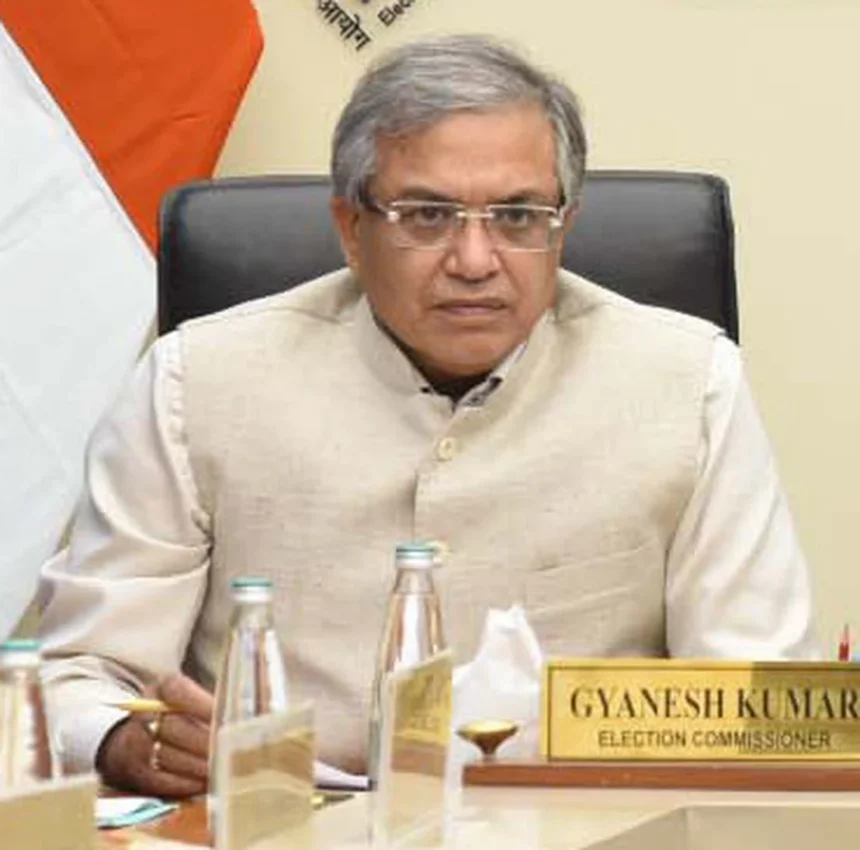
New Delhi, October 25: The Opposition INDIA bloc has announced a two-step political offensive against Chief Election Commissioner Gyanesh Kumar, starting with a public impeachment proceeding in the national capital on October 30 and ending with a massive Dilli Chalo march to Ramlila Maidan on November 1.
Congress general secretary (organisation) K.C. Venugopal announced the plan on Saturday, October 24, in a post on X. Congress president Mallikarjun Kharge has written to all INDIA bloc parties, asking their leaders and workers to be present in Delhi in full force.
“After this Public Impeachment, we will hold a Dilli Chalo March against Vote Chori culminating at Ramleela Maidan on November 1st, where at least a million concerned citizens will participate,” Venugopal wrote.
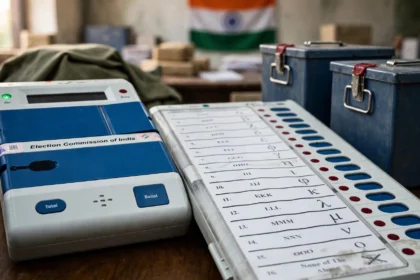
The announcement sharpens a confrontation that has been building for weeks over the Election Commission’s Special Intensive Revision (SIR) of electoral rolls. The Opposition alleges that eligible voters risk being left off the rolls, a charge the poll body and the ruling side have rejected, saying the Commission works independently and within the law.
What happens on October 30
The October 30 programme will be a mock Parliament session combined with a mock impeachment proceeding against Kumar. According to reports, it will be held on the lawns of the Ashoka Hotel in New Delhi in the afternoon, with INDIA bloc leaders, legal experts, judges and members of the public invited for a detailed discussion.
CPI general secretary D. Raja confirmed the venue and timing, saying the session will give the Opposition a public platform to lay out its case against the Chief Election Commissioner at length, rather than in slogans alone.
The date has shifted once already. The event was initially planned for October 28, but organisers say no suitable venue was available that day. Talkatora Stadium was among the options considered before the Ashoka Hotel was finalised.
Why the Opposition is doing this
At the heart of the campaign is the SIR exercise, a detailed revision of voter lists that the Opposition says needs far greater transparency. Congress leaders have argued that the verification methods used could lead to wrongful exclusions, and they have demanded Kumar’s resignation.
The campaign has already moved through the streets and the courts. Earlier this month, Opposition leaders marched to the Election Commission, Rashtrapati Bhavan and the Supreme Court. Protests in different parts of the country over the last fortnight have also demanded the Chief Election Commissioner’s resignation.
What a real impeachment would actually require
It is important to be clear about what October 30 is, and what it is not. The proceeding will carry no constitutional or legal weight. It cannot remove the Chief Election Commissioner from office.
Under Article 324(5) of the Constitution, the CEC can be removed only in the same manner and on the same grounds as a judge of the Supreme Court, that is, on grounds of proved misbehaviour or incapacity, through a parliamentary procedure. In practice, that means a two-thirds majority in Parliament.
The Opposition has already tried the parliamentary route. Leaders say they are planning to submit an impeachment notice in Parliament for a third time. Notices moved in the first attempt were rejected in both the Lok Sabha and the Rajya Sabha, while notices from the second attempt are still pending in the Upper House.
The November 1 march
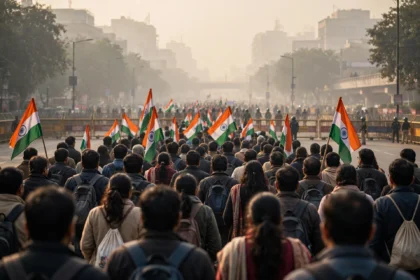
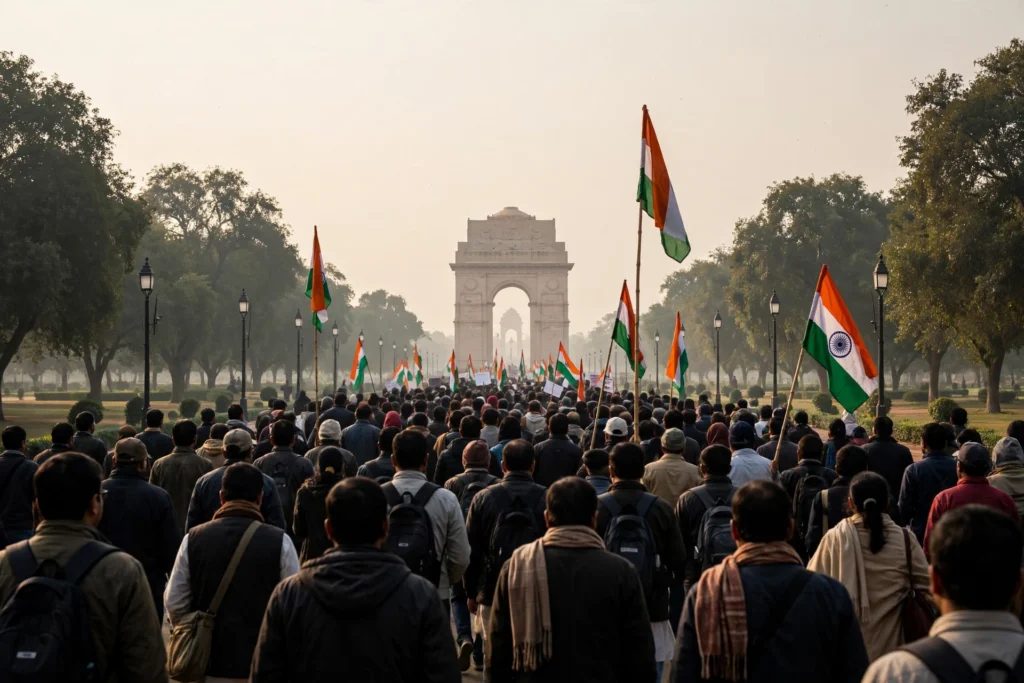
Two days after the mock impeachment, the focus shifts from a hotel lawn to the streets. The Dilli Chalo march on November 1 will culminate at Ramlila Maidan in central Delhi, a ground long associated with large political gatherings.
Venugopal has set an ambitious target of at least one million participants. Congress leaders have spent the last few days meeting state units and Delhi party workers to prepare for the mobilisation.
The march is being projected as one of the alliance’s largest street mobilisations since the 2024 general elections.
What to watch next
- Whether all INDIA bloc constituents turn up in full strength in Delhi between October 30 and November 1, as Kharge has requested.
- Whether the third impeachment notice in Parliament is admitted, and how the government responds to it.
- Whether the Election Commission issues any fresh clarification on the SIR exercise before October 30.
- How large the November 1 turnout at Ramlila Maidan actually is, against the one-million target.
FAQs
What is the INDIA bloc planning on October 30?
A public impeachment proceeding, combined with a mock Parliament session, against Chief Election Commissioner Gyanesh Kumar at the Ashoka Hotel in New Delhi.
Can a public impeachment remove the CEC?
No. It is a symbolic political exercise with no legal force. A real removal requires proved misbehaviour or incapacity and a two-thirds parliamentary majority, like the removal of a Supreme Court judge.
What is the Dilli Chalo march on November 1?
A mass march against alleged vote theft, culminating at Ramlila Maidan in Delhi, with the Opposition targeting participation of at least one million citizens.
Who announced the plan?
Congress general secretary (organisation) K.C. Venugopal announced it on October 24, saying Congress president Mallikarjun Kharge has asked all INDIA bloc parties to be present in Delhi in full force.
What is the SIR row about?
The Special Intensive Revision of electoral rolls. The Opposition alleges it could exclude eligible voters, while the Commission maintains the exercise is lawful and independent.
The INDIA bloc’s October 30 proceeding and November 1 march will test whether a street campaign can move a constitutional argument. Informeia will track both events as they unfold.