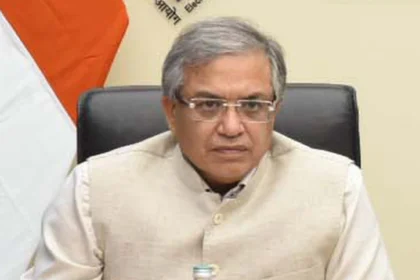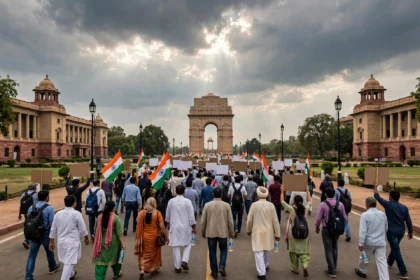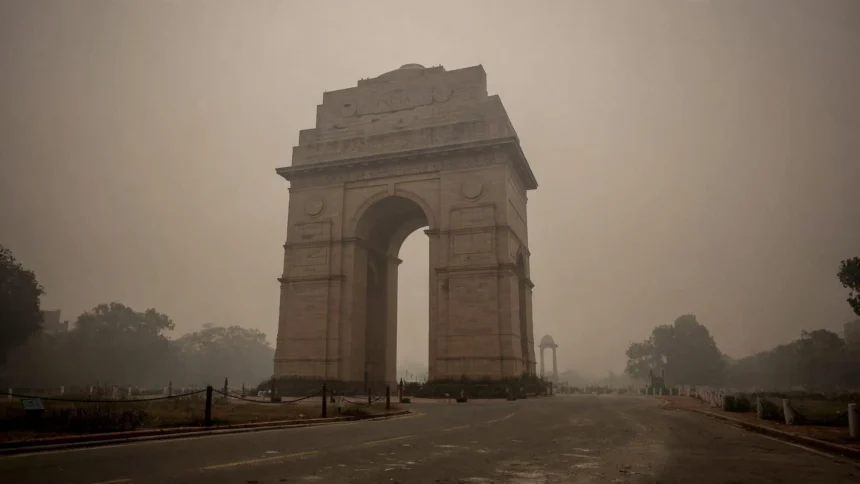
Delhi woke up to another grey Sunday, and this time the Centre has decided to come down hard on the industries adding to the toxic air. In a high-level review meeting on Saturday, Union Environment Minister Bhupender Yadav ordered the immediate sealing of 191 industrial units across Delhi and the National Capital Region that have failed to install air pollution control equipment despite repeated warnings.
The order is the sharpest enforcement step of this winter so far. It comes as the capital’s air stays firmly in the “very poor” category, with the average Air Quality Index (AQI) recorded at 351 at 8.05 am on Sunday, according to data from the Central Pollution Control Board (CPCB). Eight of the 58 active monitoring stations in the city recorded AQI levels above 400, which falls in the “severe” band. The reading at IIT Delhi was the worst in the city at 426.
191 units ignored repeated directions
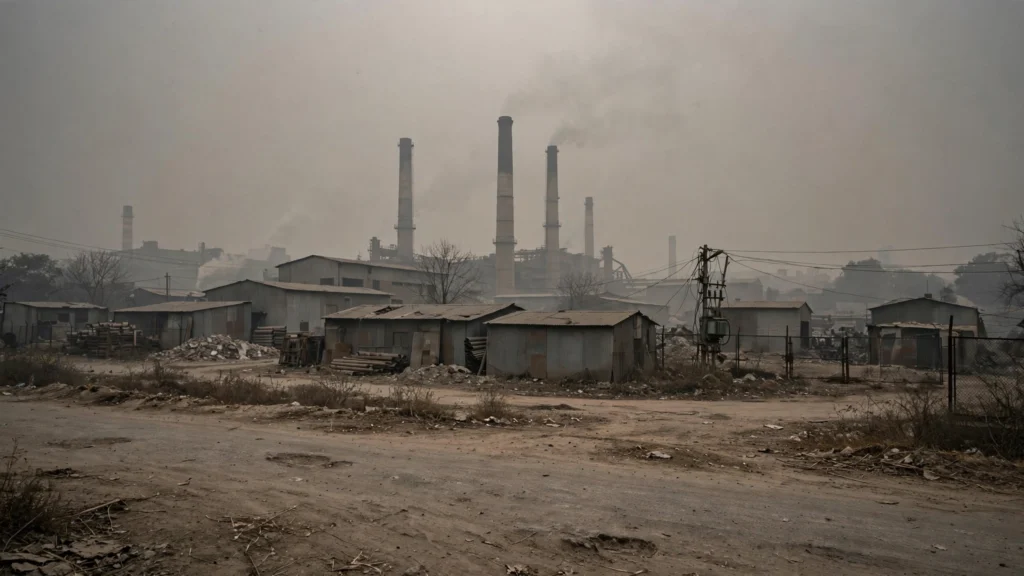
The Central Pollution Control Board has been directed to seal the 191 non-compliant industries at once. These are units that have neither installed Air Pollution Control Devices (APCDs) nor placed orders for their installation, even after repeated directions and show-cause notices.
The action follows an October 30 order from the CPCB, which told the pollution control boards of Haryana, Uttar Pradesh and Rajasthan, along with the Delhi Pollution Control Committee, to act against units that had failed to install the required equipment or place orders for it.
The crackdown is rooted in a February direction from the Commission for Air Quality Management (CAQM), which set a particulate matter emission limit of 50 mg per cubic metre for 17 highly polluting industrial categories, including food processing, textiles and metals. Large and medium industries were told to meet the new limit by August 1, while the remaining identified industries were given until October 1. The norm replaced the March 2022 standard, which allowed up to 80 mg per cubic metre.
98 per cent of units are now being watched live
The meeting also reviewed how far monitoring has come. Of the 2,345 targeted industrial units in the region, 2,298 have been connected to Online Continuous Emission Monitoring Systems (OCEMS), accounting for nearly 98 per cent of the target. The remaining 47 units have either been closed or sealed.
Minister Yadav stressed strict enforcement of the 50 mg limit, with closure, electricity disconnection and sealing for units that do not comply. He also pointed to technology-led monitoring, including Delhi’s Integrated Command and Control Centre, launched on October 5, and the CAQM’s PAVAN platform for real-time tracking of pollution, emissions and compliance.
Officials put on notice too
The crackdown is not limited to industries. Yadav asked Delhi, Haryana, Uttar Pradesh and Rajasthan to nominate secretary-level officials for 15 cities across the National Capital Region to oversee pollution-control measures. These officers will carry out field inspections and submit weekly reports to the CAQM. The ministry has also asked the CAQM to issue notices to non-performing officers.
States were also told to inspect 3,000 construction sites, and the CAQM warned that it would initiate criminal prosecution against Transport Department officials in states that fail to install Automatic Number Plate Recognition (ANPR) cameras by November 30.
Delhi’s air: better than Friday, still very poor
There has been a small improvement in the numbers, though not enough to bring relief. The city’s 24-hour average AQI settled at 367 on Saturday, a marginal improvement from 373 on Friday. On Friday morning, the average had slipped to 403, placing the capital in the “severe” category.
On Sunday morning, IIT Delhi recorded an AQI of 426, while Chandni Chowk registered 384, North Campus recorded 400, Pusa stood at 403 and NSUT Jaffarpur recorded 407, according to CPCB data. PM2.5 was the lead pollutant at 51 of the 59 monitoring stations.
Stage 3 restrictions under the Graded Response Action Plan (GRAP) are already in force across the National Capital Region, imposed by the CAQM on November 6 as a precaution after air quality deteriorated towards the “severe” category. Stage 3 includes a ban on non-essential construction work and the closure of stone crushers and mining activities, along with curbs on certain categories of vehicles.
Forecasts indicate that Delhi’s air quality will remain in the very poor category until November 17, and immediate major relief from the toxic haze is unlikely. The Delhi government’s portal has advised residents to stay indoors and run air purifiers where possible, and has listed pollution-control helpline 1800 202 5051 for reporting open burning, dust and industrial smoke.
What happens next
The sealing of the 191 units will be the first test of whether this winter’s enforcement is different from previous years. The weekly reports from the secretary-level officers will show whether the crackdown reaches beyond the headlines, and the November 30 deadline for ANPR cameras will test whether states follow through on the Centre’s warnings. For now, Delhi’s residents will watch the AQI each morning and hope the grey sky lifts before the week is out.
FAQs
How many industries has the Centre ordered sealed in Delhi-NCR?
The Centre has directed the CPCB to immediately seal 191 industrial units that failed to install air pollution control devices or place orders for them despite repeated directions and show-cause notices.
What is Delhi’s AQI today?
Delhi’s average AQI was recorded at 351 at 8.05 am on Sunday, November 15, which falls in the “very poor” category. IIT Delhi recorded the worst reading in the city at 426, in the “severe” band.
What is GRAP Stage 3?
Stage 3 of the Graded Response Action Plan is a set of emergency anti-pollution measures triggered when Delhi-NCR’s air quality nears the “severe” category. It includes a ban on non-essential construction work, closure of stone crushers and mining, and curbs on certain vehicles. It has been in force since November 6.
What is the emission limit industries must meet?
The CAQM has set a particulate matter emission limit of 50 mg per cubic metre for 17 highly polluting industrial categories. Large and medium industries had to meet it by August 1, and the remaining identified industries by October 1.
Where can Delhi residents report pollution?
Residents can report open burning, dust and industrial smoke on the Delhi government’s pollution-control helpline, 1800 202 5051.
Delhi’s air crisis is far from over, but Saturday’s orders show the Centre is now willing to shut down polluters and hold officials to account. Whether the enforcement holds through the winter will decide how much cleaner the capital’s air gets.