
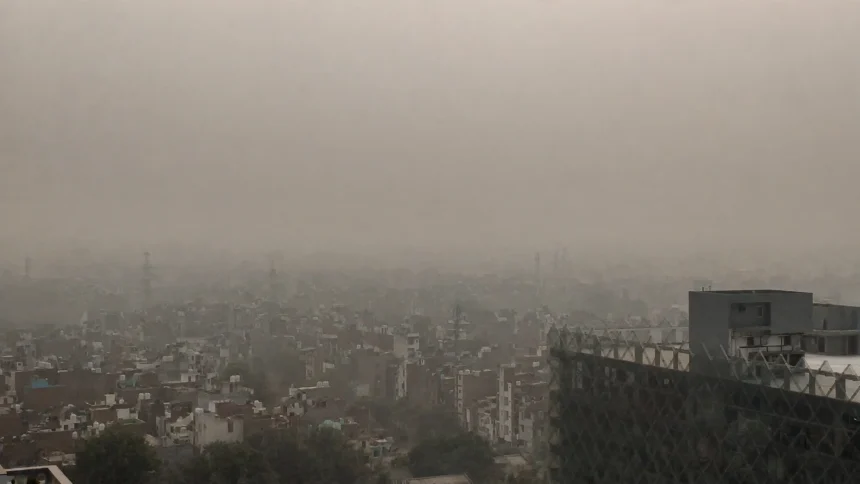
Delhi woke up to a thick grey blanket on Friday morning, and the numbers confirmed what residents could already feel in their throats. The capital’s overall air quality index touched 402, slipping back into the severe category after a brief spell of slightly cleaner air. Visibility dropped across several parts of the city as smog mixed with morning fog, and the weather department has warned that the haze is here to stay for a few more days.
Data from the Central Pollution Control Board showed 33 of Delhi’s 58 monitoring stations recording severe pollution levels on Friday morning. The India Meteorological Department has forecast that air quality in the capital is likely to swing between very poor and severe until November 16, which means there is no quick relief in sight.
Where the air was worst
IIT Delhi recorded the highest reading in the city at 487, close to the top of the severe band. Chandni Chowk and North Campus followed at 476 each. Early morning readings told the same story: at 5 am, Chandni Chowk stood at 474 and North Campus at 474, with several other stations also deep in the severe band. Ashok Vihar registered 403 and IGI Airport 402, showing that the problem stretched across the city rather than sitting in one pocket.
Thursday had offered a small breather. The hourly citywide reading at 7 am on Thursday was 321, in the very poor category, but even that was 22 points higher than the same time on Wednesday. Forecasters had already warned that Friday would be worse, with the Indian Institute of Tropical Meteorology projecting the PM2.5-driven AQI could climb to around 428 by Friday morning. That forecast has now come true.
Why the air turned severe again
A mix of factors is behind the relapse. Calm winds and cool November mornings trap pollutants close to the ground, and the post-Diwali load of smoke and dust has not fully cleared. Stubble burning in Punjab remains a contributor, and the Commission for Air Quality Management has now directed Punjab district authorities to assess and verify stubble burning sites after a recent rise in incidents.
The weather is not helping. The IMD has issued an alert for moderate to shallow fog in parts of Delhi on Friday, which will keep visibility low during the morning hours. No rain is expected today, with the minimum temperature around 17 degrees Celsius and the maximum near 29 degrees. Without wind or rain to wash the air clean, the smog simply hangs over the city.
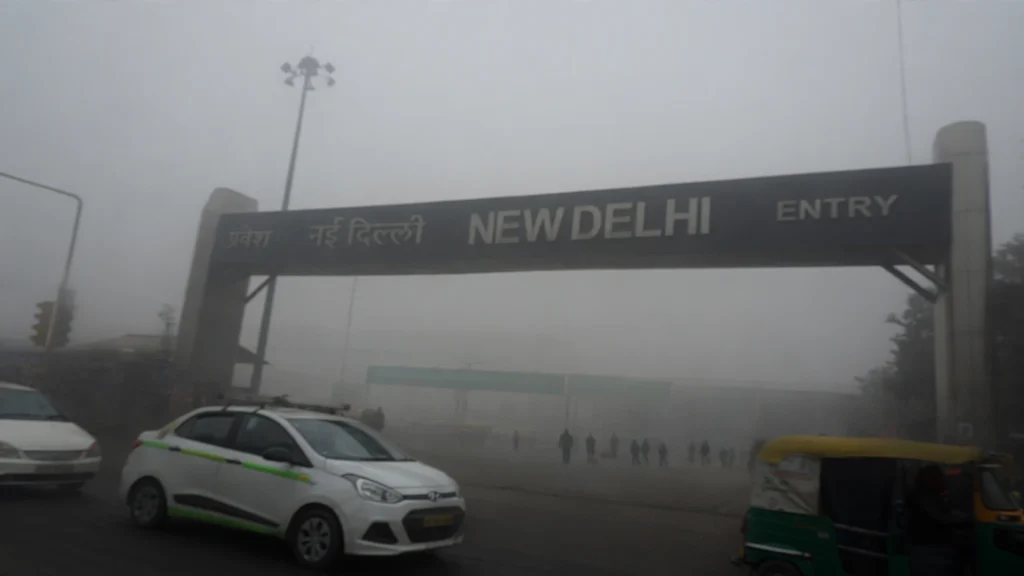
GRAP-III curbs tightened across NCR
Stage III of the Graded Response Action Plan has been in force across Delhi-NCR since November 6, and enforcement is now being stepped up. In Gautam Buddh Nagar, District Magistrate Medha Roopam has directed officials to strictly implement the ban on construction and demolition activities under GRAP-III. The directions came during a virtual review meeting to check compliance after the air quality body invoked Stage III across the region.
Under the current stage, non-essential construction work is banned, road dust suppression has been intensified and schools up to Class V are running hybrid classes. Offices have been advised to allow work from home where possible, and residents have been urged to use public transport, avoid open burning and wear masks outdoors.
Health advice: who should be careful
Doctors say prolonged exposure to air at these levels is risky for everyone, but three groups need extra caution: children, older people and those with asthma, heart disease or other respiratory conditions. At an AQI above 400, even healthy adults can develop a sore throat, watering eyes and a nagging cough after a morning outdoors.
Health experts advise limiting prolonged outdoor activity, especially early in the morning when the smog is densest. Avoid strenuous exercise outdoors, keep windows shut during peak smog hours, and wear a well-fitting mask if you must step out. People with breathing trouble should keep their inhalers and medicines handy and seek medical help if symptoms worsen rather than waiting it out.
The timing is awkward for the city. The four-day Chhath festival opens across Delhi and the east today, and thousands of devotees will gather at ghats in the morning hours. With the smog at its thickest before sunrise, those heading out for the rituals should take the same precautions and keep the time spent outdoors as short as possible.
What happens next
The forecast offers little comfort. The IMD expects air quality to stay between very poor and severe until November 16, and the early warning system shows several stations holding in the severe band through the day. Relief will depend on a change in wind speed or a spell of rain, and neither is on the cards for now.
For Delhi, this is a familiar November pattern: a day or two of marginal improvement, then a sharp slide back into severe air. The difference this year is that the curbs are already in place and enforcement is being pushed harder than before. Whether that is enough to pull the city out of the severe zone will be clear over the weekend.
FAQs
What is Delhi’s AQI today?
Delhi’s overall AQI touched 402 on Friday morning, November 13, putting the city back in the severe category. IIT Delhi recorded the highest reading at 487.
What does an AQI of 402 mean?
Under the CPCB scale, readings from 301 to 400 are very poor and 401 to 500 are severe. At severe levels, the air can affect healthy people and seriously affect those with heart or lung disease.
How long will the smog last?
The IMD has forecast that Delhi’s air quality is likely to remain between very poor and severe until November 16, with no rain expected to clear the air.
What is GRAP-III?
Stage III of the Graded Response Action Plan is a set of emergency curbs for severe air quality, including a ban on non-essential construction, dust control measures and hybrid classes for young schoolchildren. It has been in force in Delhi-NCR since November 6.
Should I go out for a morning walk today?
It is better to skip outdoor exercise while the AQI is above 400, especially in the early morning. If you must go out, wear a mask, keep it brief and avoid busy roads.
Delhi’s air will be watched closely through the weekend. For now, the advice is simple: stay indoors when you can, mask up when you cannot, and keep an eye on the hourly readings before stepping out.