The Election Commission of India on Thursday announced a Special Summary Revision of electoral rolls in four states and two Union Territories, setting in motion a two-and-a-half-month exercise that will end with final voter lists on 21 January 2027. The revision will cover Arunachal Pradesh, Mizoram, Odisha and Sikkim, along with the Union Territories of Chandigarh and Dadra and Nagar Haveli and Daman and Diu.
For voters in these six states and Union Territories, the announcement matters in a very practical way. The draft rolls will be published on 30 November, and anyone who finds their name missing, or spots an error in their entry, will have a full month to get it corrected.
Six states and Union Territories covered
The revision applies only where the Special Intensive Revision (SIR) of electoral rolls has already been completed and the final rolls published.
These six are in addition to the 17 states and Union Territories covered by the Commission’s 15 October order, issued under Section 21 of the Representation of the People Act, 1950, taking the exercise to 23 states and Union Territories in all. The Commission had skipped the annual revision in 2026 because the intensive revision was under way in phases, and with that exercise now complete in these six, the poll body has moved back to the regular annual cycle.
Key dates in the revision schedule
The Commission has laid out a clear calendar:
- 20 November 2026: Rationalisation and rearrangement of polling stations to be completed.
- 30 November 2026: Integrated draft electoral rolls published.
- 30 November to 30 December 2026: Period for filing claims and objections on the draft rolls.
- 16 January 2027: Claims and objections to be disposed of by this date.
- 21 January 2027: Final electoral rolls published.
- Qualifying date: 1 January 2027. Anyone who turns 18 on or before this date can seek enrolment.
The Commission will also accept advance applications from young citizens who will turn 18 on 1 April, 1 July and 1 October 2027.

How this revision differs from the SIR
The two exercises work very differently. A Special Summary Revision updates the existing rolls through additions, corrections and deletions, based on claims and objections filed by voters. The Special Intensive Revision, launched in 2025 and still under way in parts of the country, prepares the rolls afresh, with house-to-house verification.
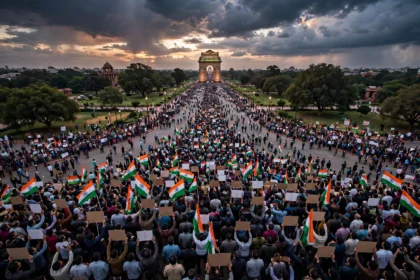
That distinction is also why the revision has been in the news. The SIR has been at the centre of a fierce political argument in recent weeks, with the opposition INDIA bloc alleging large-scale deletion of names and the government defending the exercise as a clean-up. The argument spilled onto the streets on 1 November, when the opposition held a rally at Delhi’s Ramlila Maidan, and the BJP answered with a 15-day nationwide campaign that ended on Thursday.
Why this revision matters now
The timing is not accidental. Several of the states covered by the revision are headed towards Assembly elections early next year, and clean, updated rolls are the foundation of any election. A voter whose name is missing from the list on polling day has no remedy left, which is why the Commission gives a full month for claims and objections.
What voters in these states should do
If you live in one of the six states or Union Territories, check the draft roll when it is published on 30 November, at the offices of electoral registration officers and on the Commission’s voter portal, voters.eci.gov.in.
If your name is missing, or if there is a mistake in your name, address or photograph, file a claim or objection during the window from 30 November to 30 December. New voters can apply for enrolment in Form 6, while corrections to existing entries can be sought through the prescribed forms on the portal. The booth-level officer in your area can also help with the paperwork, and it is worth doing this early in the window rather than leaving it to the last few days.
Frequently asked questions
Which states and UTs are covered by the voter roll revision?
Arunachal Pradesh, Mizoram, Odisha and Sikkim, and the Union Territories of Chandigarh and Dadra and Nagar Haveli and Daman and Diu, where the Special Intensive Revision has been completed.
When will the draft voter list be published?
On 30 November 2026. Voters can check their names at electoral registration offices and on voters.eci.gov.in.
What is the last date to file claims and objections?
Claims and objections can be filed from 30 November to 30 December 2026, and the final rolls will be published on 21 January 2027.
Who can enrol in this revision?
Anyone who turns 18 on or before 1 January 2027 can seek enrolment. Advance applications are also accepted from those who will turn 18 on 1 April, 1 July and 1 October 2027.
How is this revision different from the SIR?
The Special Summary Revision updates the existing rolls through additions and corrections, while the Special Intensive Revision prepares the rolls afresh with house-to-house verification. The revision announced on Thursday follows the SIR in states where that exercise is complete.
For voters in the six states and Union Territories, the message is straightforward: check your name on 30 November, and if something is wrong, use the month-long window to fix it. A clean voter list is the quiet work that makes polling day run smoothly.