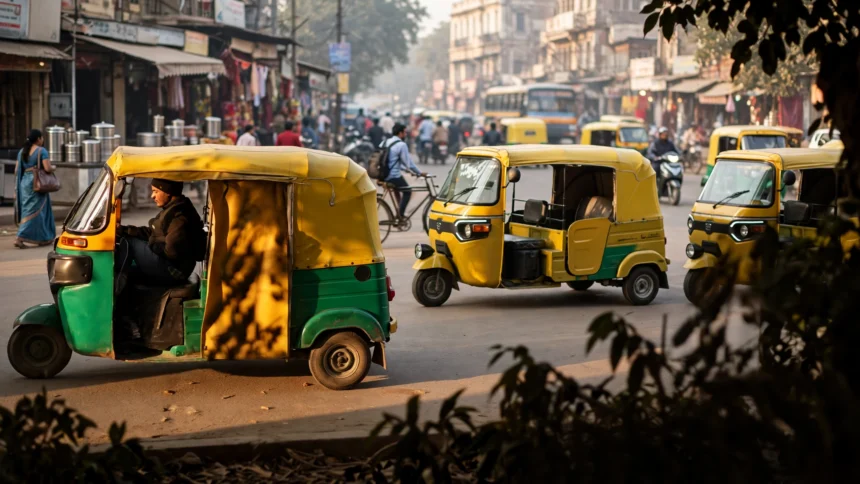
Every 90 seconds, a new electric three-wheeler rolls off the production line at a factory in India. It is a small, unglamorous machine, but it is now at the centre of the biggest electric vehicle story in the country. In September, nearly two out of every three new three-wheelers sold in India ran on a battery, not petrol or CNG, and India has become the largest market in the world for battery-powered auto rickshaws.
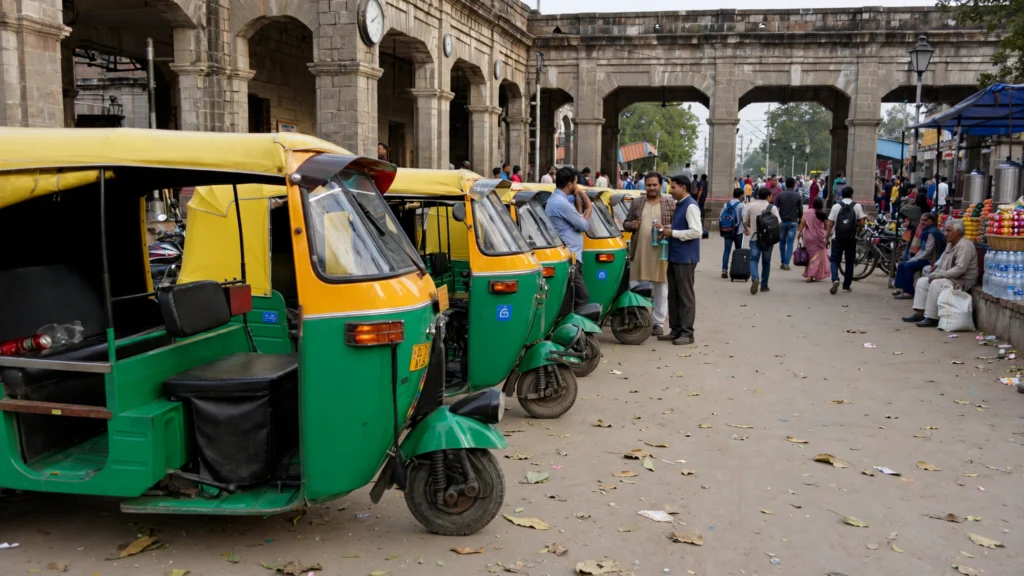
The change is easy to miss if you only watch car showrooms. Electric cars still make up only a small slice of new car sales. But step out of a railway station in Lucknow or Kanpur and the shift is right in front of you: rows of quiet, battery-run autos waiting for passengers.
The numbers behind the shift
Dealers retailed 1,32,570 three-wheelers in September 2026, up 22.25 percent on a year earlier, according to data from the Federation of Automobile Dealers Associations (FADA). Of those, 86,024 were electric, a 40 percent jump from the 61,434 sold in September 2025. That gave electric three-wheelers a 64.9 percent share of the segment, up from 56.7 percent a year ago.
Put that next to the rest of the market and the gap is striking. In the same month, only about 8.5 percent of new cars and 11.6 percent of new two-wheelers sold in India were electric. Three-wheelers are not just ahead in the EV race, they are laps ahead.
Bajaj Auto led the electric three-wheeler chart in September, followed by the Mahindra Group and TVS Motor Company. Analysts say the next phase of growth may be steadier, driven more by replacement demand and by CNG auto owners switching to electric.
From roadside jugaad to the factory floor
Electric rickshaws first appeared on the streets of Delhi more than a decade ago, and they did not look like a revolution. Many were assembled in roadside workshops, with Chinese-made batteries fitted onto modified pedal tricycles. They were cheap, rough around the edges, and mostly ignored by the big manufacturers.
That has changed completely. At Mahindra Last Mile Mobility’s plant in Zaheerabad, Telangana, workers and robots now build these vehicles on a proper production line, racing to meet demand. Mahindra LMM chief executive Suman Mishra told AFP the company’s EV penetration has grown six times in the last five years.
Why drivers are switching
The honest answer is money. A petrol three-wheeler costs more than twice as much per kilometre to run over its lifetime as an electric one, according to a 2025 estimate by Indian think tank CEEW. For a driver who spends all day on the road, that gap adds up fast. Drivers switching to electric report saving several hundred rupees a day on fuel, money that goes straight towards paying off the loan on the vehicle itself. Mahindra’s work in this space has drawn global attention too: the company is one of 15 finalists shortlisted for the Earthshot Prize, the environmental award that Prince William will present in Mumbai on November 17.
Battery prices have fallen steadily, and petrol prices have stayed high, so the maths keeps moving in the electric auto’s favour. Government incentives have helped as well, cutting the upfront price for buyers who qualify.
What is still missing
The boom is not evenly spread. E-rickshaws are common across northern India, queueing outside stations and markets, but they are far less visible in Mumbai, where limited parking and charging infrastructure make ownership harder. For drivers without a fixed parking spot, finding a reliable place to plug in every night is still a daily worry.
Even so, the direction of travel is clear. The auto rickshaw has always been India’s workhorse for short trips, and the electric version does the same job for less money and with no exhaust smoke. What began as a roadside experiment is now a factory-built industry, and every 90 seconds, another one joins the road.
FAQs
How many electric three-wheelers were sold in India in September 2026?
Dealers retailed 86,024 electric three-wheelers in September 2026, up 40 percent from a year earlier, according to FADA data. That was 64.9 percent of all three-wheelers sold in the month.
Why are auto drivers switching to electric rickshaws?
Running costs. A petrol three-wheeler costs more than twice as much per kilometre to operate over its lifetime as an electric one, as estimated by think tank CEEW in 2025. Drivers also save several hundred rupees a day on fuel.
Which companies lead India’s electric three-wheeler market?
Bajaj Auto topped the electric three-wheeler sales chart in September 2026, followed by the Mahindra Group and TVS Motor Company.
Are electric rickshaws cheaper than petrol autos overall?
The electric version usually costs more to buy, but lower fuel and maintenance costs make it cheaper over its working life, which is why so many drivers have switched.
Where are e-rickshaws most common in India?
They are widespread across northern India, including cities like Lucknow, but less visible in Mumbai, where parking and charging space is limited.
India’s electric rickshaw boom did not arrive with a grand launch or a celebrity unveiling. It grew one short trip at a time, and it is now the quietest transport revolution on the country’s roads.