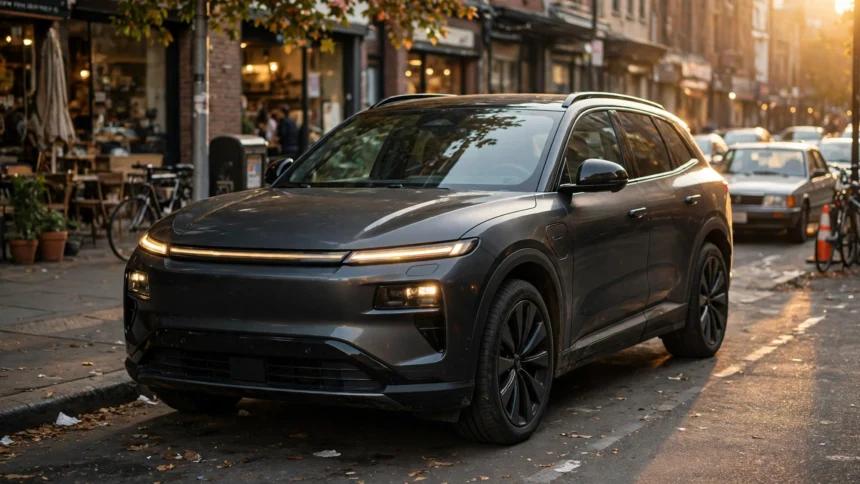
Tata Motors is reportedly gearing up to give its flagship SUV an electric heart. Fresh reports this week say the Tata Safari EV will break cover in January 2027, making it the company’s first three-row electric SUV and its most premium EV yet. Tata itself has not confirmed a launch date, a price or final specifications, so everything here is based on industry reports rather than an official announcement. But the fact that several auto publications are now pointing to the same January window suggests the wait is nearly over.
The Safari EV was earlier expected to arrive during the 2026 festive season. That window came and went without a launch, and January 2027 is now the timeline most reports agree on. If it holds, prices could be announced in January with deliveries following in February 2027.
Built on the Harrier EV’s platform
Under the skin, the Safari EV is expected to share Tata’s acti.ev+ architecture with the Harrier EV, stretching that proven formula into a bigger, three-row body above the Harrier EV in Tata’s electric range.
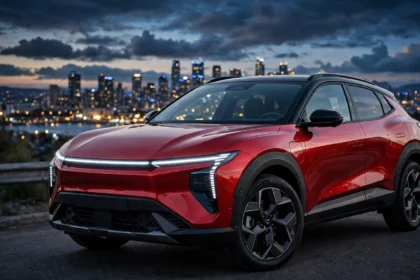
Spy shots of test cars have already hinted at the direction. Expect a closed-off grille, aerodynamically optimised alloy wheels, revised lighting and other EV-specific touches that set it apart from the diesel Safari, while keeping the big SUV’s familiar upright stance. Reports also mention a side step and a multi-link rear suspension setup, plus Tata’s TiDAL digital architecture layer.
Battery, range and all-wheel drive
This is where the Safari EV could make its strongest case. Reports point to three battery options:
- 65kWh for the entry variants, shared with the Harrier EV
- 75kWh for the mid and higher variants
- 80kWh possibly reserved for the top-spec variants, which would make it the largest battery Tata has ever fitted to an EV
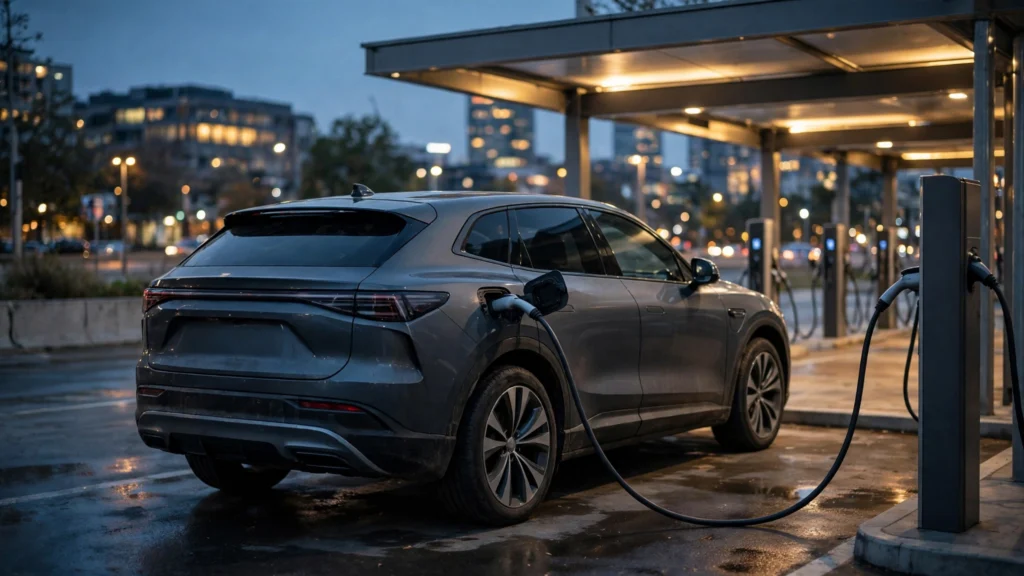
For reference, the Harrier EV’s 75kWh pack claims up to 627 km of range in rear-wheel-drive form and 622 km with all-wheel drive. The Safari EV, being slightly larger and heavier, may land in a similar ballpark or a touch lower, though certified figures will only come closer to launch. If the 80kWh pack materialises, it would give Tata a useful talking point against rivals.
Drive layouts are expected to mirror the Harrier EV as well. Most variants should get rear-wheel drive, while the range-topping versions are tipped to get Tata’s QWD dual-motor all-wheel-drive system. On the Harrier EV, that setup pairs a 158 PS front motor with a 238 PS rear motor for a combined output in the region of 354 hp and 504 Nm of torque. The Safari EV’s own numbers may differ slightly, but the intent is clear: this will be the most powerful Tata EV so far.
Room for six or seven, rivals waiting
Unlike most electric SUVs in this price band, the Safari EV is expected to come in both six-seater and seven-seater configurations. That alone sets it apart in a segment where three-row electric options are still rare, and it plays directly to the Safari nameplate’s family-car strengths.
The competition will not be standing still. The Mahindra XEV 9S, whose top variants use a 79kWh pack, is the most direct rival, while the recently launched MG Hector Tomahawk EV brings a 69.2kWh battery and a claimed range of up to 517 km. On paper, a Safari EV with an 80kWh option would edge both on battery size, though real-world range, charging speed and pricing will decide the actual contest.
What it might cost
Price estimates vary across reports. Some put the Safari EV roughly between Rs 25 lakh and Rs 35 lakh (ex-showroom), while others suggest a starting point closer to Rs 20 lakh. Either way, it will sit well above Tata’s current mainstream EVs and firmly in premium territory. Given Tata holds around 40 percent of India’s electric passenger car market, according to industry data cited in recent reports, the company will want this flagship to protect that lead rather than just add volume.
For buyers, the sensible move is to wait for the official reveal. The January timeline, the battery options and the all-wheel-drive variant are all still reports, not confirmations. But if even most of them hold true, the Safari EV will arrive as Tata’s biggest and most powerful EV yet, and one of the few genuine three-row electric family cars in India.
FAQs
When will the Tata Safari EV launch in India?
Reports point to January 2027, with prices possibly announced that month and deliveries starting around February 2027. Tata Motors has not officially confirmed the date.
What battery options will the Tata Safari EV get?
Reports suggest 65kWh and 75kWh packs, with a larger 80kWh battery possibly offered on top-spec variants. Final specifications are still unconfirmed.
Will the Safari EV get all-wheel drive?
Yes, according to reports. Lower variants are expected to be rear-wheel drive, while top variants should get Tata’s QWD dual-motor all-wheel-drive system.
How many seats will the Safari EV have?
It is expected to be offered in both six-seater and seven-seater layouts, like the diesel Safari.
What will the Tata Safari EV rival?
Its main rivals are expected to be the Mahindra XEV 9S and the MG Hector Tomahawk EV, both large electric SUVs in a similar price band.
We will update this story as soon as Tata Motors confirms the launch date, prices and official specifications.