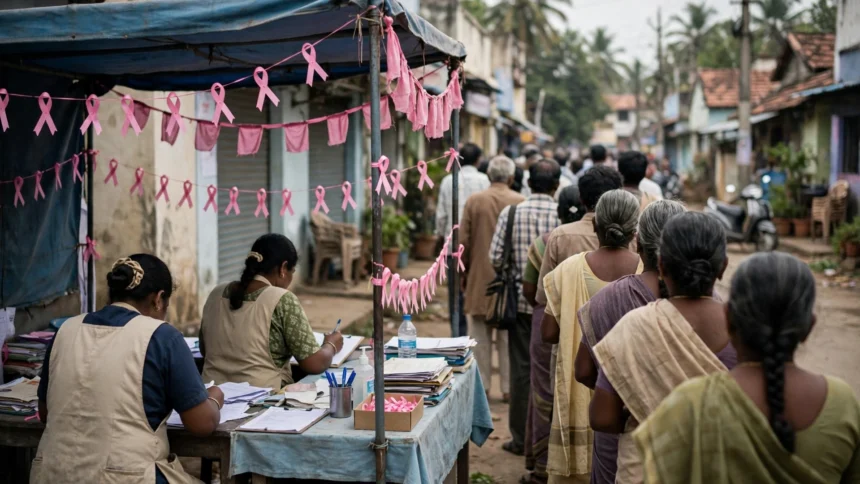
Chennai, October 30: A cancer screening camp at Sriperumbudur near Chennai today closed out a month of steady, on-ground work by the Indian Institute of Technology Madras and the Hyundai Motor India Foundation. More than 400 people turned up at the camp, the latest stop in a Pink October outreach that has now screened over 2,800 people across three states.
The initiative, called Hyundai Hope for Cancer, marked Pink October, the international breast cancer awareness month, with camps in Tamil Nadu, Maharashtra and Haryana through October 2026. Its idea is simple: take screening to people where they live, instead of waiting for them to walk into a hospital with symptoms.
That matters because early detection changes outcomes. A cancer found early is often easier and cheaper to treat, and far less frightening for the family than one found late. A camp in their own town lowers the barrier in a way a poster campaign rarely can.
Where the 2,800 screenings happened
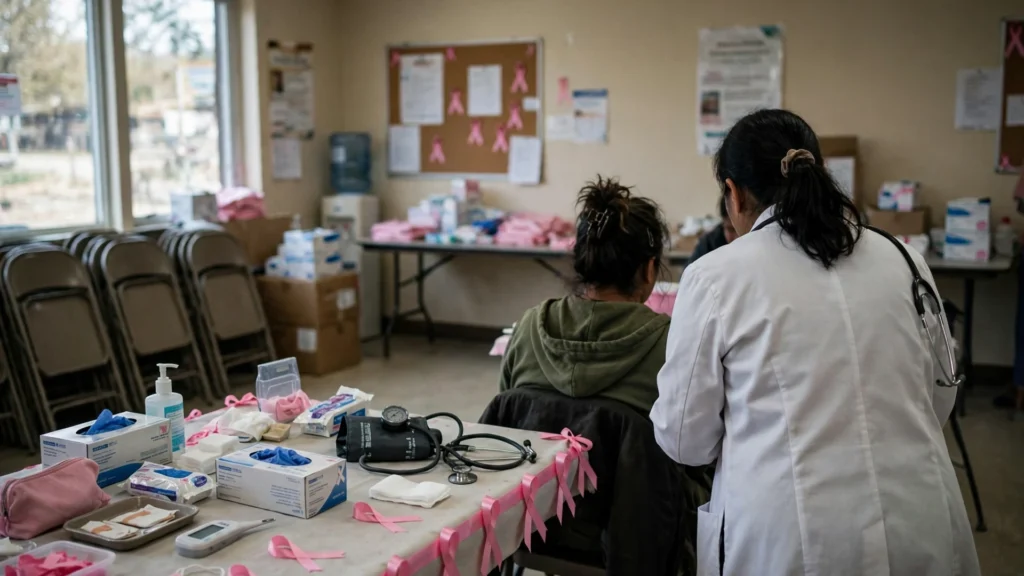
The October outreach reached more than 2,800 people in all. Tamil Nadu accounted for the largest share, with over 1,700 people screened, followed by more than 600 in Maharashtra and over 500 in Haryana. The Sriperumbudur camp today added over 400 people to that tally, with organisers using the day to talk plainly about why early detection matters and what screening actually involves.
The camps are not limited to one kind of cancer. The wider programme covers some of the most common cancers in India, including oral, cervical, breast, colon and prostate cancers, and it pairs screening with awareness sessions so people leave knowing what to watch for, not just with a test result.
In Maharashtra, the outreach included screening camps on October 15 and 16 at a school in Vadgaon-Maval near Pune, where more than 500 people were screened. The programme also supported HPV vaccination at a hospital in Talegaon-Maval in Pune, a preventive step against cervical cancer that is often missed in conversations about treatment.
A programme that goes beyond one month
Pink October gave the drive its theme, but Hyundai Hope for Cancer is a much larger effort. The Rs 64 crore initiative brings together community screening, preventive healthcare, help for children with cancer, and advanced cancer research at IIT Madras.
So far, the initiative has conducted more than 420 free cancer screening camps across the country and reached over 72,000 people. More than 3,600 people have been identified for follow-up care, and 20 confirmed cancer cases have been picked up through the programme, people who might otherwise have found out much later.
That follow-up link is what turns a one-day camp into a real health intervention: a suspicious result must lead to a hospital visit, a confirmatory test and a treatment plan.
Why Pink October still matters
Breast cancer awareness month exists for a reason that shows up in survey after survey: many women do not get screened simply because they feel fine. A recent Chennai survey by an IIT Madras team found that nearly three in four women surveyed had never been screened for breast cancer, and the most common reason given was having no symptoms.
That logic is dangerous, because early breast cancer often has no symptoms at all. By the time a lump is obvious, the disease may already be advanced. Screening exists for exactly that gap.
Alongside the camps, IIT Madras hosts the Hyundai Centre for Cancer Genomics, whose Bharat Cancer Genome Atlas documents the genomic landscape of cancers in India from Indian patient data.
What this means for ordinary families
For families, the practical takeaway is:
- Do not wait for symptoms to think about screening, especially for breast, cervical and oral cancers.
- Ask your doctor which screening fits your age and risk, and how often it should be repeated.
- If a free screening camp comes to your town, use it. It costs a morning, and it can save years.
- If you are offered follow-up after screening, go. A referral is not a diagnosis, it is a next step.
- For adolescents, ask about HPV vaccination, which protects against the virus behind most cervical cancers.
The Sriperumbudur camp today will not make headlines on its own. But multiplied across 420 camps and 72,000 people, that quiet work is how screening stops being a slogan and starts being a habit. Pink October ends this week. The need it highlights does not.
FAQs
What is the Hyundai Hope for Cancer initiative?
It is a joint IIT Madras and Hyundai Motor India Foundation effort combining free community screening, HPV vaccination, help for children with cancer, and cancer genomics research.
How many people were screened in Pink October 2026?
More than 2,800 people were screened across Tamil Nadu, Maharashtra and Haryana during October 2026, including over 400 at a camp in Sriperumbudur near Chennai on October 30.
Which cancers do the camps screen for?
The programme covers common cancers including oral, cervical, breast, colon and prostate cancers, along with awareness sessions on early detection.
Why is screening important even without symptoms?
Many early cancers cause no symptoms. Screening can find them when treatment is simpler and more effective, rather than waiting until the disease is advanced.
What happens if a screening result needs follow-up?
People are referred for further checks and care. The programme reports over 3,600 follow-ups so far, with 20 confirmed cases found through its camps.
Stay tuned to Informeia for more health news and explainers that matter to your family.