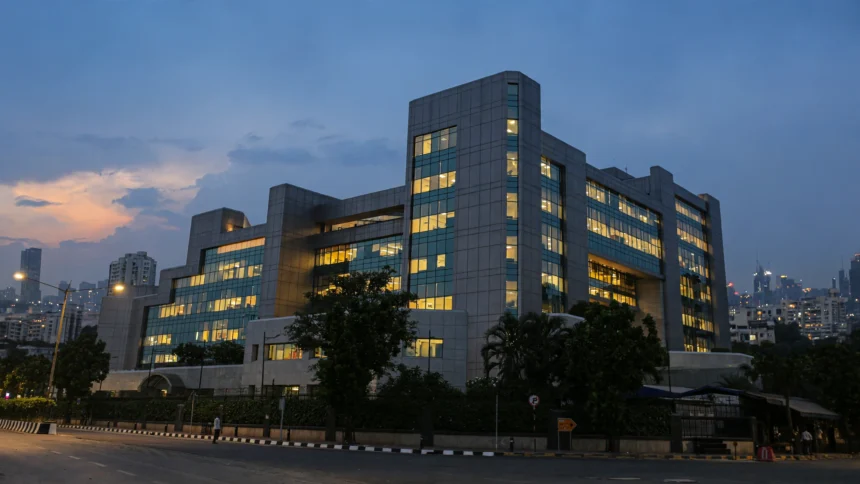
The National Stock Exchange of India has switched on a new kind of cooling inside its own data centre, and the reason is simple: its artificial intelligence ambitions are now too hot for ordinary air. On Monday, the exchange said it has deployed direct-to-chip liquid cooling to run its growing AI workloads, a first for Indian capital markets, and it plans to push its graphics processor fleet past 80 units this quarter on the way to 224.
The move puts the exchange at the front of a quiet race inside Indian finance. Banks, brokerages and exchanges are all leaning harder on AI for market surveillance, risk checks and data analysis, and every one of those workloads runs on power-hungry GPU chips that throw off far more heat than a standard server room was built to handle.
What NSE has actually built
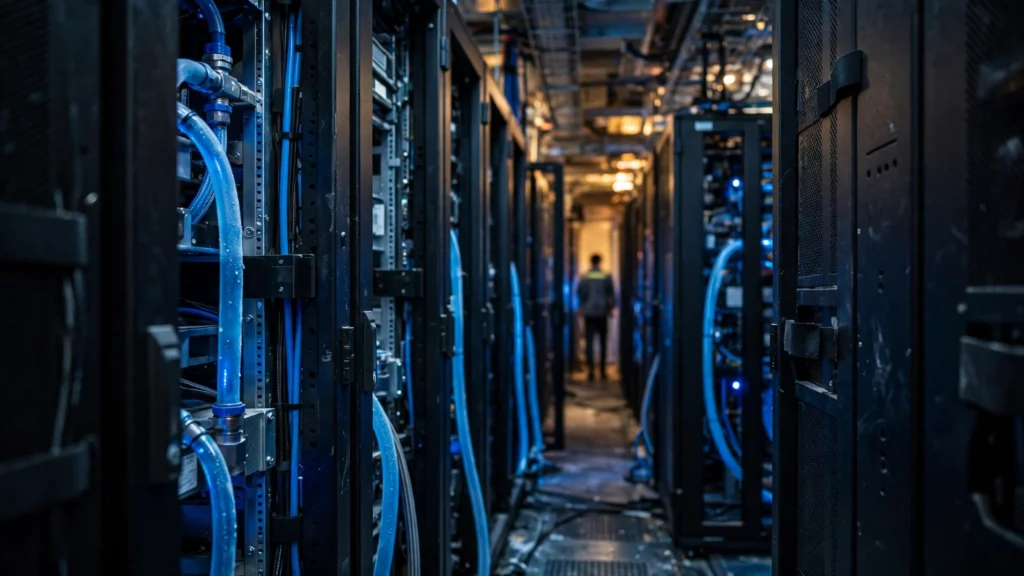
The new system, known as direct-to-chip liquid cooling or DCLC, sits inside NSE’s on-premises data centre in Mumbai. Instead of blowing chilled air across whole racks, it circulates liquid through cold plates fitted directly on top of the processors, pulling heat away at the source.
NSE said it has already deployed multiple GPUs on the new setup. The plan from here is to scale the fleet beyond 80 GPUs during the current quarter, with the cooling infrastructure designed to hold up to 224 GPUs across high-density racks. The exchange also plans to extend the same cooling technology to its co-location data centre in the near future, depending on what market participants need.
Why liquid cooling, and why now
AI workloads are the driving force. Training and running AI models on GPUs packs far more computing power into each rack than traditional trading systems ever did, and air cooling struggles to keep up once racks pass a certain density. Liquid cooling carries heat away far more efficiently, which lets operators run more chips in the same floor space without the room turning into an oven.
There is also an energy argument. Cooling is one of the biggest power costs in any data centre, and direct-to-chip systems typically use less energy than blasting cold air through a hall. For an exchange that runs around the clock, even a modest efficiency gain adds up quickly.
The timing fits a wider build-out. India is investing heavily in domestic AI computing capacity, and NSE’s announcement shows that demand is not coming only from tech companies. The institutions that run the country’s markets want the same horsepower, inside their own walls.
What it means for the market
For traders and brokers, the immediate change is invisible. Nobody sees a cooling pipe when they place an order. But the capacity underneath matters. Exchanges use AI to scan for unusual trading patterns, to flag risks in real time and to crunch the volumes of market data generated every session.
There is a second, quieter point in NSE’s announcement: control. The exchange stressed that the infrastructure sits in its own data centre, which it said strengthens data sovereignty while keeping complete control over AI data, computing resources and access. In an era when most AI work is rented from public clouds, NSE is choosing to keep its most sensitive computing at home.
“The exchange is investing in advanced technologies to strengthen operational excellence, enhance efficiency and promote responsible resource utilisation,” said Viral Mody, Executive Director at NSE. Sampath Manickam, the exchange’s Chief Technology Officer, said the liquid cooling system would give NSE a scalable and energy-efficient foundation for high-density GPU computing.
What NSE has not said yet
Some details are still missing. The exchange has not disclosed what the deployment cost, which GPU models it is running, or which vendor supplied the cooling equipment. Those gaps are normal for infrastructure announcements, but they leave open the question of how quickly other Indian exchanges and large financial firms will follow.
FAQs
What is direct-to-chip liquid cooling?
It is a cooling method that circulates liquid through cold plates mounted directly on processors, removing heat at the source instead of relying only on chilled air in the server hall.
How many GPUs is NSE planning to run?
NSE plans to scale its GPU capacity beyond 80 units during the current quarter, and the new infrastructure is designed to support up to 224 GPUs across high-density racks.
Why does a stock exchange need so much AI computing?
Exchanges use AI for market surveillance, risk management and analysing the huge volumes of trading data produced every session. Those workloads run best on GPU chips, which generate a lot of heat.
Is this the first such deployment in India?
NSE says it is the first deployment of direct-to-chip liquid cooling in Indian capital markets. The system runs inside its own on-premises data centre in Mumbai.
Will NSE extend the technology elsewhere?
Yes. The exchange said it plans to extend liquid cooling to its co-location data centre in the near future, based on the needs of market participants.
The exchange’s message is straightforward: its AI plans are growing fast, and its data centre is being rebuilt to keep up. The market will be watching how quickly the GPU count climbs.