
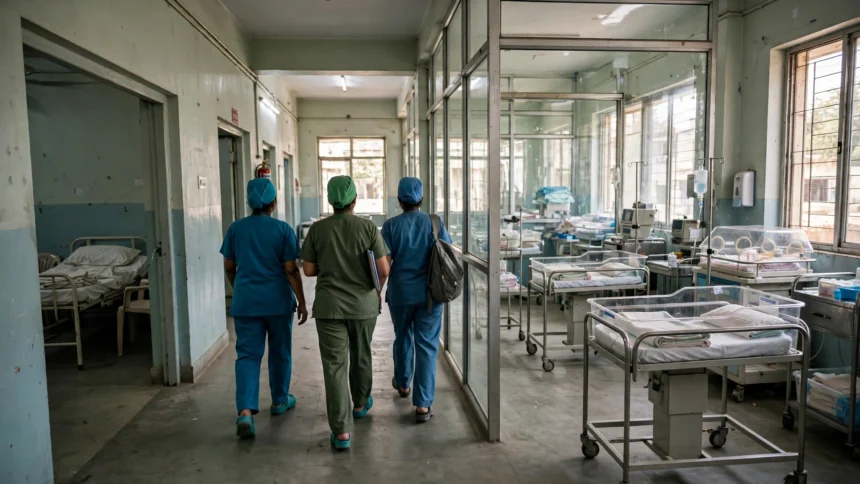
Maharashtra has ordered a mandatory audit of every Caesarean delivery in its government hospitals, after official data showed that 37 per cent of births in public institutions were surgical. In private hospitals, the figure was higher still at 59 per cent.
The order, issued on November 3 by the State Family Welfare Office in Pune, was reported on Monday, November 9. It directs civil surgeons, municipal health officers and the deans of government medical colleges to put the audit mechanism in place across all public health institutions in the state.
Under the new system, every Caesarean section, including both first-time and repeat procedures, will be examined. The doctor who performs the surgery must fill in an audit form on the same day, recording the medical reason for operating. Hospitals must send monthly audit reports to district authorities by the fifth of every month, and district officers will forward consolidated reports to the state by the tenth.
What the numbers show
The trigger for the order is data from the Health Management Information System, covering births up to September 2026. In government hospitals, 1,18,036 of 3,23,345 deliveries were Caesarean sections, a rate of 37 per cent. In private hospitals, 1,89,152 of 3,18,683 deliveries were surgical, a rate of 59 per cent.
The gap between the two sectors is not new. A separate study of 281 institutional deliveries among residents of a Mumbai slum community, published in October, found a Caesarean rate of 52.8 per cent in private facilities against 37.1 per cent in public hospitals.
National survey data tells a similar story of a steady climb. In Maharashtra, the Caesarean rate in government institutions rose from 18.3 per cent under the fourth National Family Health Survey (NFHS-4) to 23.8 per cent under NFHS-6. In private hospitals, it rose from 39.1 per cent under NFHS-5 to 48.5 per cent under NFHS-6. Nationally, Caesarean deliveries increased from 21.5 per cent in NFHS-5 to 27.2 per cent in NFHS-6.
These figures sit far above the benchmark suggested by the World Health Organization, which says Caesarean rates of 10 to 15 per cent are associated with lower maternal and newborn deaths, and that rates above that range do not bring further mortality benefits.
How the audit will work
The audit is designed to be routine rather than occasional. Each surgery will be checked against its recorded medical indication, and the paperwork must be completed by the operating doctor on the day of the delivery, not weeks later.
The reporting chain is fixed. Hospitals compile their monthly audit reports and send them to district authorities by the fifth of the following month. District officers then send a consolidated report to the state government by the tenth. The idea is that patterns, such as a hospital where surgical births keep rising without clear medical reasons, will show up in the monthly data instead of surfacing years later in a survey.
The state move builds on steps already taken at the national level. Under the National Health Mission, measures to discourage unnecessary Caesarean deliveries include a dedicated C-section audit component in the assessment checklist for maternity operation theatres in government hospitals, and a requirement that hospitals empanelled under the Central Government Health Scheme display their ratio of Caesarean to normal deliveries.
Why it matters for mothers
A Caesarean section is a life-saving operation when it is medically needed, for instance when the baby is in distress or the mother faces complications. But surgery also carries its own risks, including longer recovery, infection and complications in later pregnancies. When the procedure is done without a clear medical reason, mothers take on those risks without the benefit.
Public health experts have long pointed to the wide gap between public and private hospitals as a sign that not every surgical birth is driven by medical need. Cost is part of the picture too. In the Mumbai slum community study, the average spending on childbirth was more than Rs 39,000 in private facilities, nearly 17 times the Rs 2,300 average in public hospitals.
For now, the audit order covers government hospitals only. Whether the same scrutiny extends to private hospitals, where the rates are highest, will be watched closely in the coming months as the first monthly reports come in.
FAQs
What has Maharashtra ordered?
A mandatory audit of every Caesarean delivery in government hospitals, so that each surgery is checked against a recorded medical reason.
What are the current C-section rates in Maharashtra?
Up to September 2026, 37 per cent of births in government hospitals and 59 per cent in private hospitals were Caesarean deliveries, according to Health Management Information System data.
How will the audit work in practice?
The operating doctor must complete an audit form on the same day as the surgery. Hospitals report monthly to district authorities by the fifth, and districts report to the state by the tenth.
How do these rates compare with global guidance?
The World Health Organization suggests a Caesarean rate of 10 to 15 per cent. Rates above that range are not linked to lower maternal or newborn deaths.
Has the C-section rate been rising?
Yes. Nationally, it rose from 21.5 per cent in NFHS-5 to 27.2 per cent in NFHS-6. In Maharashtra, the private hospital rate rose from 39.1 per cent to 48.5 per cent between the two surveys.
Maharashtra’s audit will show, month by month, whether the new scrutiny brings surgical birth rates down, and whether the reasons recorded for each operation stand up to examination.