New Delhi: India is preparing to change the way it fights disease, moving from treating illness after it appears to stopping it before it starts. Union Minister Dr Jitendra Singh laid out the shift on Sunday, November 22, at THE WEEK Health Summit 2026 in the capital, saying research is now working at the molecular and genetic level, with prevention and early detection at its centre.
The message was aimed at a worrying trend: diabetes, obesity, high blood pressure and heart disease are now showing up in Indians at much younger ages, driven by changing diets, less physical activity and lifestyle risks spreading across cities and villages. Prevention, the minister said, can no longer be left to doctors alone.
From treatment to prevention
For decades, Indian healthcare has been built around treatment: a patient falls ill, visits a hospital, and gets medicine or surgery. The new approach flips that order, finding risk early through genetic information and biomarkers, years before a disease causes damage.
Speaking as chief guest, Dr Singh said healthcare is evolving beyond conventional treatment towards scientific interventions, preventive strategies and more precise disease management, in line with the Viksit Bharat 2047 vision.
10,000 genomes and a map of Indian disease risk
At the heart of the plan is GenomeIndia, a national project that has sequenced the whole genomes of 10,000 Indians from 84 population groups. Published in Nature Genetics, the work has identified more than 400 genetic traits across these populations.
That matters because most global genetic databases are built overwhelmingly on European ancestry data, so risk scores drawn from them are often less accurate for South Asian patients. With its own reference map, India can study which variants raise the risk of diabetes and heart disease in Indian bodies specifically.
This is the foundation of precision medicine: the same disease may need different treatment in different people. Researchers are already studying biomarkers in women who develop gestational diabetes, to spot who is most likely to develop Type 2 diabetes later.
From vaccines to gene therapy: what is already working
Dr Singh pointed to programmes where molecular science is already reaching patients:
- HPV vaccination: More than 50 lakh adolescent girls have been vaccinated against HPV, which causes cervical cancer.
- Gene therapy: CMC Vellore has treated severe haemophilia A with gene therapy, using patients’ own genetically modified blood stem cells, in work published in the New England Journal of Medicine.
- Early kidney disease detection: Tests are being developed to spot chronic kidney disease before symptoms appear, as dialysis expands in district hospitals.
- Rare diseases: The government and ICMR are widening diagnosis and treatment for rare genetic diseases, where families face delayed diagnosis and high costs.
- New antibiotics: Indian researchers are also developing new antibiotics as drug resistance grows.
Why it matters
The real test is not in a laboratory, but in a clinic in a small town. Sequencing and gene therapy are still expensive and concentrated in big-city hospitals. If precision medicine stays limited to a few research centres, it will change headlines more than health outcomes.
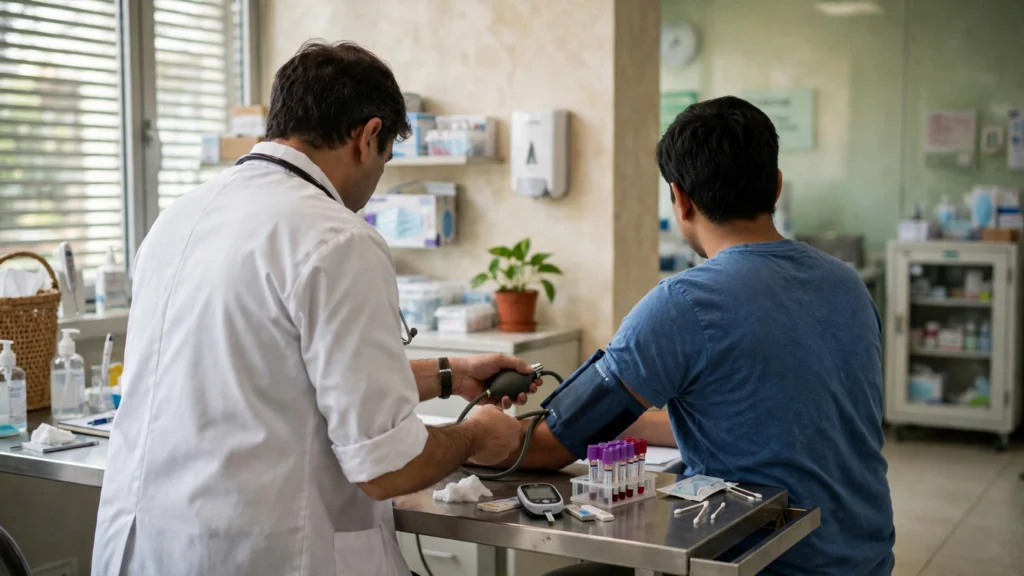
What could change things for ordinary readers is the screening end of the plan. A young adult with a family history of diabetes or heart disease can already get a basic metabolic check, blood sugar, lipids, blood pressure and kidney function, in their twenties, long before symptoms appear. That is the cheapest version of prevention, and it needs no genome sequence. The minister’s own warning pointed the same way: he cautioned young people against health misinformation on social media and medicines used for cosmetic purposes without a doctor’s advice.
A short timeline
- February 2024: GenomeIndia announces sequencing of 10,000 Indian genomes across 84 population groups.
- February 2026: The national HPV vaccination campaign for 14-year-old girls begins, with free single-dose vaccines at government facilities.
- November 22, 2026: Dr Jitendra Singh frames the national shift towards molecular prevention and precision medicine at THE WEEK Health Summit.
The challenges ahead
Three hurdles will decide whether the plan delivers. First, cost and reach: advanced diagnostics must travel from big-city hospitals to district and primary health centres. Second, trust and privacy: a national genetic database needs strict safeguards. Third, proof at scale: early breakthroughs such as the small haemophilia trial need larger studies before they become routine care.
For now, the direction is clear: India is betting that the cheapest disease is the one that never happens.
FAQs
What is precision medicine?
Treatment tailored to a person’s genes, lifestyle and environment, instead of the same medicine for every patient.
What is GenomeIndia?
A national project that has sequenced the whole genomes of 10,000 Indians from 84 population groups, creating a reference map of Indian genetic diversity for disease research.
Why are metabolic diseases rising among young Indians?
Changing diets, less physical activity, urban stress and ultra-processed food are pushing diabetes, obesity and hypertension into younger age groups, in cities and villages alike.
What can young adults do right now?
Get basic metabolic screening in your twenties, especially with a family history of diabetes or heart disease, and check health advice with a doctor rather than social media.
Is the HPV vaccine free in India?
Yes. The national campaign offers free, voluntary, single-dose HPV vaccination to 14-year-old girls at government health facilities, with parental consent.
This article is for information only and is not medical advice. Consult a qualified healthcare professional for health decisions.