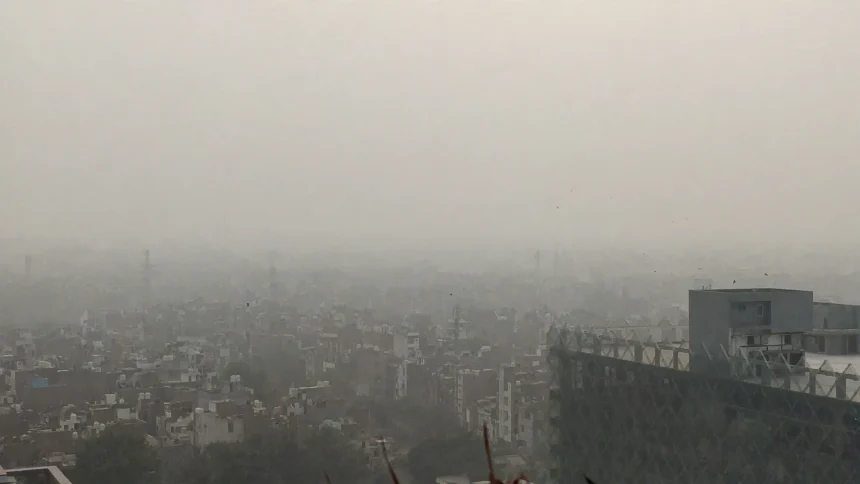
As winter smog settles over north India again, two new studies have added an unexpected item to the list of things polluted air can damage: blood sugar control. An Indian-led review published this week finds that long-term exposure to fine particulate matter, PM2.5, is consistently linked to a higher risk of type 2 diabetes, while a separate study from South Korea shows how dirty air and diabetes together wear out the stem cells inside bone marrow.
The timing is hard to ignore. October to February is exactly when PM2.5 levels in Indian cities routinely run far above both the World Health Organization limit and India’s own national standard. And with more than 10 crore Indians already living with diabetes, researchers say the findings make air pollution a diabetes issue, not just a lungs issue.
What the Indian review found
The review, published on October 27 in the Journal of Vascular Diseases, is an umbrella review, which means it pools the results of earlier large reviews rather than running a fresh trial. The team gathered 13 such reviews covering more than 200 million participant observations from around the world. It was led by Dr Yashendra Sethi of PearResearch, Dehradun, and Subharti Medical College, Meerut, and included Dr Anoop Misra of Fortis C-DOC Centre of Excellence for Diabetes in New Delhi and Saurabh Singhal of the Nexoria Institute of Cardiometabolic Excellence, Dehradun.
The headline number is stark. Every 10 micrograms per cubic metre rise in long-term PM2.5 exposure was associated with roughly a 10 to 16 percent higher risk of developing type 2 diabetes. PM2.5 means particles 2.5 micrometres or smaller, about 30 times thinner than a human hair, small enough to slip deep into the lungs and from there into the bloodstream.
Every one of the seven reviews that looked at new cases of type 2 diabetes found a link with polluted air, and the risk rose as pollution rose. The pattern looked much the same in Asian and Western populations. Polluted air was also linked to higher fasting blood sugar and to more deaths from diabetes.
Notably, the link held even in places where yearly pollution was close to the WHO safe limit of 5 micrograms per cubic metre. India’s own national limit for the yearly average is 40 micrograms per cubic metre, eight times higher, and many Indian cities exceed even that.
Why South Asia faces the heaviest burden
The authors are blunt about where this matters most. “South Asia is the setting in which the population-level implications of this association would be greatest, because exposure is high and near-universal and the burden of type 2 diabetes is rising rapidly,” they write. They argue that air pollution should be treated as part of heart, kidney and diabetes prevention, not as a separate environmental problem.
The scale of diabetes in India sharpens the point. The Indian Council of Medical Research India Diabetes study, published in 2023, estimated that about 10.1 crore Indians have diabetes. Many of them live in cities where the air from October to February is at its worst, which means the same months that bring smog also bring the highest sustained exposure for people already at risk.
Doctors commenting on the review say the message is practical, not just academic. Dr Kunal Gupta, consultant endocrinologist at Sparsh Hospital, Bengaluru, said air pollution is increasingly emerging as an important environmental risk factor for type 2 diabetes, beyond the traditionally recognised factors such as obesity, unhealthy diet, physical inactivity and family history. He added that people with a family history of diabetes, obesity or other metabolic risk factors should be particularly mindful of prolonged exposure to polluted environments.
How dirty air harms bone marrow
A second study, from Jeonbuk National University in South Korea and published in the Journal of Hazardous Materials, helps explain why people with diabetes may be hit harder. Researchers exposed diabetic and healthy mice to artificial PM2.5 in a chamber built to copy real outdoor air. In the diabetic mice, pollution made bone marrow stem cells, the cells that make blood and repair bone, age faster and work poorly. The damage was traced to an inflammation switch in the lungs, and blocking it reversed much of the harm. The researchers said fine particulate matter and type 2 diabetes act synergistically, meaning together they do more damage than either alone.
There are caveats, and the researchers state them plainly. The review pooled observational studies, which can show a link but cannot by themselves prove that pollution causes diabetes, and several of the reviews drew on the same original studies. The authors rated the certainty of the evidence as low and said causality and reversibility remain untested. Dr Rajeev Jayadevan, convenor of Kerala IMA’s research cell, also cautioned that lab animals are exposed to very large doses over a short time, while human exposure is spread over many years at lower doses, so mouse results cannot be applied directly to people.
What this means for you this winter
None of this means a few smoggy days will give someone diabetes. The risk in the review comes from long-term, year-after-year exposure. But it does mean that protecting yourself from dirty air is now also a diabetes precaution, especially for people with a family history of the disease or with prediabetes. Practical steps doctors commonly suggest include:
- Checking the daily air quality index and limiting outdoor exercise on severe days, especially in the morning when smog is thickest.
- Using a well-fitted mask outdoors on high-pollution days rather than a loose cloth covering.
- Keeping indoor air cleaner with closed windows and, where possible, an air purifier during peak smog weeks.
- Sticking to the diabetes basics that still matter most: weight control, regular movement, balanced meals and annual blood sugar checks.
The bigger fix, researchers say, is structural: cleaner air as a public health policy, not just a winter talking point. Until then, the smog outside the window is one more reason to take both lung health and blood sugar seriously.
FAQs
Does air pollution really cause diabetes?
The new review finds a consistent link, not proof of cause. Long-term PM2.5 exposure was associated with a 10 to 16 percent higher type 2 diabetes risk per 10 micrograms per cubic metre, but the underlying studies were observational and the authors rate the certainty of evidence as low.
What is PM2.5?
Fine particulate matter measuring 2.5 micrometres or smaller, about 30 times thinner than a human hair. It comes from vehicles, industry, construction dust, crop burning and other combustion, and it can penetrate deep into the lungs and bloodstream.
How many Indians have diabetes?
The ICMR India Diabetes study from 2023 estimated about 10.1 crore Indians have diabetes, which is why researchers say the pollution link matters so much for India.
Can masks or purifiers remove the risk?
They can reduce personal exposure on bad days, but the risk studied comes from long-term exposure over years. Masks and purifiers help; they do not replace cleaner air or diabetes basics like diet, movement and regular check-ups.
Is this winter’s smog worse than usual?
Smog building up over north Indian cities from October to February is a recurring seasonal pattern. The new studies do not rank this winter against past ones; they show why sustained exposure across many such winters deserves attention.
Two studies, one message: the air we breathe for years at a stretch may be quietly shaping blood sugar as well as lungs. As the smog season peaks, that is a connection worth knowing about, and worth acting on.