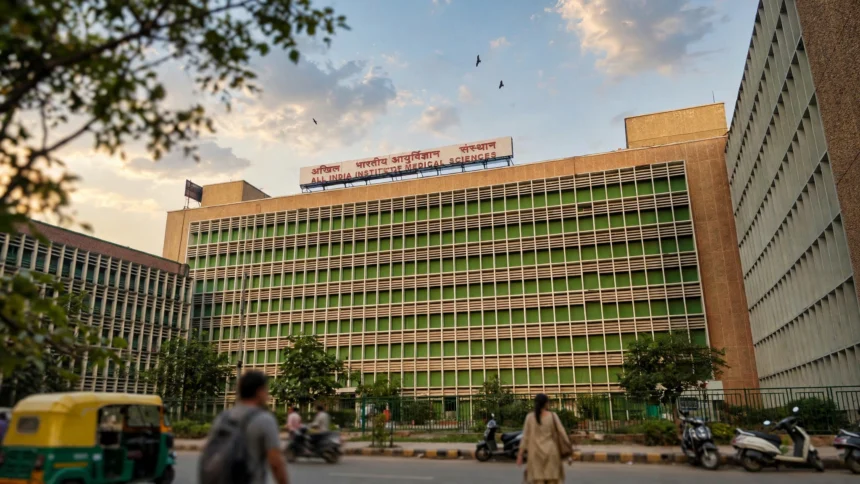
Doctors at the All India Institute of Medical Sciences (AIIMS) in New Delhi have performed India’s first open fetal surgery to repair a severe spinal defect in an unborn baby, in a six-hour operation carried out at 25 weeks of pregnancy. The institute announced the landmark procedure on Saturday, 14 November 2026, calling it a major step forward for fetal medicine and paediatric neurosurgery in the country.
The surgery was performed on 12 November. A multidisciplinary team repaired a lumbosacral myelomeningocele, the most severe form of spina bifida, while the baby was still in the womb, aiming to stop further damage to the developing spinal cord before birth.
What happened in the operating theatre
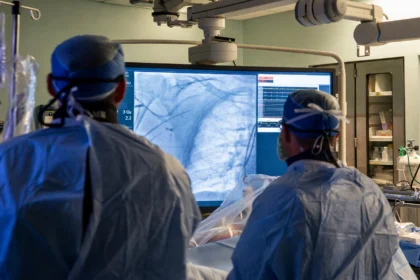
The procedure took place at the Neurosciences Centre at AIIMS, using high-end surgical microscopy and continuous ultrasound guidance. More than 30 medical professionals took part, according to the institute.
The neurosurgical part of the operation was led by Professor Deepak Gupta, who is also the president of the Indian Society for Pediatric Neurosurgery. The maternal-fetal medicine and obstetric teams were led by Professor Neena Malhotra and Professor K Aparna Sharma. Anaesthesia, plastic surgery and neonatology teams were also involved, reflecting how many specialties a case like this pulls together.
The operation was not put together overnight. AIIMS said the team spent more than five weeks on multidisciplinary planning before the surgery, including detailed fetal imaging, counselling of the parents, anaesthetic preparation and operative simulation. That preparation matters because fetal surgery carries risks for both the mother and the baby, including preterm labour and complications from scarring on the uterus.

What is myelomeningocele?
Myelomeningocele is an open neural tube defect. In this condition, the spinal cord and its protective coverings push out through an opening in the baby’s spine, leaving delicate nerve tissue exposed to the fluid around it. It is the most serious form of spina bifida.
Children born with the condition often face problems with movement, bladder and bowel control, and fluid build-up in the brain, which may need a shunt to drain. Until now, the standard approach in India has been to operate after the baby is born. Repairing the defect before birth aims to protect the spinal cord earlier, while it is still developing.
Neural tube defects are not rare in India. A 2024 systematic review of 27 Indian studies estimated their pooled prevalence at 9.46 per 1,000 births, though the figure varies across regions and the country still lacks strong nationwide surveillance for these conditions.
Why operating before birth can help
The strongest evidence for fetal repair comes from the Management of Myelomeningocele Study, known as the MOMS trial, conducted in the United States. It found that among children who had surgery before birth, 40 percent needed a shunt to drain fluid from the brain by 12 months of age, compared with 82 percent of those operated on after birth. Children in the prenatal surgery group also showed better motor outcomes.
Professor Gupta has been clear, though, that the operation is not a cure. The child will still need long-term, multidisciplinary care after birth, and doctors will keep monitoring development closely. The surgery gives the spinal cord a better starting point. It does not erase the condition.
What this means for families in India
Not every baby with myelomeningocele will be a candidate. The timing of the diagnosis, the exact position and size of the defect, the mother’s health and the hospital’s capacity all decide whether fetal surgery is possible. AIIMS has not said how many such operations it plans to do, but the fact that the first one has been completed means the protocols, the team and the equipment are now in place.
The free treatment under JSSK is also significant. Fetal surgery is among the most expensive and resource-heavy procedures in medicine, and cost alone would put it out of reach for most families. Covering it under a public scheme is what makes a first like this matter beyond the hospital walls.
FAQs
What surgery did AIIMS perform?
India’s first open fetal repair of lumbosacral myelomeningocele, the most severe form of spina bifida, in a baby at 25 weeks of pregnancy.
When was the operation done?
The six-hour procedure was performed on 12 November 2026 at the Neurosciences Centre, AIIMS New Delhi, and announced on 14 November.
Who led the surgical team?
Professor Deepak Gupta led the neurosurgical component, with Professors Neena Malhotra and K Aparna Sharma leading the maternal-fetal medicine and obstetric teams.
Does fetal surgery cure spina bifida?
No. It aims to limit neurological damage before birth and reduce complications such as the need for a shunt, but long-term multidisciplinary care remains essential.
How much did the family pay?
Nothing. The procedure was provided free of cost under the Government of India’s Janani Shishu Suraksha Karyakram (JSSK).
For now, one family in Delhi has a baby whose spine was repaired before birth. For Indian medicine, the operation opens a door that had stayed closed until this week.