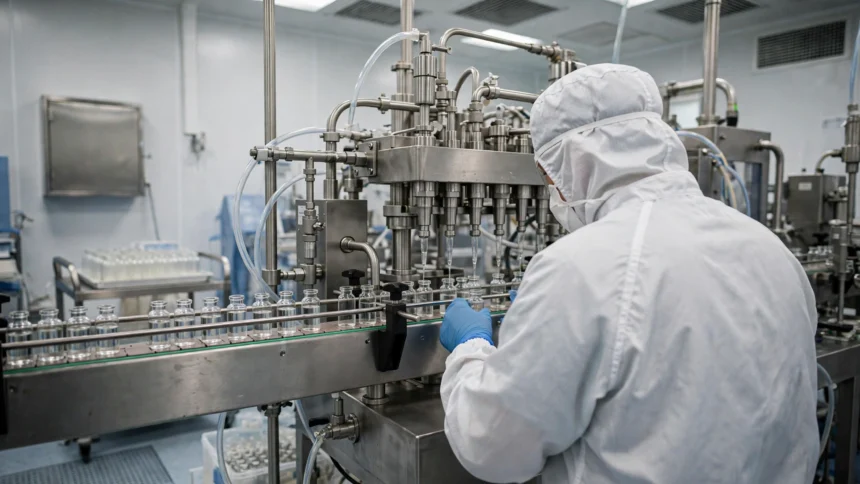
New Delhi has proposed one of the strictest cleanliness rules yet for India’s sterile drug factories. Under a draft amendment announced on Wednesday, 4 November 2026, not a single microbe would be acceptable in the most sensitive production zones, known as Grade A areas. Any growth found there would have to be investigated, not averaged away.
The proposal comes from the Union Ministry of Health and Family Welfare. It amends Schedule M of the Drugs Rules, 1945, the rulebook for good manufacturing practice in India. The draft, G.S.R. 953(E) dated 28 October 2026, aligns India’s limits with WHO guidance for sterile products.
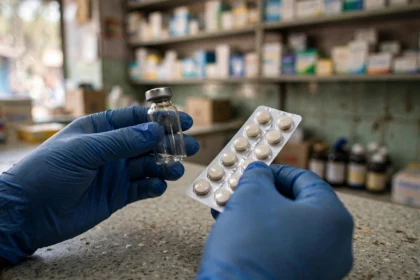
For patients, the change is about something they never see but depend on completely: the air, surfaces and hands inside the rooms where injectable medicines, eye drops and other sterile products are made. If those rooms are not clean enough, a medicine meant to heal can itself carry infection.
What is a Grade A area?
Pharmaceutical plants divide their cleanrooms into grades, from A to D. Grade A is the top of the ladder. It covers the zones where exposed sterile products, containers and components are actually handled, for example during filling and sealing.
Inside, workers wear full protective suits, gloves and masks, and the air is filtered and constantly monitored. Grades B, C and D support Grade A with progressively less strict controls.
What exactly is changing?
At present, Schedule M allows less than 1 colony-forming unit, or CFU, in Grade A areas. In plain terms, that is a tiny allowance that could be read as room for an occasional, very low count. The draft replaces that with a clear standard: no growth.
- No growth standard: Grade A monitoring must show zero microbial growth, replacing the current less than 1 CFU allowance.
- Automatic investigation: any microbial growth detected in a Grade A area would trigger an investigation, in line with WHO guidance.
- WHO alignment: the revised limits follow WHO Technical Report Series No. 1044, Annex 2, on good manufacturing practices for sterile pharmaceutical products.
- Draft stage: this is a proposal, not a final rule. It will only take effect after consultation and a final gazette notification.
The shift may sound like wordplay, but it changes behaviour on the factory floor. A count of even 1 CFU would no longer be a minor result below a ceiling. It would be a signal that something must be found and fixed.

Why align with WHO norms now?
India is the world’s third-largest pharmaceutical manufacturer by volume and a major supplier of generic medicines around the world. That scale is a strength, but it also means Indian factories are judged by international buyers and regulators against global benchmarks.
When domestic limits differ from WHO standards, exporters must effectively work to two sets of rules, and buyers may question whether Indian standards are strict enough. Harmonising Schedule M removes that gap.
The ministry said the amendment addresses existing differences between Schedule M and WHO requirements for Grade A areas, bringing India’s rules in line with internationally recognised standards. Larger export-oriented firms should adapt easily; smaller domestic units may need more time and support.
What happens next?
The government has invited objections and suggestions from stakeholders and the public. Submissions can be sent to the Under Secretary (Drugs Regulation) at the Ministry of Health and Family Welfare, or by email to the ministry’s drugs division. Reports say objections are invited within 30 days of publication of the draft notification.
Once the consultation closes, the ministry is expected to consider the feedback, finalise the revised limits and notify them through the official gazette. Manufacturers would then need to align their quality systems, including environmental monitoring programmes, with the updated Schedule M.
The proposal does not stand alone. On 3 November 2026, the ministry separately proposed requiring manufacturers to appoint authorised personnel for batch release, keep prescribed batch records and issue batch-release certificates.
What does this mean for patients?
For most patients, nothing will change visibly, and that is the point. Sterile medicines such as injections and intravenous fluids must be free of microbes, because they bypass the body’s normal defences. A stricter Grade A standard is designed to catch problems earlier, before a contaminated batch can reach a hospital or pharmacy.
Patients are unlikely to see prices or availability change because of this draft alone. What may change is the assurance behind the label: the medicine was made to the cleanliness standard the WHO expects anywhere in the world.
Frequently asked questions
What is Schedule M?
Schedule M is the part of the Drugs Rules, 1945 that sets good manufacturing practice requirements for pharmaceutical factories in India, including premises, equipment, quality control and sterile production.
What is a Grade A area?
Grade A is the highest classification clean area in a sterile manufacturing plant, where exposed sterile products, containers and components are handled. It carries the strictest environmental controls.
What does “no growth” mean in practice?
It means routine microbial monitoring in Grade A areas should find no viable microbial growth. Any growth found would trigger an investigation, rather than being treated as acceptable within a numerical limit.
Is the new rule already in force?
No. The proposal was issued as a draft notification, G.S.R. 953(E) dated 28 October 2026, and announced on 4 November 2026. It will take effect only after consultation and a final notification.
How can stakeholders respond?
Objections and suggestions can be sent to the Under Secretary (Drugs Regulation), Ministry of Health and Family Welfare, or by email to the ministry’s drugs division, within the consultation period stated in the draft notification.
The message from New Delhi is simple: the cleanest room in the factory should show nothing growing where it should not. The consultation will now test how quickly that standard can become everyday reality.