
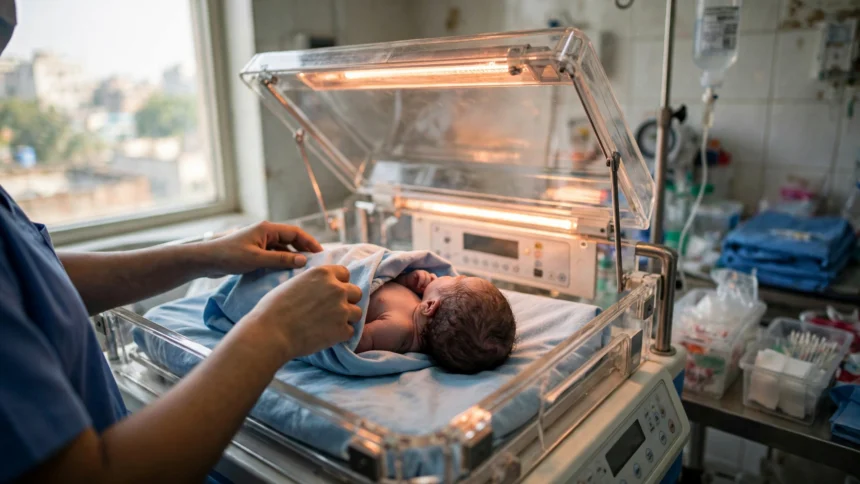
India marks National Newborn Week from today, November 15 to 21, with hospitals, health workers and families across the country turning their attention to the first 28 days of a baby’s life. Those four weeks, doctors say, are the most fragile stretch of childhood, and the week is a reminder that many newborn deaths in India are still preventable with simple, timely care.
The numbers: big progress, still a long way to go
India’s neonatal mortality rate, the number of babies who die within 28 days of birth for every 1,000 live births, has fallen to 17, according to the United Nations Inter-agency Group for Child Mortality Estimation (UN IGME) 2025 report. That is down from 57 in 1990, a fall of nearly 70 per cent over 34 years.
The Sample Registration System (SRS) 2023 report puts the rate at 19 per 1,000 live births, while the SRS 2024 report records an infant mortality rate of 24 per 1,000 live births, down from 30 in 2019.
But the same data shows why the week still matters. Newborn deaths accounted for nearly 73 per cent of all infant deaths in India in 2024. Globally, around 2.3 million newborns died in 2022, according to the World Health Organization, most of them from causes that can be prevented: premature birth, complications during delivery, and infections.
Why the first 28 days matter so much
A newborn is at its most vulnerable in the hours and days right after birth. Prematurity, birth asphyxia and infections are the leading causes of death in this period, and each of them responds best to care that starts immediately.
Health workers stress a short list of practices that make the biggest difference:
- The first hour: skin-to-skin contact and breastfeeding within the first hour of birth, which keeps the baby warm and protected.
- Warmth: keeping the baby warm at all times, since newborns lose body heat quickly.
- Clean hands and clean cord care: simple hygiene during delivery and in the first days prevents infections that can turn serious fast.
- Birth vaccines: BCG and the hepatitis B vaccine, given shortly after birth, along with vitamin K where advised.
- Home visits: ASHA workers visiting the mother and baby at home in the first weeks to spot danger signs early.
None of this needs expensive equipment. That is the point of the week’s message: most of what saves a newborn is basic care, delivered on time, by people who know what to look for.
What the government has built around newborns
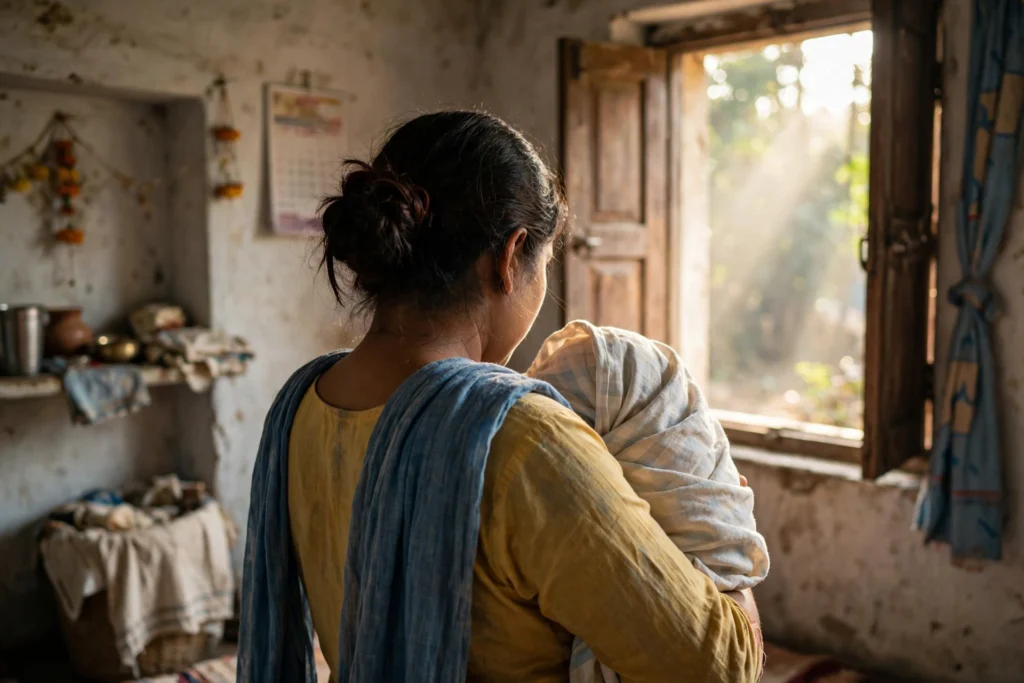
India’s newborn care system has grown steadily over the past decade. Special Newborn Care Units (SNCUs) in district hospitals now treat sick and premature babies who would once have had nowhere to go. Janani Suraksha Yojana and Janani Shishu Suraksha Karyakram support institutional deliveries and free care for mothers and newborns, while the India Newborn Action Plan, launched in 2014, set the goal of ending preventable newborn deaths and stillbirths. Mission Indradhanush has pushed immunisation into the hardest to reach districts.
States are marking the week with their own drives. Rajasthan has started its SAANS campaign, running from November 12 to February 28, to protect children under five from pneumonia, with ASHA workers visiting homes and a push on timely treatment and vaccination.
The gap between states is still wide
The national average hides sharp differences. According to the SRS 2023 report, Kerala’s neonatal mortality rate stands at just 4 per 1,000 live births, while Madhya Pradesh and Chhattisgarh record 26, and Uttar Pradesh 25. A baby born in one state faces very different odds from a baby born in another.
Closing that gap depends less on new hospitals than on reaching every birth with the same basic standards: a trained attendant at delivery, a warm chain of care, early breastfeeding, and a follow-up visit at home.
What families can do this week
For expectant parents, the week is a good time to plan the basics: register the pregnancy, attend antenatal check-ups, and know which hospital or health centre to go to for delivery. After birth, watch for danger signs such as poor feeding, fast breathing, fever, or unusual sleepiness, and seek care immediately rather than waiting.
FAQs
When is National Newborn Week 2026 observed?
From November 15 to 21, 2026. It is observed every year in India during this week to raise awareness about newborn health and survival.
What is India’s neonatal mortality rate now?
The UN IGME 2025 report puts it at 17 deaths per 1,000 live births in 2024, down from 57 in 1990. The Sample Registration System 2023 report records 19 per 1,000 live births.
What are the main causes of newborn deaths in India?
Premature birth, complications during delivery such as birth asphyxia, and infections are the leading causes, according to the World Health Organization.
What is the target for newborn survival by 2030?
Under the Sustainable Development Goals, India aims to bring the neonatal mortality rate below 12 per 1,000 live births by 2030.
Which government programmes support newborn care?
Special Newborn Care Units, Janani Suraksha Yojana, Janani Shishu Suraksha Karyakram, the India Newborn Action Plan and Mission Indradhanush support newborn survival, along with home visits by ASHA workers.
National Newborn Week runs from November 15 to 21. If you are expecting a baby, speak to your doctor or ASHA worker about a safe delivery plan and newborn care in the first weeks.