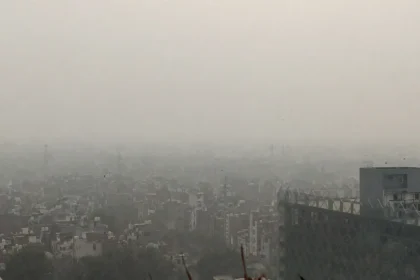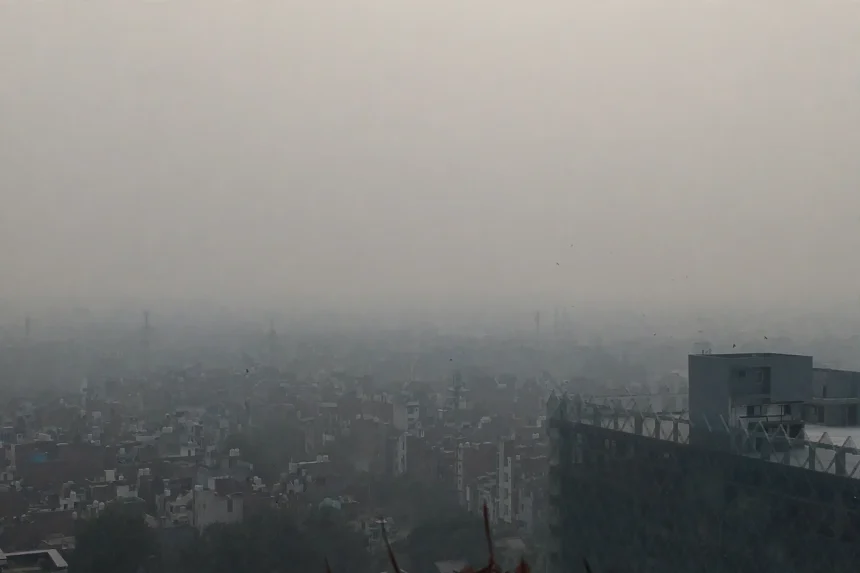
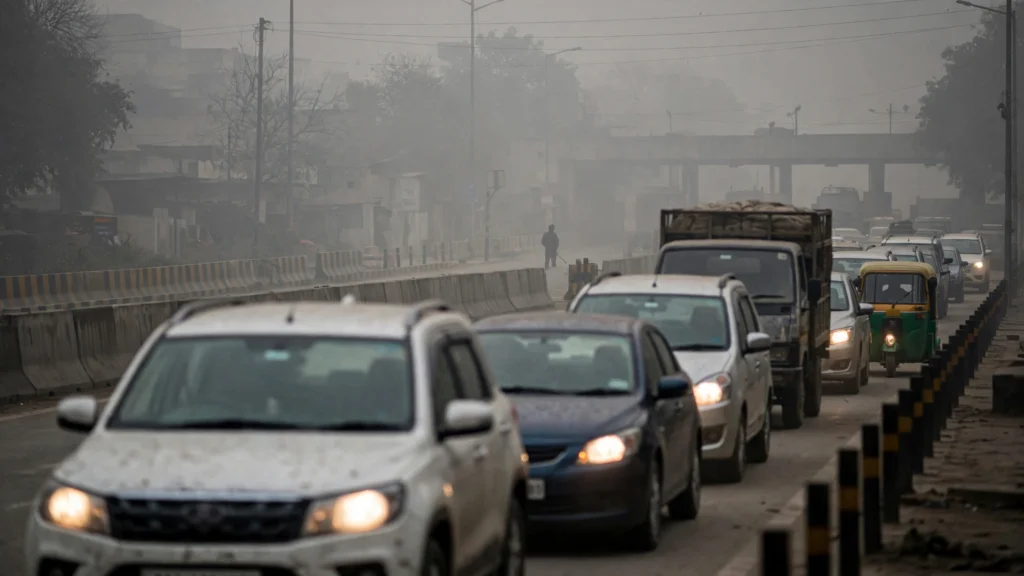
Delhi woke up to a grey, heavy sky on Sunday, and by the end of the day the city had its worst air of the season. The Air Quality Index touched 261, placing the capital firmly in the poor category, and the timing could hardly have been more pointed: the same day, Delhi’s new winter anti-pollution restrictions came into force.
It was the highest reading in 198 days. The AQI last crossed 250 on April 17, when it touched 263, and Sunday’s figure matched the level recorded on July 12. For a city that had just recorded its cleanest October in eight years, with a monthly average of 166, the slide back into poor air felt abrupt, and it set the tone for the week ahead.
What the new curbs mean for Delhi
The winter measures, which will remain in force for varying periods between November 1 and February 28, are aimed at cutting the three biggest winter culprits: vehicular emissions, road dust and construction dust. The headline measures are:
- Vehicles registered outside Delhi that meet BS-IV or older emission standards are barred from entering the capital.
- Dust-generating outdoor construction and demolition work is restricted, with a separate 15-day ban ordered by the Commission for Air Quality Management (CAQM) across Delhi-NCR from November 5 to 20.
- Parking charges have been doubled in an effort to discourage private vehicle use.
- Government and private offices in Delhi-NCR have been told to operate with only 50 per cent of staff physically present, with the rest working from home.
Exemptions apply where work from home is not feasible, including essential services and certain industrial establishments, and projects linked to railways, metro services, airports, hospitals and national security are exempt from the construction restrictions.
Traffic snarls on day one
The first day of the curbs did not pass quietly. Intensified vehicle checks at Delhi’s borders led to long queues and heavy traffic snarls, leaving commuters stranded and frustrated. Many took to social media to question whether the checks would actually improve air quality, or simply add to the daily commute.
Officials have said the checks are a necessary part of keeping older, higher-polluting vehicles out of the city at the start of the season when cold air and low wind trap pollutants close to the ground. The Decision Support System for air quality management estimated that transport emissions accounted for 16.4 per cent of Delhi’s pollution on Sunday, while stubble burning contributed up to 18.5 per cent.
The numbers behind Sunday’s air
Of Delhi’s 57 monitoring stations, 22 recorded very poor air, 21 recorded poor air and the remaining 14 recorded moderate air. Jahangirpuri was the most polluted spot in the city at 378, close to the severe category, which begins at 401. PM2.5, the fine particulate matter that penetrates deep into the lungs, remained the predominant pollutant across the capital.
Doctors have long warned that prolonged exposure to poor air can trigger breathing difficulties, especially for children, the elderly and people with asthma or other respiratory conditions. Health experts advise limiting outdoor exertion on poor-air days, keeping windows shut during peak pollution hours and wearing a well-fitted mask outdoors when the AQI climbs into the very poor range.
What the forecast says for this week
The Air Quality Early Warning System has forecast that Delhi’s air is likely to stay in the poor category on November 2 and 3, with conditions fluctuating between poor and very poor over the following six days. In other words, the curbs that began on Sunday are not a one-day story; residents should expect the restrictions, and the haze, to persist through the week.
The CAQM has said its measures are preventive in nature, limited to a specified period and geographical area, and designed with the seasonal vulnerability of the region in mind. The real test will be whether the combination of fewer older vehicles, paused construction dust and halved office attendance can hold the AQI back from the severe levels Delhi has seen in past winters.
For now, the message from the weekend is simple: winter has arrived in Delhi, and with it, the annual struggle for clean air has begun again.
FAQs
What was Delhi’s AQI on November 1?
Delhi recorded an AQI of 261 on Sunday, November 1, in the poor category, its worst reading in 198 days.
Which vehicles are barred under the new curbs?
Vehicles registered outside Delhi that comply with BS-IV or older emission standards face entry restrictions under the winter measures.
Are offices in Delhi-NCR working at half capacity?
Yes, government and private offices have been directed to operate with 50 per cent physical attendance, with the rest working from home, except essential services and establishments where this is not feasible.
How long will the restrictions last?
The measures remain in force for varying periods between November 1 and February 28, while the CAQM construction and demolition ban runs from November 5 to 20.
Is Delhi’s air expected to improve this week?
The forecast says air quality is likely to remain poor on November 2 and 3, and fluctuate between poor and very poor over the following six days.
Delhi’s winter pollution battle is back in focus. Stay with Informeia for daily AQI updates and the latest on the capital’s anti-pollution measures.