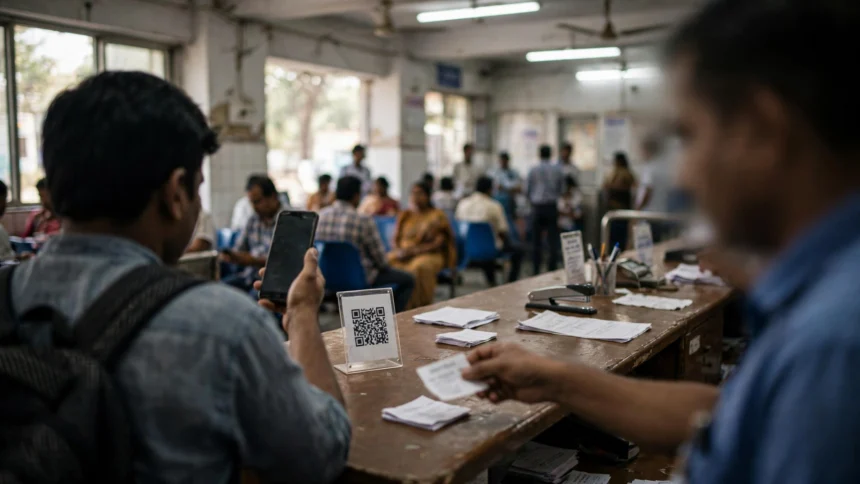
For anyone who has stood in a long queue at a government hospital in Haryana, clutching a registration slip and waiting for change at the payment counter, the morning routine may soon look a little different. Haryana has introduced UPI payments at 610 public healthcare institutions across the state, and expanded the option to complete outpatient department (OPD) registration from home before visiting a hospital.
The move, announced on October 27, is aimed at shorter queues, faster registration and less time spent at counters. Officials say walk-in registration and cash payments will continue, so patients who do not use a smartphone or a digital payment app will not be left out.
Additional Chief Secretary, Health and Family Welfare, Sumita Misra said the initiative would make hospital visits more convenient by simplifying registration, reducing waiting time at payment counters and offering digital alternatives to conventional procedures. The department has described the change as a step towards more convenient, transparent and citizen-centric public healthcare.
Where UPI payments will work
The digital payment system is now operational across 610 public healthcare institutions. The breakup, given in the official statement, is:
- 23 district civil hospitals
- 52 civil and sub-civil hospitals
- 121 community health centres
- 414 primary health centres
The facility has also been extended to civil surgeon offices in all 23 districts. Patients can use UPI to pay applicable charges for OPD registration, inpatient department (IPD) registration, medico-legal cases and other healthcare services.
The rollout followed a successful trial at the District Civil Hospital in Panipat. After a state-level workshop on October 13, civil surgeons and deputy civil surgeons were directed to put UPI payment facilities in place by October 16, and officials say the system became operational across all 23 districts within that period.
How the new system works
Alongside payments, Haryana has strengthened OPD pre-registration from home. Patients can complete registration before reaching the hospital through the e-Upchar Hospital Management Information System, which is available at 23 district civil hospitals, 31 civil and sub-civil hospitals and other healthcare centres connected to the system.
Those who book an appointment online must visit the hospital on their scheduled date and time. Dedicated pre-registration counters have been set up at hospitals, and Scan and Pay facilities have been introduced to speed up fee payments.
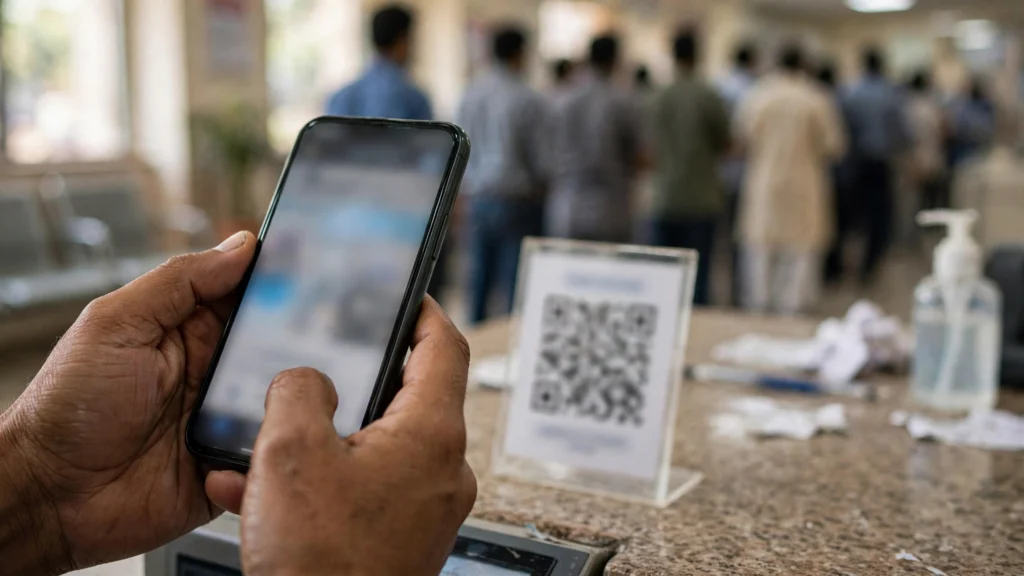
A separate Scan-and-Register facility is now available at 118 healthcare institutions under the e-Hospital system. It allows patients to register digitally using their smartphones, as an alternative to standing at a conventional counter.
In practice, registration can be done before leaving home, and payment at the hospital can be completed with a phone scan instead of cash and change. For patients travelling from villages to a district hospital, that can save a day lost to queues.
Cash and walk-in options stay
The department has been clear on one point that matters most to older patients and to families without smartphones. Conventional walk-in registration and cash payment facilities will remain available at government hospitals.
That assurance is important. Digital tools help only when they sit alongside the old system, not when they replace it overnight. Elderly patients, people who are not comfortable with phones, and anyone whose phone battery or network fails on the day will still be able to register and pay in the usual way.
The real test will be on the ground in the coming weeks: whether the counters work during busy morning hours, whether staff can guide first-time users, and whether patients know the online option exists before they set out.
What patients should keep in mind
- Check whether your hospital is connected to the e-Upchar system before trying online pre-registration.
- If you book online, reach the hospital on your scheduled date and time and use the dedicated pre-registration counter.
- Carry the usual documents and details you would carry for a hospital visit, even when you register from home.
- If you prefer cash or walk-in registration, those options remain available.
For now, the message from Chandigarh is simple. Haryana wants fewer queues and faster hospital visits, and it is using UPI and online registration to get there, while keeping the counter open for everyone else.
FAQs
Where can I pay with UPI in Haryana hospitals?
UPI payments are available at 610 public healthcare institutions, including district civil hospitals, civil and sub-civil hospitals, community health centres and primary health centres, and at civil surgeon offices in all 23 districts.
Can I complete OPD registration from home?
Yes, where the hospital is connected to the e-Upchar system. You can complete OPD pre-registration before visiting, and then visit on your scheduled date and time.
What can I pay for with UPI?
Applicable charges for OPD and IPD registration, medico-legal cases and other healthcare services, as notified by the hospital.
Do I need a smartphone to visit a government hospital now?
No. Walk-in registration and cash payments will continue, so patients without smartphones or digital payment apps can still access services.
What is Scan-and-Register?
It is a facility at 118 healthcare institutions under the e-Hospital system that lets patients register digitally using their smartphones instead of joining a conventional registration queue.
Haryana patients who use the new system are advised to check the arrangements at their local hospital before travelling, as facilities can vary by centre.