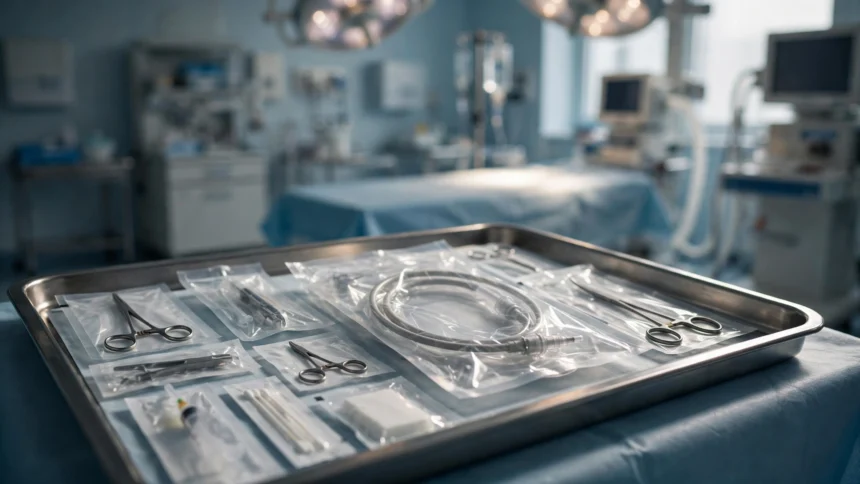
New Delhi, October 24: The Centre has told every state and Union Territory to strictly enforce the ban on reusing single-use medical devices in hospitals, after reports that some private and corporate hospitals were sterilising disposable equipment and using it again on other patients. The order, issued by the Directorate General of Health Services (DGHS), covers both public and private healthcare facilities and warns that the practice puts patients at risk of infection and leaves them paying full price for equipment that was never meant to be used twice.
The October 16 letter has been circulated to chief secretaries, state health departments and drug controllers. The message is blunt: a device labelled for single use must be used once, and only once.
What the Centre found
According to the DGHS letter, it had come to its notice that certain hospitals were taking devices meant for one procedure, sterilising them, and then reusing them. The practice was reported in some of the most sensitive areas of medicine: cardiology, nephrology, oncology, cardiothoracic and vascular surgery, and neurosurgery.
It has been observed that such devices and disposable surgical items, after being used for one procedure, are being subjected to sterilisation and subsequently reused, despite being designated for single use only, the letter said.
The Association of Indian Medical Device Industry (AiMeD) flagged cardiac catheters, guidewires, balloon and ablation catheters, introducer sheaths, dialysis equipment such as dialysers and blood tubing, surgical staplers, laparoscopic trocars and orthopaedic drill bits. Syringes and needles were also named.
Why reuse is dangerous, even after sterilisation
The DGHS is clear that sterilisation does not make a single-use device safe for a second patient. These devices are designed, tested and manufactured for one procedure. Once used, they can suffer microscopic damage, lose their performance, or retain biological material that cleaning cannot fully remove.
That creates three risks for the next patient:
- Cross-infection: possible exposure to hepatitis B and C, HIV and bacterial infections from a previous procedure.
- Device failure: a weakened catheter, guidewire or stapler may break or underperform during surgery.
- Complications: reduced performance can mean longer procedures, repeat interventions or poorer outcomes.
For patients, the other shock in the letter is financial. The DGHS flagged instances in which patients were allegedly charged the full cost of a device despite its reuse, and cases in which the cost was reimbursed by government authorities as if a brand-new device had been used.
What the order actually says
The directive leaves no room for interpretation. It has accordingly been decided that the reuse of single-use medical devices and disposable surgical items shall be strictly prohibited in all healthcare organisations, including both public and private healthcare facilities, the letter said.
Every device must also be used strictly as its Original Equipment Manufacturer (OEM) directs. If the manufacturer says single use, a hospital cannot overrule that with its own sterilisation protocol.
The order also points to the legal framework behind it: the Drugs and Cosmetics Act, 1940, the Medical Devices Rules, 2017, the Clinical Establishments Act, 2010, and the rules on infection control and biomedical waste management. Hospitals that continue the practice could therefore face action under more than one law, not just an administrative warning.
Who has to enforce it, and how
Enforcement rests with the states. The DGHS has asked chief secretaries, health officials and drug controllers to monitor compliance, inspect facilities and act on violations.
The directive also refers to a Central Government Health Scheme (CGHS) office memorandum from December 2016 on reuse in CGHS-empanelled hospitals. What is new is the Centre’s insistence on strict, uniform enforcement now.
What patients should check before a procedure
Most patients will never see the device used in their surgery, but these questions help:
- Ask whether the device listed on your bill is new and single-use, and keep the itemised bill.
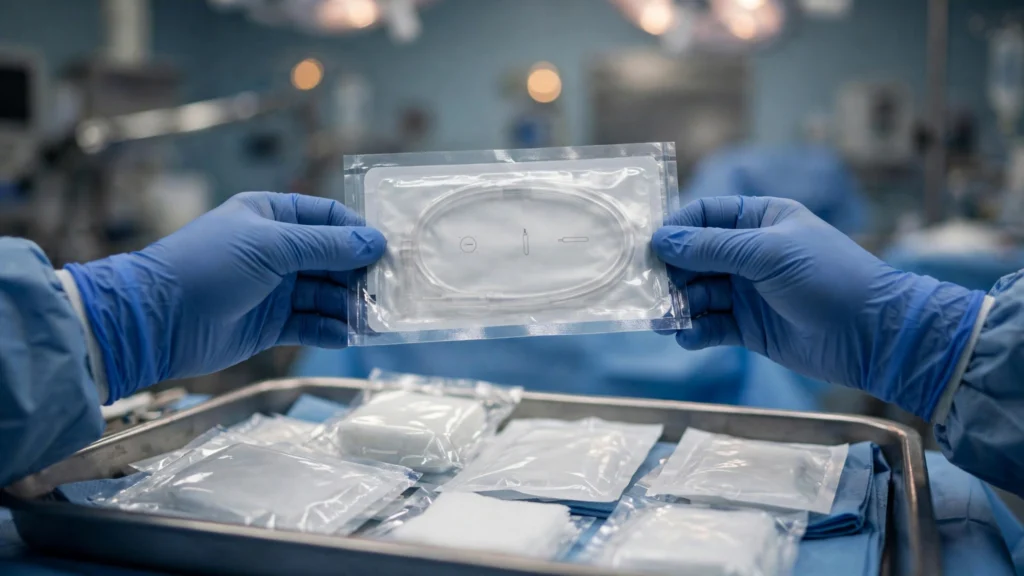
- Check that sealed packaging is opened in front of you where that is possible, especially for catheters and implants.
- Ask the hospital how used disposable items are segregated and disposed of after a procedure.
- If a bill seems inflated or a device charge looks unclear, ask for a written break-up before paying.
Whether it changes practice on the ground will depend on inspections, penalties and transparency in the coming weeks. For now, the rule is unambiguous: if it says single use, it gets used once, and then it goes.
FAQs
What is a single-use medical device? A device made for one patient and one procedure, such as a cardiac catheter or surgical stapler. It is not designed to be cleaned and reused.
Is sterilisation enough to reuse such a device? No, according to the DGHS. Sterilisation cannot guarantee that a single-use device is safe again, because damage or leftover biological material can remain and performance can drop.
Which hospitals does the ban cover? All healthcare organisations, including both public and private facilities, under the Centre, states and Union Territories.
What should a patient do if reuse is suspected? Keep the itemised bill and discharge summary, and raise it with the hospital and the state drug controller.
Can hospitals be punished for reuse? Yes, under the Drugs and Cosmetics Act, the Medical Devices Rules, the Clinical Establishments Act and infection-control and waste rules.
Informeia will track how states enforce this order.