Syria closed its only border crossing with Jordan on Tuesday, a day after Jordanian warplanes struck targets in southern Syria. The closure suspended passenger and commercial traffic in both directions, and turned a cross-border military operation into a diplomatic dispute that neither capital has yet resolved.
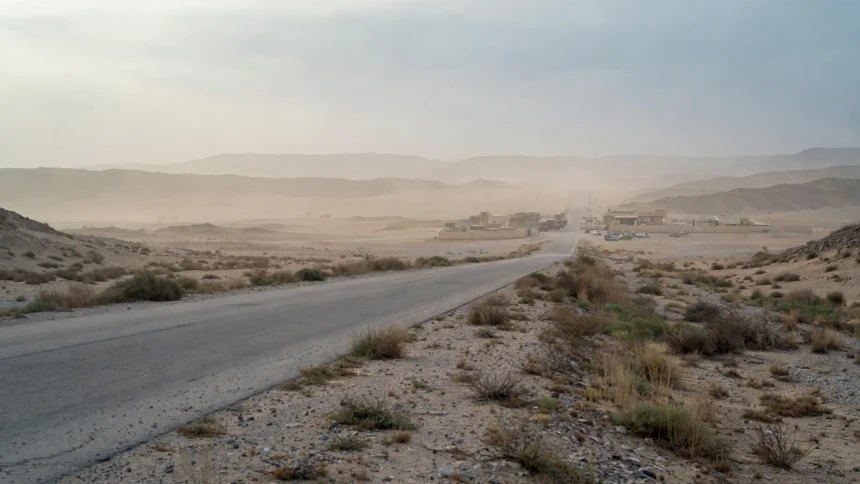
The crossing at Nassib, known as Jaber on the Jordanian side, is the main land route between the two countries. Syria’s border authority said the decision followed developments on the ground in Daraa province, and was taken to protect travellers and staff at the terminal.
What happened on Monday evening
Jordan said its air force struck what it described as militant hideouts in the countryside of Daraa and Suwayda provinces on Monday evening. The Jordanian Armed Forces said the operation destroyed sites and vehicles used by groups it linked to last week’s deadly attack on a church in Jordan.
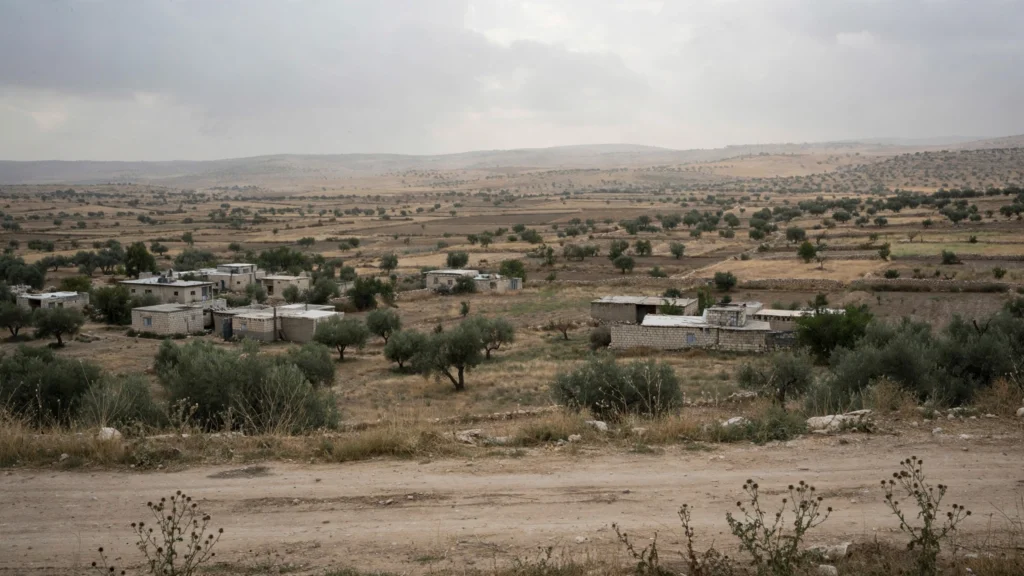
Syria’s Civil Defence said its teams responded to four sites. In its preliminary report, it said seven people were killed, including three children and a woman, and three others were wounded. It described a strike on a tent in the Daraa countryside in which five members of one family were killed, while three other family members were injured.
Syrian health officials later said hospitals had received eight victims, including an elderly man and three children, plus four wounded. The shifting toll shows how early reports can move as checks are completed.
Two very different accounts of the toll
Jordan gave a very different picture on Tuesday. Government Communication Minister Mohammed al-Momani said the strikes had killed more than 20 Islamic State militants, according to Reuters. He said Jordan regretted civilian casualties and acknowledged that some civilians had been killed.
Syria, by contrast, has presented the dead as civilians, including women, children and elderly men. Jordan had not, in the first reports, commented directly on the Civil Defence account. There has been no independent verification of either account so far, and the gap between the two versions is likely to shape how the incident is judged in both countries.
Why Jordan says it struck
Jordan linked the strikes directly to the attack on mourners at a church funeral in Karak last Friday. The Jordanian Armed Forces said the operation was carried out in revenge for those killed at Hamoud Church, after investigators determined that suspects in the church attack were linked to groups operating in southern Syria.
Jordan’s military said the strikes were conducted in coordination with the Syrian government, presenting the operation as a joint security action. Damascus rejected that version outright. Syria’s Foreign Ministry said it had informed Jordan of its complete reservation over the strikes, which it said took place without prior coordination or notification. A Foreign Ministry official described the strikes as a treacherous attack in comments to Al Jazeera, and the government said it had opened an investigation.
Damascus later said it was working with Jordan on a joint field and security committee to prevent further violations.
The church attack in Karak
The chain of events began on Friday, when gunmen opened fire on mourners at a funeral at Hamoud Church in the village of Hamoud in Karak governorate, in southern Jordan. Nine people were killed and 40 others were wounded, according to Reuters, citing Jordanian state television and security officials.
Jordan’s interior minister said the attack was carried out by extremists, but it was too early to determine whether they had links to known groups inside or outside Jordan. No group has claimed responsibility.
Early on Monday, security forces arrested three suspects, described as two brothers and their brother-in-law, after a shootout. Firearms were seized, and the statement did not identify their affiliation.
Why the Nassib closure matters
The Nassib crossing carries passengers and freight between Syria and Jordan, and onward trade in the region. A suspension in both directions affects travellers, truck drivers and businesses that rely on the route, and removes the most direct road link between the two neighbours until it reopens.
By shutting the crossing, Syria signalled it viewed the strikes as a sovereignty issue. By insisting they were coordinated, Jordan presented the episode as cooperation against a shared threat.
FAQs
What happened at the Jordan-Syria border?
Jordan carried out airstrikes in southern Syria on Monday evening, and Syria closed the Nassib border crossing on Tuesday, suspending traffic in both directions.
Why did Jordan carry out the strikes?
Jordan said the strikes targeted militant hideouts linked to suspects in the deadly church attack in Karak last Friday, in which nine people were killed.
How many people were killed in the strikes?
The figures are disputed. Syria’s Civil Defence initially reported seven killed, and health officials later reported eight victims. Jordan said more than 20 militants were killed and acknowledged some civilian deaths.
Was the operation coordinated with Syria?
Jordan said it was conducted in coordination with Damascus. Syria said there was no prior coordination or notification, and opened an investigation.
When will the Nassib crossing reopen?
No reopening date has been announced. Syria cited developments in Daraa province, and Damascus has proposed a joint field and security committee with Jordan.