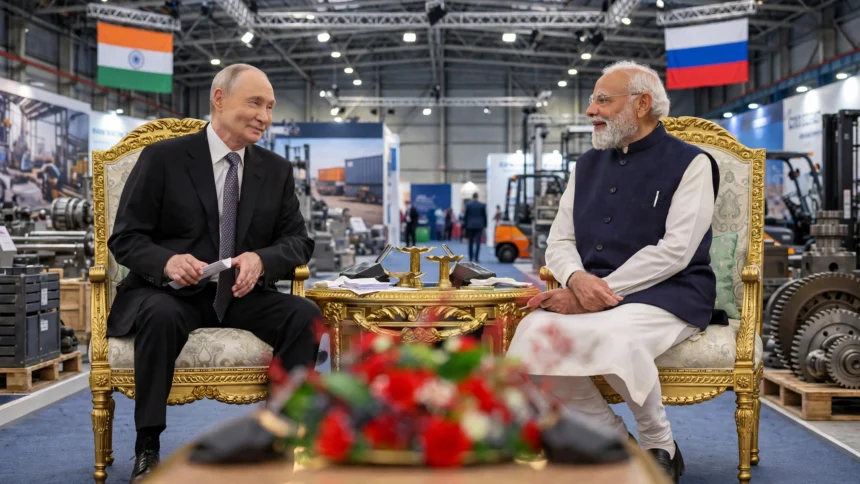
New Delhi, October 24: India and Russia have set their sights on a much bigger economic partnership. Prime Minister Narendra Modi and Russian President Vladimir Putin have directed their governments to expand cooperation, with bilateral trade targeted at $100 billion by 2030, India’s Ambassador to Russia, Vinay Kumar, has said.
The message came in an interview with Russian news agency TASS, published on Saturday. Kumar said the two leaders had discussed the full range of bilateral relations on the sidelines of the BRICS summit in New Delhi on September 12 and 13, and had asked the relevant ministries and agencies to take the work forward, particularly in trade and commerce.
Alongside the trade target, the two countries are working toward two-way investment of $50 billion by 2030. For New Delhi and Moscow, the numbers are not just a headline. They are a statement of intent at a time when both countries are looking to deepen ties beyond their traditional areas of cooperation and build a broader, more resilient economic relationship.
What the $100 billion target means
A trade target of $100 billion by 2030 would mark a major step up in the India-Russia economic relationship. It signals that both governments want businesses on both sides to trade more, invest more and find new areas to work together, rather than relying on a narrow set of goods.
Kumar pointed to concrete results already visible from the recent engagement. One was the joint participation of the two leaders in the BRICS business summit. Another was a visit to the Innoprom-India exhibition, described as the first Russian industrial exhibition held in New Delhi. Such platforms matter because they put buyers, sellers, manufacturers and investors in the same room, and deals often follow the handshakes.
Investment and jobs in focus
The $50 billion two-way investment goal is equally important. Investment creates factories, jobs, technology transfer and long-term partnerships that trade alone does not. When companies invest in each other’s countries, they build a stake in the relationship that lasts far beyond a single shipment.
Labour cooperation is another part of the story. Kumar said India aimed to supply Russia with the required number of skilled workers in line with its needs. Indians already account for around 25 to 30 per cent of Russia’s quota for foreign workers, he said.
That figure underlines a quiet but significant shift. India, with a population of nearly 1.5 billion, is positioning itself as a global centre for skilled personnel. The average age of India’s workforce is 29 years, and workers account for about 69 per cent of the population, Kumar noted. In other words, India has both the numbers and the youth to meet demand abroad while building skills at home.
Training workers for Russian industry
India trains specialists for its domestic market as well as for employment overseas, Kumar said. New Delhi has also proposed that Russia establish educational institutions in India, or collaborate with existing Indian institutions, to train workers needed by Russian industries.
The idea is practical. Rather than simply sending workers abroad, the two countries would build the training pipelines together, so workers arrive with the exact skills Russian employers need. That could cover manufacturing, engineering, services and other sectors where Russia faces shortages.
For Indian workers, such programmes could open structured, legal pathways to overseas employment, with recognised qualifications. For Russia, they offer a reliable supply of trained people. For both governments, it turns a migration question into a planned partnership.
Why this matters now
The timing of the interview matters. It follows the BRICS summit in New Delhi, where Modi and Putin reviewed the relationship in person. The fact that the envoy chose to spell out the trade and investment targets publicly suggests both sides want businesses to take note and act.
India-Russia ties have long rested on defence, energy and strategic cooperation. The push now is to give the economic leg of the relationship equal weight. A $100 billion trade goal and a $50 billion investment goal, if achieved, would make the partnership far more broad-based and harder to shake.
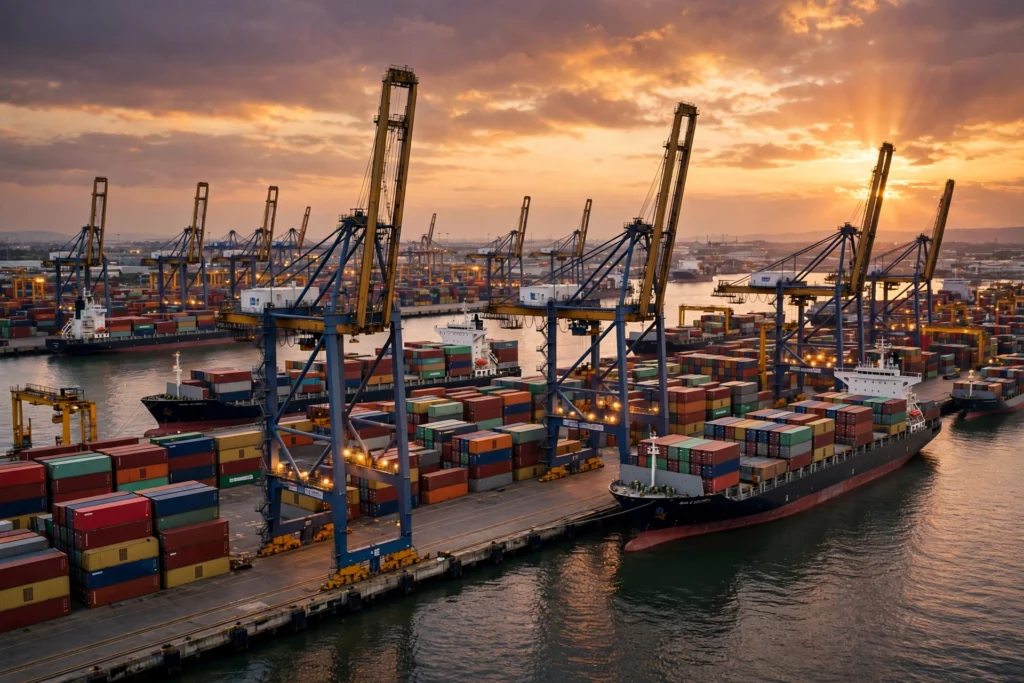
There will be challenges, of course. Trade at that scale needs shipping, insurance, banking channels and regulatory clarity, and businesses will watch closely for follow-through. But the direction from the top is now clear, and officials on both sides have their instructions.
For now, the message from Moscow is simple: India and Russia want to trade more, invest more and work together more closely, and 2030 is the deadline they have set themselves.
FAQs
What is the India-Russia trade target?
India and Russia aim to increase bilateral trade to $100 billion by 2030, according to Ambassador Vinay Kumar.
What is the investment target?
The two countries are also working toward two-way investment of $50 billion by 2030.
Who announced the targets?
Indian Ambassador to Russia Vinay Kumar, in an interview with Russian news agency TASS published on October 24, 2026.
When did Modi and Putin discuss this?
The leaders discussed the full range of bilateral relations on the sidelines of the BRICS summit in New Delhi on September 12 and 13.
What about Indian workers in Russia?
Indians account for around 25 to 30 per cent of Russia’s quota for foreign workers, and India has proposed joint training institutions to prepare workers for Russian industries.
Stay tuned for more updates on India-Russia ties and global trade.