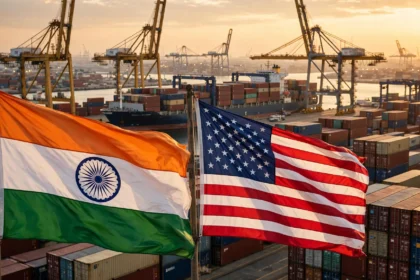
Washington is quietly thinning out its diplomatic footprint across the Middle East. The United States has ordered staffing cuts at its embassies in Jordan, Lebanon, Qatar and the United Arab Emirates, days after ordering non-emergency staff and their families out of Saudi Arabia, as American intelligence warns that Iranian plots against US personnel have reached an advanced stage.
For India, the developments matter directly: the Gulf hosts one of the world’s largest Indian diasporas, and the Strait of Hormuz carries roughly a fifth of the world’s oil.
What exactly has the US done
The drawdown has come in two stages. Earlier in the week, the State Department ordered non-emergency US government employees and their families to leave the US embassy in Riyadh and the consulates in Jeddah and Dhahran, a formal ordered departure, the strongest category of evacuation instruction.
On Friday came a second round: staffing reductions at US embassies in Jordan, Lebanon, Qatar and the UAE. Those four missions have moved to limited operations, meaning fewer staff on site, but they remain open and no formal departure order has been issued for them. State Department spokesperson Tommy Pigott stressed that the mandatory departure applied to Saudi Arabia alone.
The intelligence warning behind the decision
At the heart of the drawdown is a one-page, unclassified memo dated October 23 from Director of National Intelligence Jay Clayton to Secretary of State Marco Rubio. First obtained by Axios, it says Iran has substantially increased efforts to target American personnel, and that lethal plotting has reached advanced stages in the Middle East and certain other countries.
The memo does not name specific targets or countries outside the Middle East, and it does not say whether any attack is imminent. What it does is press for wider circulation of the warning, so more personnel who might be at risk can see it. Officials have linked the staffing decisions to two threats running in parallel: plots attributed to Iran, and attacks by the Iran-backed Houthis in Yemen.
Missiles over Saudi Arabia raise the temperature
The Houthi angle is not abstract. The Saudi-led coalition said on Friday it had intercepted a ballistic missile aimed at Riyadh, and Saudi civil defence issued, then withdrew, danger warnings for Mecca, Jeddah, Taif and Yanbu. US officials have, however, pushed back firmly on one reading of the drawdown: they deny the embassy cuts are tied to any planned new American or Israeli strike on Iran.
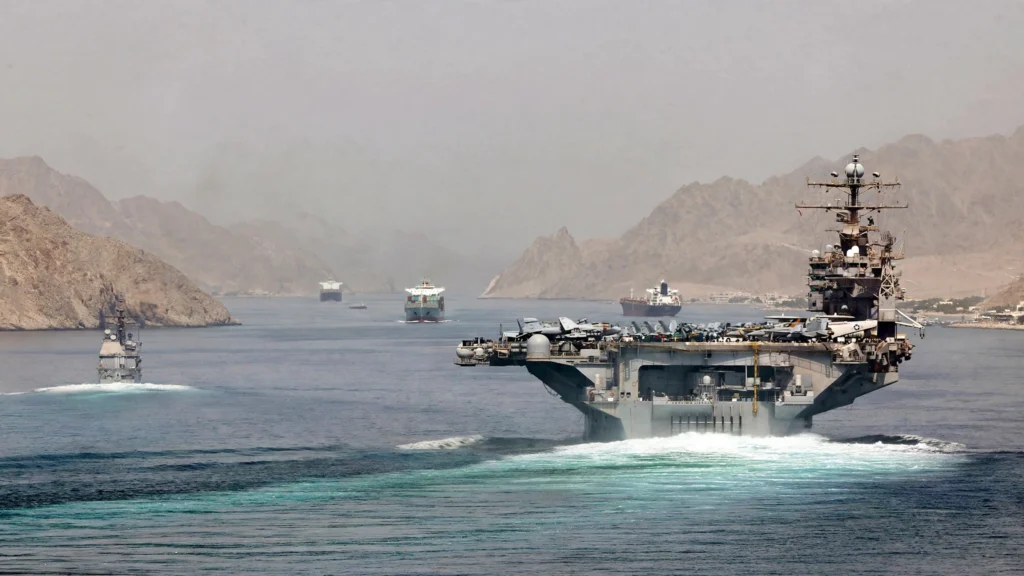
A strike this weekend? Mixed signals from Washington
The denials sit awkwardly next to the week’s other headline. Tom Barrack, the US ambassador to Turkey and special envoy for Syria, said in a podcast interview on Friday that a US strike on Iran could happen this weekend. “Could there be a strike this weekend? Absolutely,” Barrack told host Mario Nawfal, while adding that President Donald Trump remained open to a deal with Tehran.
Trump himself played down the remark hours later, telling reporters in Florida he knew nothing about it, even as he kept his options open. He had earlier said no strike would come before the US congressional elections on November 3. Israel’s prime minister Benjamin Netanyahu, who faces elections on Tuesday, has meanwhile repeatedly vowed to topple Iran’s clerical leadership.
What it means for India
For India, the stakes run through energy and people. Brent crude has climbed to around $116 a barrel, its highest in five months, as traders price in the risk of disruption in the Gulf. Any sustained spike feeds straight into India’s import bill and pump prices. The Strait of Hormuz is the chokepoint to watch: Iran’s Revolutionary Guard navy has claimed in recent days that tankers using what it calls an unauthorised southern route struck naval mines, claims the US military has disputed.
There is also the human dimension. More than nine million Indians live in the Gulf, with the largest communities in the UAE, Saudi Arabia and Qatar. So far there is no advisory from New Delhi specific to this drawdown.
What happens next
- Embassies: if limited operations widen into formal departure orders, Washington expects a sharper escalation.
- The weekend: Barrack’s remark puts Saturday and Sunday in focus, though Trump has distanced himself from it.
- Oil: Brent near $116 is already a five-month high; any Hormuz incident could push it higher.
- Diplomacy: mediators including Qatar and Pakistan are trying to keep a channel open, and Trump insists a deal remains possible.
Frequently asked questions
Which US embassies are cutting staff?
Jordan, Lebanon, Qatar and the UAE are moving to limited operations. A stronger ordered departure already applies to staff and families in Saudi Arabia.
Why is the US cutting embassy staff?
US intelligence warned that Iranian plots against American personnel have reached advanced stages, and officials also cite the threat of Houthi attacks spreading beyond Saudi Arabia.
Are the embassies closing?
No. All four remain open with limited operations, and staff there have not been ordered to leave, unlike in Saudi Arabia.
Is the US about to strike Iran?
Envoy Tom Barrack said a strike this weekend was possible, but President Trump downplayed the remark and US officials deny the embassy cuts are linked to any planned strike.
How does this affect India?
Brent crude is near $116 a barrel, a five-month high, which matters for India’s import bill, and millions of Indians live in the Gulf countries at the centre of the tension.