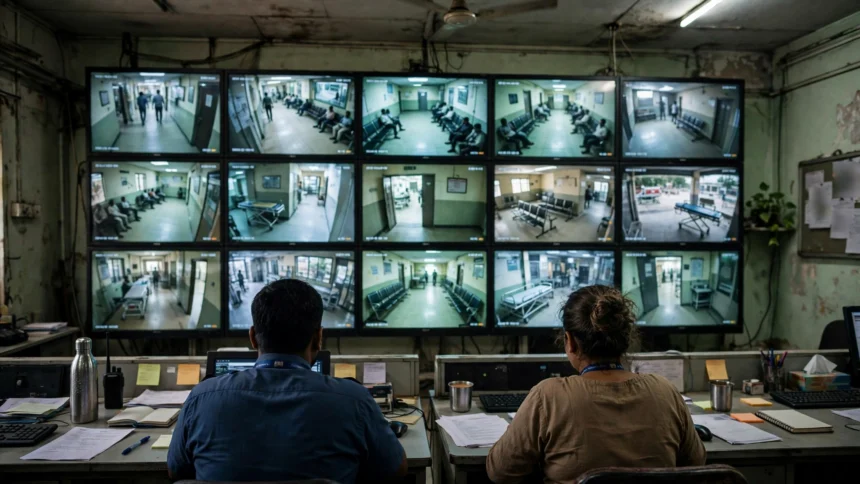
Maharashtra has switched on an artificial intelligence watchman for its public hospitals. On Monday, the state government launched Maha-Pulse AI in Kolhapur, the first pilot project in Maharashtra that puts AI to work inside government healthcare services. From a single district command centre, officials can now keep an eye on 104 government health facilities spread across the district, from the general hospital in the city to small primary health centres in remote villages.
The launch matters because it changes how the state runs its hospitals. Until now, checking whether doctors were present, queues were moving or wards were clean depended on surprise inspections and paper reports. Maha-Pulse AI does that job continuously, using cameras that are already installed in these facilities.
What Maha-Pulse AI is
Maha-Pulse stands for Maharashtra’s Platform for Unified Lifecare Support and Engagement. It is a district-level command and control system built by the state health department and the Kolhapur collectorate, with technical support from IIT Mandi. Health Minister Prakash Abitkar, who is also Kolhapur’s guardian minister, formally launched the project on Monday, November 16, at the Residency Club in Kolhapur.
The platform links 104 government healthcare units across 12 talukas of Kolhapur district to one command centre. The network covers 1 general hospital, 5 sub-district hospitals, 15 rural hospitals and 83 primary health centres. That mix is the point of the pilot. If the system works across a big city hospital and a village health centre alike, the same model can be rolled out to other districts.
Funding for the project has come from the District Planning Committee under its innovative initiatives head. The launch is part of Mission Arogyam, the state’s programme to make public healthcare more efficient and citizen-focused. Kolhapur had been picked as the pilot district for Maha-Pulse AI in September, when the state also rolled out an integrated health dashboard and a star-rating system for hospitals.
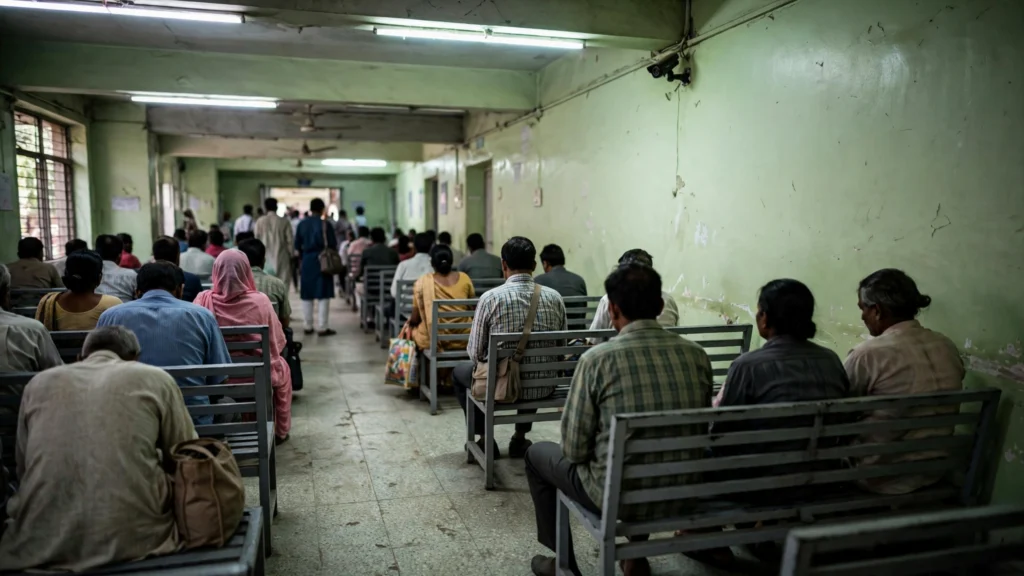
What the AI actually watches
The system analyses live footage from the CCTV cameras already installed in these facilities, so no new cameras had to be put up. It tracks several things at once:
- Doctor attendance: whether medical staff are present at their posts during duty hours.
- Patient footfall and queues: how many people are waiting in outpatient departments, how long they wait, and where congestion builds up.
- Cleanliness and housekeeping: the state of wards, corridors and common areas.
- Emergencies: the system can instantly flag events such as a patient collapsing or a fire breaking out, and alert officials.
The platform also analyses outpatient congestion, patient waiting numbers and average waiting times, giving administrators a live picture of where a hospital is under strain. Health and administrative authorities, including the deputy director of health services, the civil surgeon and local elected representatives, can monitor the facilities from the command centre.
Why this model, and why Kolhapur
According to the health minister, the initiative was inspired by Uttar Pradesh’s HOPE model, which uses technology to monitor public hospitals. The idea is the same: use cameras and software that already exist, rather than building new infrastructure, to bring transparency into day-to-day hospital management.
Kolhapur was a natural choice for the pilot. The district has a full spread of government facilities, from its general hospital to dozens of primary health centres in rural talukas, so the pilot tests the system in very different settings at the same time. The project is the first district-level effort in the state to deploy AI directly in public health services.
What happens next
The government will judge the pilot on its results in Kolhapur. Based on how the system performs, officials plan to develop a model for other districts within the next two months. If it is extended, the same command-centre approach could eventually cover government hospitals across Maharashtra.
For patients, the promise is practical rather than futuristic: shorter queues, doctors present on duty, cleaner wards and faster responses when something goes wrong. The test now is whether the alerts and dashboards actually change what happens on the ground in those 104 facilities. The next two months in Kolhapur will give the answer.
FAQs
What is Maha-Pulse AI?
Maha-Pulse AI is Maharashtra’s first AI-driven public health monitoring pilot, launched in Kolhapur on November 16, 2026. It connects 104 government health facilities to a single district command centre.
How many hospitals does it cover?
104 facilities across 12 talukas: 1 general hospital, 5 sub-district hospitals, 15 rural hospitals and 83 primary health centres.
Does it need new CCTV cameras?
No. The system analyses footage from the CCTV cameras already installed in these facilities, using AI and machine learning.
What does the AI monitor?
Doctor attendance, patient footfall, queue management, cleanliness, housekeeping and emergency incidents, including a patient collapsing or a fire outbreak.
Will it come to other districts?
The government plans to develop a model for other districts within two months, based on the outcome of the Kolhapur pilot.
Maharashtra has taken the first step. Whether Maha-Pulse AI becomes a statewide system now depends on what its cameras see in Kolhapur over the coming weeks.