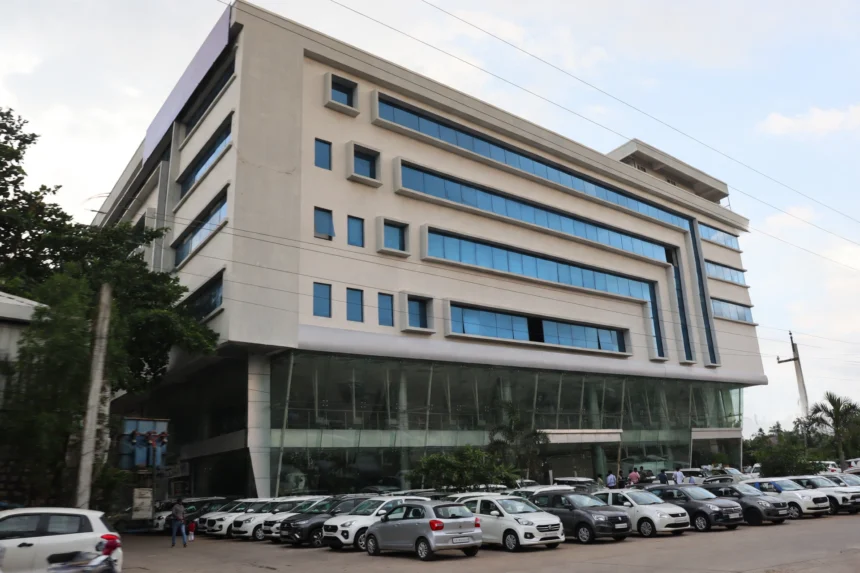
Maruti Suzuki sold more cars in a single quarter than it ever has before, and still made less money. That contradiction sits at the heart of the carmaker’s results for the July to September quarter, announced on Tuesday, October 27, and it tells a wider story about India’s car market: demand is strong, costs are rising faster, and even record showroom traffic cannot fully protect profits.
India’s largest carmaker reported a standalone net profit of Rs 2,415 crore for the second quarter of FY27, down 27 percent from Rs 3,303 crore in the same quarter last year. Revenue from operations rose 26 percent to Rs 53,340 crore, up from Rs 42,332 crore a year ago. Sales grew, revenue grew, and profit fell.
Record sales, led by small cars and SUVs
Maruti Suzuki achieved its highest ever quarterly total sales volume of 6,96,654 units in the quarter, a rise of 26.5 percent year on year. Growth in the domestic passenger vehicle market was broad based. Small car sales rose 35.9 percent, while SUV sales jumped 68.2 percent, helped by a strong response to recently introduced SUVs and by extra production capacity coming on stream.
The company’s domestic market share increased by 2.2 percentage points to 40.8 percent. Even with the added capacity, demand kept running ahead of supply. Network inventory stood at about 17 days at the end of September, and pending customer bookings were around 2,00,000 units. Exports dipped slightly to 1,08,119 units from 1,10,487 a year ago, but domestic demand more than made up for it.
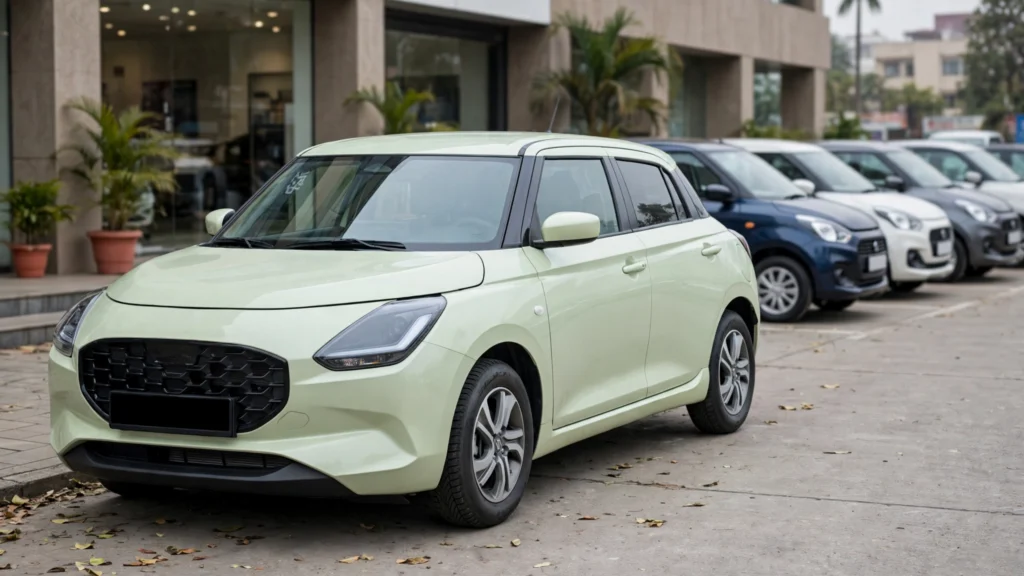
Why profit fell while revenue rose
Two pressures squeezed profit. The first was the cost of making cars. Expenses jumped to Rs 50,604 crore in the quarter, up from Rs 39,008 crore a year earlier. The company linked higher commodity costs to the West Asia conflict, with raw materials such as steel and copper becoming more expensive through the year. In September it raised prices of select models by up to Rs 20,000, its third hike since May, but that was not enough to offset the rise.
Operating profit fell 17.1 percent to Rs 2,804 crore from Rs 3,382 crore a year ago, although it improved 10.8 percent from the April to June quarter. EBITDA fell 6 percent to Rs 4,763 crore from Rs 5,085 crore, and the EBITDA margin narrowed to 8.9 percent from 12 percent a year ago. That margin squeeze is the clearest sign of how much costlier each car became to build.
The second pressure came away from the factory floor. Non-operating income fell sharply because of mark to market losses on invested surplus, the company said. Other income dropped to Rs 430 crore from Rs 966 crore a year ago. Maruti earned less from its investments at the same time as its core carmaking margins thinned, and the two effects together pulled net profit down by more than a quarter.
What the numbers mean for buyers
Strong demand and low dealer inventory mean popular models are unlikely to come with deep discounts in a hurry. Rising input costs and repeated price hikes mean sticker prices are more likely to creep up than fall.
- Small cars are back in demand: sales rose 35.9 percent in the quarter.
- SUVs grew fastest: sales rose 68.2 percent, helped by new models.
- Dealers held only about 17 days of stock, with 2,00,000 bookings pending.
- Maruti’s domestic market share rose to 40.8 percent.
- Exports dipped slightly to 1,08,119 units from 1,10,487 a year ago.
The half year picture
Zoom out to the first six months of FY27 and the same pattern holds. Maruti reported its highest ever half yearly sales volume of 13,79,378 units, up 27.9 percent, and record half yearly net sales of Rs 1,05,746 crore. Yet standalone net profit for the half year fell 18.3 percent to Rs 5,767 crore from Rs 7,061 crore in the same period last year.
The question now is whether input costs ease enough for margins to recover, or whether Maruti will need further price rises. For now, customers are buying in record numbers while each sale earns a little less than a year ago.
FAQs
What was Maruti Suzuki’s profit in Q2 FY27?
Rs 2,415 crore standalone, down 27 percent from Rs 3,303 crore. Consolidated net profit was Rs 2,466 crore.
How much did Maruti Suzuki’s revenue grow?
Revenue rose 26 percent to Rs 53,340 crore from Rs 42,332 crore. Consolidated revenue was Rs 53,356 crore.
How many cars did Maruti Suzuki sell in Q2 FY27?
A record 6,96,654 units, up 26.5 percent. Small cars rose 35.9 percent, SUVs 68.2 percent.
Why did Maruti Suzuki’s profit fall despite record sales?
Higher commodity costs raised expenses, and mark to market losses cut investment income. Other income fell to Rs 430 crore from Rs 966 crore.
What does this mean for car buyers?
With 17 days of stock and 2,00,000 pending bookings, heavy discounts look unlikely and further price rises remain possible.
Maruti Suzuki announced its Q2 FY27 results on October 27, 2026. The figures in this article are from the company’s standalone and consolidated results for the July to September quarter.