Microsoft India and Samhita-Collective Good Foundation (Samhita-CGF) have unveiled a multilingual AI chatbot built for India’s small businesses, giving micro, small and medium enterprises a practical way to keep using artificial intelligence long after their training ends. The chatbot was launched on Friday, November 20, 2026, at the AI Enablement for MSMEs Leadership Dialogue in New Delhi, held alongside NITI Aayog’s Atal Innovation Mission.
For India’s estimated 10 crore MSMEs, the announcement tackles the problem most small businesses face with AI. Learning a new tool in a workshop is one thing. Using it every day, in your own language, while running a shop or a small factory, is quite another. This chatbot is designed to sit in that gap.
What the chatbot does
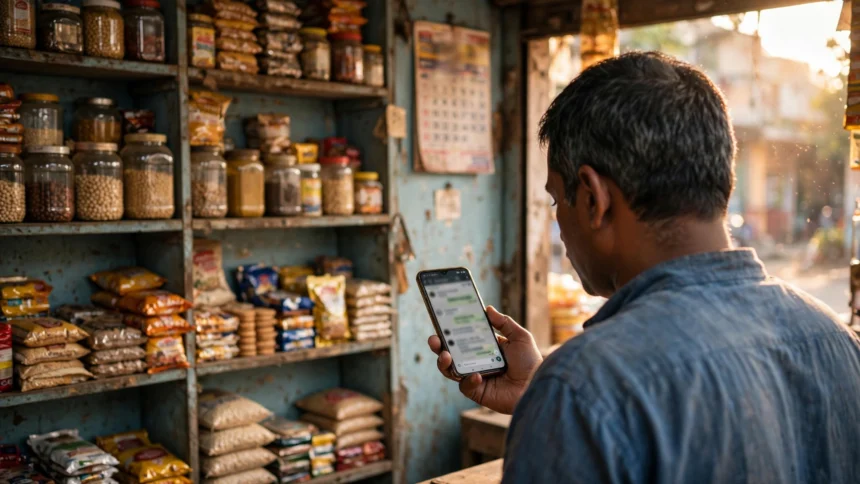
The new chatbot speaks to small business owners in regional languages and helps them keep learning and applying AI in daily operations once formal training ends. Microsoft India and Samhita-CGF have not yet announced a name for the chatbot, nor the full list of languages it will support, but the partners have said it will be scaled up to serve MSMEs across the country.
The idea is simple. A business owner who has finished the training can ask the chatbot how to use AI for a real task, whether that is drafting a message to a customer or working out a basic budget. Instead of hunting through manuals or waiting for the next workshop, the owner gets an answer in a language they are comfortable with, on the phone they already use.
The 60-day programme behind it
The chatbot is the follow-up to Microsoft’s AI Enablement for MSMEs initiative, helping 3,000 MSMEs in Andhra Pradesh, Delhi-NCR, Karnataka and Maharashtra adopt AI workflows across their business functions over a 60-day learning journey. The chatbot is meant to keep that learning alive after the 60 days are over.
The November 20 dialogue brought together Dr Deepak Bagla, Mission Director of the Atal Innovation Mission at NITI Aayog, and Sanjay Chadha, General Manager for Corporate, External and Legal Affairs at Microsoft India and South Asia, along with MSME founders and ecosystem partners.
Microsoft and Samhita-CGF are also planning a National MSME AI Adoption Playbook, drawing on the learning experiences of the 6,000 individuals in the programme. The playbook is expected to capture what actually worked for small businesses, and what did not, so other enterprises can follow a tested path.
Why it matters
India’s small businesses employ crores of people and supply everything from machine parts to handmade goods, yet most run on thin margins and thinner staff. A tool that saves an hour a day is not a luxury for them. It is the difference between a business that keeps up and one that falls behind. That is why the language question matters more than the technology itself. Most AI tools arrive in English first, and most Indian small business owners do not work in English. A chatbot that answers in regional languages removes the single biggest barrier between a small enterprise and a technology that could genuinely help it.
The second thing worth noting is the timing. This is not a pilot announced for some distant date. The training is already running, the chatbot is already unveiled, and the playbook is being built from real participants. The open question is speed. No date has been given for the nationwide rollout, so for now the benefit reaches the 3,000 businesses in the four regions in the programme. Whether the chatbot reaches a weaver in Varanasi or a spare-parts maker in Coimbatore will depend on how quickly the partners move from announcement to access.
What happens next
For now, the programme continues in its four regions, and the chatbot will be scaled to MSMEs across the country, though no timeline has been shared. Small business owners outside the four regions will be watching for when the chatbot opens up to them, and which languages it supports at launch. The National MSME AI Adoption Playbook will also be one to watch, since it should show, with real examples, which AI uses actually saved time and money for businesses like theirs.
FAQs
What is the Microsoft MSME AI chatbot?
It is a multilingual AI chatbot unveiled by Microsoft India and Samhita-CGF on November 20, 2026. It helps small businesses keep learning and using AI in daily work after a 60-day training programme.
Which businesses can use it right now?
The chatbot follows a programme currently helping 3,000 MSMEs in Andhra Pradesh, Delhi-NCR, Karnataka and Maharashtra. The partners plan to expand it across India, but no date for the nationwide rollout has been announced.
Which languages does the chatbot support?
The chatbot is designed to work in regional languages, but Microsoft and Samhita-CGF have not yet shared the full list of languages or a name for the chatbot.
What is the National MSME AI Adoption Playbook?
It is a planned guide based on the experiences of 6,000 programme participants, capturing practical lessons on how small businesses can adopt AI.
Who is behind the initiative?
Microsoft India and Samhita-Collective Good Foundation run the programme, with support from NITI Aayog’s Atal Innovation Mission. Samhita-CGF is the delivery partner.
Microsoft’s chatbot is a small step with a large audience: 10 crore small businesses. If it reaches them in their own languages, it could change how AI spreads through India’s economy, one small business at a time.