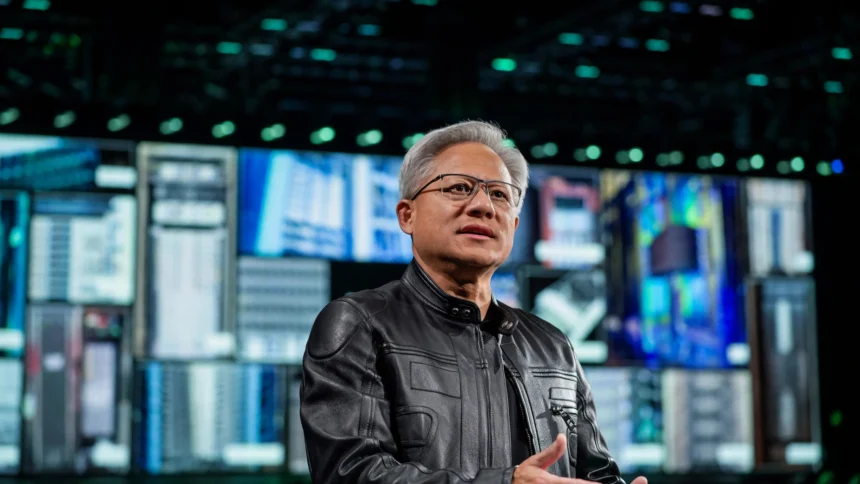
Nvidia has shut the door on a Jensen Huang comeback. The chipmaker’s board is not considering bringing its former chief executive back, despite a petition signed by more than 180,200 people and public backing from Elon Musk and US President Donald Trump.
The message from the board is clear: the search for a permanent chief executive goes on, and Huang, who resigned on November 12 after 33 years at the top, will not be part of it.
Three people familiar with the matter told Reuters that the board is not weighing a return for Huang. CNBC and Fox News carried the same message from their own sources, and Nvidia’s board has now made its position plain even as the campaign to reinstate the co-founder grows louder by the day.
The campaign to bring Huang back
The “Stand With Jensen” campaign has gathered pace since Huang stepped down last Thursday. More than 180,200 people have signed a petition demanding his return, and the open letter lists SpaceX and Tesla chief Elon Musk, Replit chief executive Amjad Masad and Epic Games chief executive Tim Sweeney among its signatories.
“We write with gratitude for Jensen Huang and with a clear demand to the Board: bring Jensen back while an independent investigation establishes the facts,” the letter says.
Trump has said he would not mind seeing Huang reinstated as chief executive. Some prominent shareholders have also urged the board not to rush. Gavin Baker of Atreides Management and Brad Gerstner of Altimeter Capital Management have both argued that Nvidia should not appoint a permanent replacement before all the facts are known.
The board, however, is unmoved. It has hired law firm Wachtell Lipton to investigate whether Huang’s alleged conduct compromised national security or company secrets, and it is pressing ahead with the succession process.
Why Huang resigned
Huang resigned as president, chief executive and board member with immediate effect on November 12, ending a 33-year run at the company he co-founded in 1993. The board had accepted his resignation a day earlier, on November 11.
The resignation followed reports about his private life. The New York Times first reported on his connection with Alice Huang, a Chinese businesswoman whom US intelligence officials suspect of having links to Beijing. Those intelligence links have not been independently established. Days later, reports emerged of a second alleged relationship with Kimberly Powell, Nvidia’s vice president of healthcare, who reported directly to him.
Huang acknowledged in a letter to staff that he had been unfaithful to his wife and apologised for violating his family’s and his employees’ trust. He has not commented publicly on his resignation.
Chief financial officer Colette Kress, who has held the finance role since 2013, has taken over as interim chief executive while keeping her CFO job. Longtime director Harvey C. Jones has become the board’s first ever chairman.
The search for a successor
Finding the next chief executive of the world’s most valuable chipmaker is now the board’s most urgent task, and it is still at an early stage. A representative for the board said on Friday that the company was in the process of selecting a search firm and had not formally engaged one.
The Financial Times reported that the board had approached Arm Holdings chief executive Rene Haas as a possible successor. US Treasury Secretary Scott Bessent has called for Nvidia to appoint an outsider, saying the company needs a “dramatic shake-up” after Huang’s departure.
The uncertainty has rattled investors. Nvidia shares fell around 4 percent on Monday, a day before the company was due to report its third-quarter results for fiscal 2027. The stock had already plunged more than 13 percent when news of the resignation broke on November 12. Huang, 63, remains one of Nvidia’s largest shareholders, owning about 3.6 percent of the company.

A timeline of the Nvidia crisis
- November 8: Nvidia says independent directors will oversee an investigation into whether Huang was targeted by a foreign intelligence operation.
- November 11: Reports emerge of a second alleged relationship. The board holds an emergency meeting and accepts Huang’s resignation.
- November 12: Nvidia announces Huang has resigned with immediate effect. Colette Kress becomes interim CEO and Harvey C. Jones becomes chairman.
- November 16: Nvidia shares fall around 4 percent as the “Stand With Jensen” petition passes 180,200 signatures.
- November 17: Reuters reports the board is not considering bringing Huang back. Nvidia reports third-quarter results later today.
Why it matters
This is no longer just a story about one man’s private life. Nvidia sits at the centre of the global artificial intelligence boom, and its chips power the data centres of nearly every major technology company. A leadership vacuum at this moment matters to the whole industry, not just to Nvidia’s shareholders.
The board’s decision also draws a line that other companies will watch closely. By refusing to bend to a petition backed by some of the most powerful names in technology, Nvidia is saying that the investigation into its former chief matters more than the clamour for his return. That stance will be tested in the weeks ahead, because the same investigation could still produce findings that change the story again.
For India, the stakes are practical. Nvidia’s graphics processors are the backbone of the country’s AI mission, including the 45,000-GPU capacity being built under the IndiaAI programme. A stable Nvidia leadership matters to every Indian startup and research lab betting on AI infrastructure, and a long, messy succession would slow decisions on supply, pricing and partnerships that Indian buyers depend on.
The immediate test comes today. Nvidia reports its third-quarter results later on Tuesday, and Kress will face investors for the first time as interim chief. The numbers will be strong, analysts expect, but the questions will all be about the search for her permanent successor.
FAQs
Is Jensen Huang returning as Nvidia CEO?
No. Nvidia’s board is not considering bringing him back, according to three people familiar with the matter who spoke to Reuters. CNBC and Fox News have reported the same.
Who is running Nvidia now?
Chief financial officer Colette Kress is interim chief executive, and longtime director Harvey C. Jones is the board’s first ever chairman.
Why did Jensen Huang resign?
He resigned on November 12 after reports of alleged extramarital relationships, including one with a Chinese businesswoman US intelligence officials suspect of links to Beijing. The allegations have not been independently established, and an independent investigation is under way.
Who could replace him?
No permanent successor has been named. Arm chief executive Rene Haas has been approached, according to the Financial Times, and the board is selecting a search firm. Treasury Secretary Scott Bessent has urged the board to pick an outsider.
When will Nvidia announce its next CEO?
There is no timeline yet. The board has said only that it will consider internal and external candidates, and the process is at an early stage.
Nvidia’s board has made its choice, and it is final for now. The campaign for Huang’s return will continue, but the company is moving on, and the search for the person who will lead the world’s most important chipmaker through the AI era has begun in earnest.