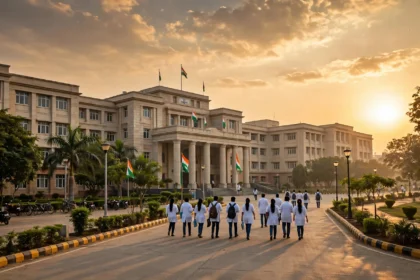
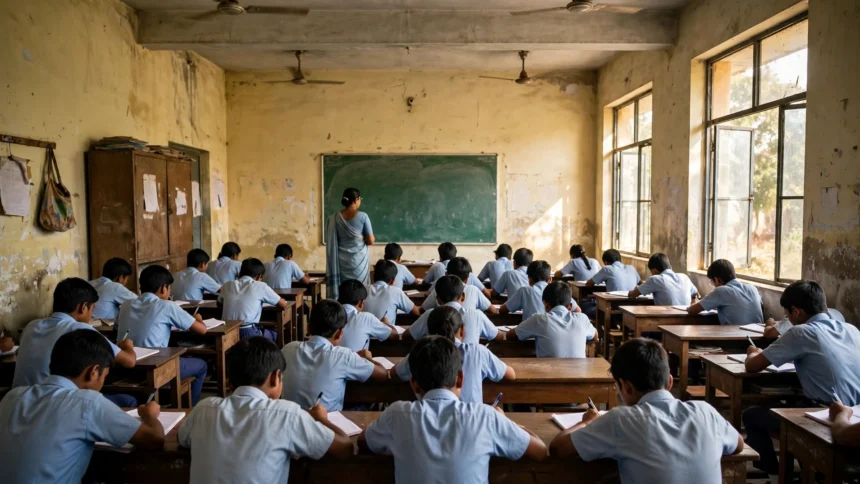
Telangana is set to scrap its decades-old intermediate college system. From the next academic year, Classes 11 and 12 will be taught inside schools, Chief Minister A Revanth Reddy announced on Wednesday after a review meeting of the education department, replacing the two-tier structure in which students finished Class 10 in school and then moved to a separate junior college for two years.
The announcement matters because of one number the Chief Minister put on the table: about 40 per cent of students in Telangana, mostly girls and those from Dalit, tribal and minority communities, leave school after Class 10 instead of moving on to intermediate colleges. The government says bringing Classes 11 and 12 under the same roof should keep more of them in the classroom.
What exactly is changing
Under the new system, Telangana will move to a 10+2 pattern. School education will be split into three clear stages: primary education from nursery or kindergarten to Class 4, secondary education from Classes 5 to 8, and senior secondary education from Classes 9 to 12. Students will stay in the same school system right through Class 12 instead of switching institutions after their Class 10 board exams.
That is a break from the current setup, where schooling up to Class 10 ends with the SSC public examination, and the two years after that, known locally as intermediate, are governed by the separate Telangana Board of Intermediate Education and taught in junior colleges.
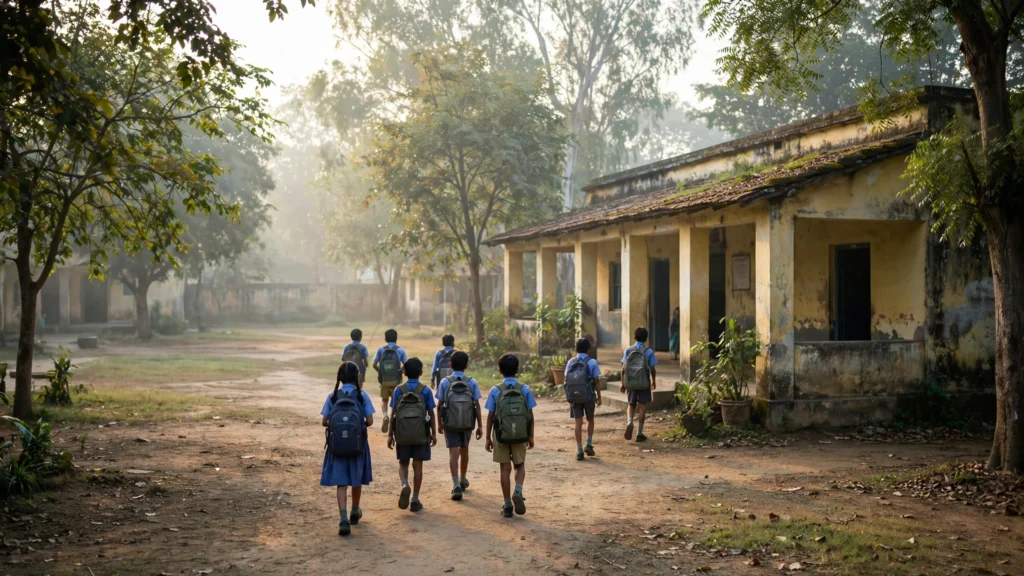
Why the government says the old system failed
Revanth Reddy, who also holds the education portfolio, pointed to the dropout pattern after Class 10 as the core problem. Around 40 per cent of students do not make the jump to intermediate colleges, and the dropouts are concentrated among girls and students from Dalit, tribal and minority communities. The Chief Minister said the state wants quality education from nursery level to university, so students can compete in the modern world.
He contrasted the state system with institutions such as Kendriya Vidyalayas, Navodaya Vidyalayas and Kasturba Gandhi Balika Vidyalayas, where dropout rates are far lower because students get continuous education up to Class 12. The logic is simple: if a student never has to change schools at 15, fewer of them fall out of the system.
There is another target in the background. Junior colleges in the Telugu states, mostly run by private institutions, have for years been criticised for turning the two intermediate years into little more than integrated coaching for engineering and medical entrance tests, with intense academic pressure on teenagers.
What happens to junior college staff
One of the first questions after any such announcement is about the people who work in the system being wound down. The Chief Minister assured that the employment and retirement benefits of lecturers and non-teaching staff in junior colleges would remain unaffected. That assurance matters because thousands of lecturers are employed in government and aided junior colleges across the state.
The government has not yet spelt out the full transition plan, such as how existing junior colleges will be merged or repurposed. Those details are expected to follow as officials work out the implementation.
Other decisions from the review meeting
The education review meeting covered more than the intermediate overhaul. The Chief Minister instructed officials to move government-run welfare hostels and residential schools out of rented buildings and to build hostels with full facilities, including adequate toilets and water supply. He also directed officials to speed up the recruitment of Assistant Professors, Associate Professors and other faculty in state universities.
What students and parents should watch
For students currently in Class 10, the change will matter from the next academic year. The Chief Minister said that after Class 12, students should get the opportunity to choose subjects of their interest and become experts in those fields, and that students must be trained to have a command over language and communication skills by the time they finish Class 12.
Parents should watch for the official notification and the transition plan, which will clarify admissions for Classes 11 and 12 and the fate of the intermediate board examinations. Until that detail arrives, the announcement is a direction of travel, not yet a complete rulebook.
FAQs
When will Classes 11 and 12 move into schools in Telangana?
From the next academic year, as announced on November 11. Detailed orders will follow.
Why is Telangana scrapping intermediate colleges?
About 40 per cent leave education after Class 10, mostly girls and students from Dalit, tribal and minority communities. The government says keeping Classes 11 and 12 in schools will cut that dropout.
What will the new school structure look like?
Primary from nursery to Class 4, secondary from Classes 5 to 8, and senior secondary from Classes 9 to 12, all under the school education system.
Will junior college lecturers lose their jobs?
No, the Chief Minister has assured that the employment and retirement benefits of lecturers and non-teaching staff in junior colleges will remain unaffected.
Does this affect private junior colleges?
The announcement covers the state system. Details on how private junior colleges will be treated are yet to be announced.
It is one of the biggest school reforms in the state since its formation. If handled well, it could keep lakhs of teenagers, especially girls and first-generation learners, in school for two more years. The test will be in the details.