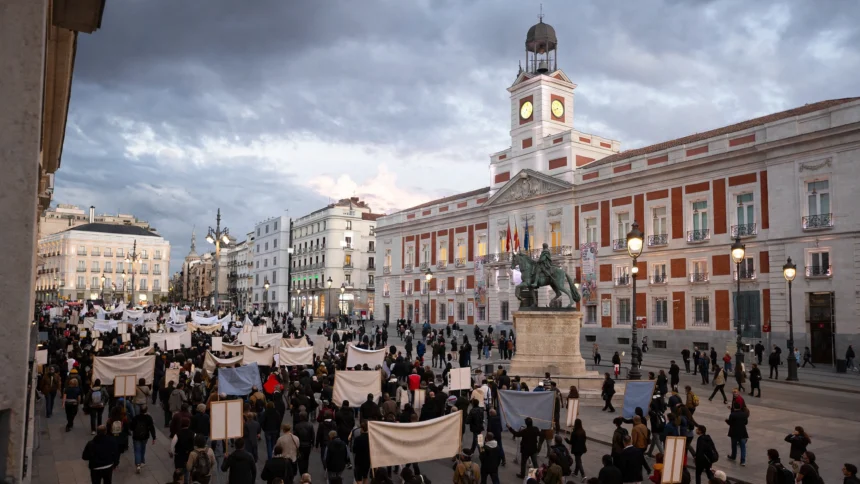
Spain came to a near standstill on Wednesday as around four million workers walked off the job in the country’s first general strike in 14 years, turning the streets of Madrid, Barcelona and dozens of other cities into a mass protest against a housing crisis that has pushed rents beyond the reach of ordinary families.
The 24-hour strike, called by Spain’s two largest trade unions and backed by tenants’ associations, was the first nationwide walkout since 2012, when workers protested against austerity during the eurozone debt crisis. This time the target was different: soaring rents, a shortage of homes and a wave of evictions that unions say has left an entire generation locked out of decent housing.
Despite stormy weather, with two storms bringing heavy rain and strong winds across much of the country, workers set up picket lines at dawn and marched through city centres in the afternoon. The day was largely peaceful, but clashes broke out in the evening in Barcelona and Madrid, where protesters set fire to rubbish containers and blocked roads. Police said at least 73 people had been arrested by late evening following more than 1,000 incidents linked to the strike.
A country short of homes
At the heart of the protest is a simple, brutal arithmetic. Spain faces a shortage of around 750,000 homes, according to the country’s central bank, and that gap is expected to grow beyond one million by 2028. Rents have nearly doubled in a decade, while wages have not kept pace, and evictions have become a regular feature of life in the big cities.
The strike was first called by tenants’ groups, and it was later joined by the General Union of Workers (UGT) and the Workers’ Commissions (CCOO), the two unions that together represent more than a million workers. Students, pensioners, tenants and the self-employed joined the marches, and unions said about four million people took part in total, roughly one in five of Spain’s workforce of around 23 million.
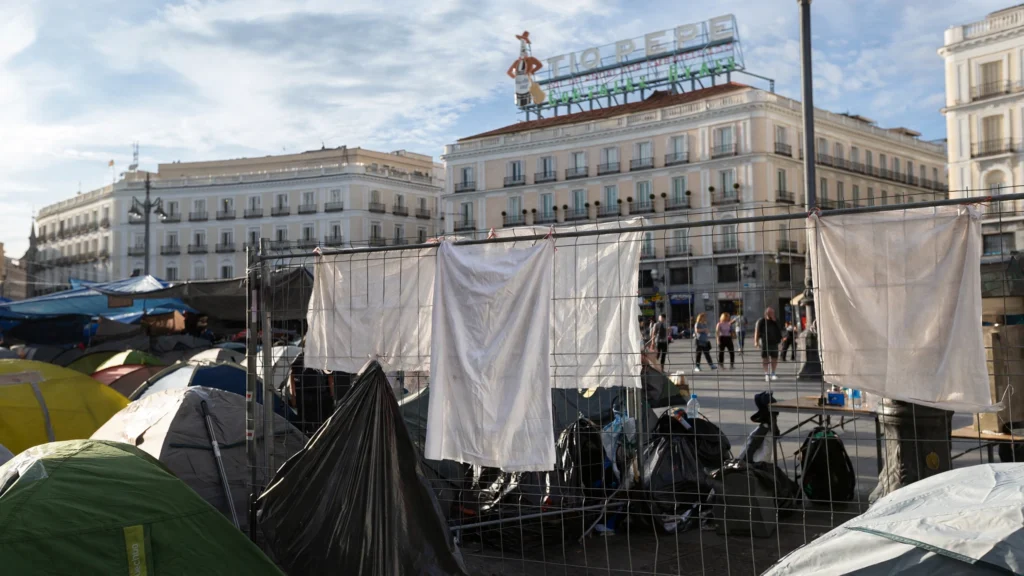
For many of those marching, the protest was personal. Young workers in Madrid and Barcelona now routinely spend more than half their pay on rent, and families say they are being pushed out of the neighbourhoods they grew up in. The tents that housing campaigners pitched in Madrid’s Puerta del Sol square in recent weeks have become a symbol of that anger, and the strike carried it onto the national stage.
An election fought over housing
The timing of the strike was no accident. Spain votes in a snap general election on November 29, less than three weeks away, and housing has become the central issue of the campaign.
Prime Minister Pedro Sanchez is hoping to make housing affordability the defining question of the election, shifting attention away from corruption investigations involving his inner circle and a deadly train crash last month. His government has promised new measures to bring down rents and build more affordable homes, but unions and tenants’ groups say the action so far has been too slow and too small.
What happens next
The strike may be over, but the housing crisis it highlighted is not. The central bank’s warning that the homes shortage will pass one million by 2028 means the pressure on the next government, whoever wins on November 29, will only grow. Unions have said they will judge the parties by their housing plans, and tenants’ groups have promised to keep up the pressure after the election.
FAQs
Why did Spain go on a general strike?
Workers protested against the housing crisis, including soaring rents, a shortage of around 750,000 homes and rising evictions. The strike was backed by Spain’s two largest unions, UGT and CCOO, and by tenants’ associations.
How many people took part in the strike?
Unions said around four million workers took part, roughly one in five of Spain’s workforce. The walkout was the first general strike in Spain since 2012.
When is Spain’s general election?
Spain votes in a snap general election on November 29, 2026, less than three weeks after the strike. Housing affordability has become a central issue of the campaign.
Was the strike peaceful?
The strike was largely peaceful during the day, with big marches in Madrid, Barcelona and other cities. Clashes broke out in the evening in Barcelona and Madrid, and police said at least 73 people were arrested.
How bad is Spain’s housing shortage?
Spain faces a deficit of about 750,000 homes, according to the central bank, and that figure is expected to exceed one million by 2028. Rents have nearly doubled in a decade.
Spain’s housing crisis has moved from the margins of politics to its centre, and Wednesday’s strike made sure of it. The election on November 29 will show whether the anger on the streets becomes a verdict at the ballot box.