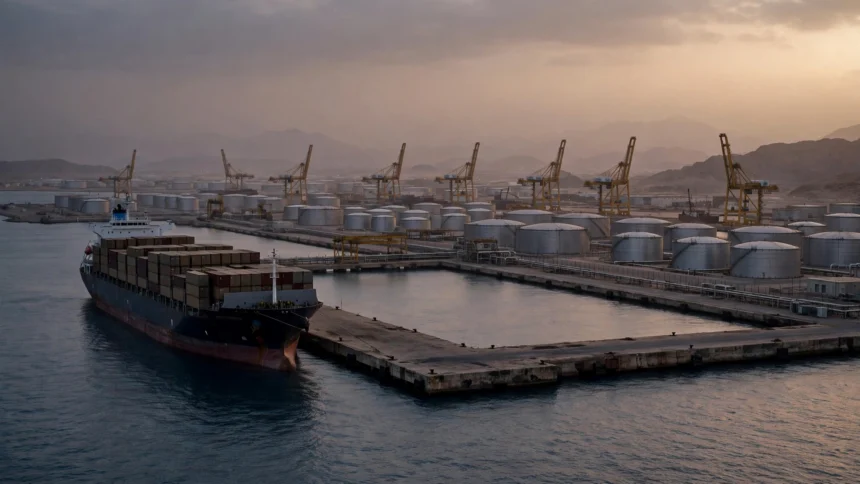
Seven people were wounded on 2 November after Saudi-led coalition strikes hit a key Red Sea port and an oil facility in Yemen’s western Hodeidah province, according to the Houthi group. The attacks targeted the Ras Issa oil terminal and a separate site in Bajil district, marking the latest escalation in a cross-border conflict that has intensified in recent weeks.
Houthi health ministry spokesman Anees Alasbahi said four civilians were wounded at Ras Issa port and three more at the oil facility in Bajil. In a post on X, he described the repeated strikes on oil facilities and vital ports as a flagrant violation of international humanitarian law and accused the coalition of targeting civilians and critical infrastructure.
The Houthis’ Al-Masirah television channel reported earlier that Saudi forces had attacked a pier and a commercial ship docked at Ras Issa port. The channel said the strikes hit the port berth and the vessel, though it did not immediately give details of the damage. Houthi media also reported a strike on Sunday near Hodeidah University.
The Saudi-led coalition said it had conducted a precision operation to neutralise vital resources used by the Houthis, and separately said it had intercepted a drone and a ballistic missile launched by the Houthis towards its southern region.
Why Ras Issa matters
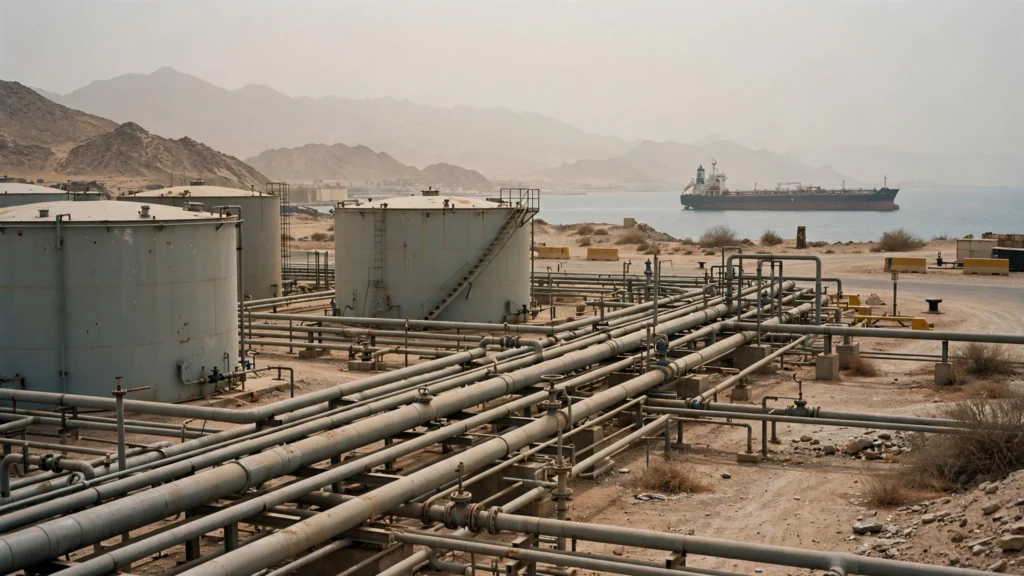
Ras Issa is not just another dot on Yemen’s Red Sea coast. Hodeidah holds the biggest seaport under Houthi control, and it is a key entry point for food and aid reaching areas they hold. Ras Issa, around 55 kilometres north of Hodeidah city, also serves to import and store oil.
That dual role, as a commercial lifeline and a military asset in rival eyes, is why strikes there carry such weight. Damage to port infrastructure can quickly hit fuel supplies and aid deliveries in a country where millions already depend on humanitarian assistance.
A wider wave of strikes
Houthi military spokesman Yahya Sarea said 75 air and missile strikes had hit eight provinces, Saada, Taiz, Amran, Ibb, Dhamar, Lahj, Hodeidah and Al-Jawf, over the previous 24 hours. He claimed the attacks caused civilian casualties and put the total number of strikes since the latest escalation began at 3,830, figures that could not be independently verified.
Separately, Al-Masirah reported another airstrike on a telecommunications facility south-east of Saada city, attributing it to Saudi warplanes. No casualties were immediately reported there.
Cross-border hostilities between the Houthis and Saudi Arabia have intensified in recent weeks. Saudi strikes have hit Houthi-held areas across Yemen, while the group has launched missiles and drones towards Saudi territory. Iran’s state-run IRNA agency also reported on Sunday that a strike on an industrial complex in Saudi Arabia’s Dammam had caused a large fire, a claim attributed to a Yemeni strike, though it was not independently confirmed.
How the truce unravelled
Yemen has been embroiled in conflict since late 2014, when the Houthis seized Sanaa and large parts of northern Yemen. A Saudi-led coalition intervened in 2015 in support of the internationally recognised government, and a fragile truce agreed in 2022 held unevenly for years.
That truce fell apart in July after the Houthis allowed an Iranian plane to land in Sanaa in defiance of Saudi control over Yemeni airspace, setting off a spate of attacks. Since fighting reignited, the United Nations says more than 1,600 people have been killed and more than 300,000 displaced.
The renewed fighting also sits inside a wider regional crisis, with Gulf capitals warning that a fresh confrontation involving the United States, Israel and Iran could draw in states across the region.
What happens next
- Damage assessment: How badly were Ras Issa’s pier, berth and fuel handling hit, and can aid and oil shipments continue through Hodeidah?
- Retaliation risk: Houthi missile and drone launches towards Saudi Arabia have typically followed coalition strikes, raising the prospect of further exchanges in the coming days.
- Aid access: Humanitarian agencies will be watching Hodeidah closely, since any prolonged disruption at its ports hits food and fuel supplies for millions.
FAQs
Where is Ras Issa port?
Ras Issa is an oil terminal on Yemen’s Red Sea coast in Hodeidah province, around 55 kilometres north of Hodeidah city. It imports and stores oil.
How many people were wounded in the latest strikes?
The Houthis said seven people were wounded: four civilians at Ras Issa port and three more at an oil facility in Bajil district, according to Houthi health ministry spokesman Anees Alasbahi.
What did the Saudi-led coalition say?
The coalition said it carried out a precision operation to neutralise vital resources used by the Houthis.
How many strikes did the Houthis report in 24 hours?
Houthi military spokesman Yahya Sarea claimed 75 air and missile strikes hit eight provinces in 24 hours, and put the total since the latest escalation began at 3,830. Those figures could not be independently verified.
Why did the 2022 Yemen truce collapse?
AFP reporting says it fell apart in July after the Houthis allowed an Iranian plane to land in Sanaa in defiance of Saudi control over Yemeni airspace.
Yemen’s ports have long been both lifelines and flashpoints. The events at Ras Issa this week show how quickly that fragile balance can tip, and how much ordinary people stand to lose when it does.