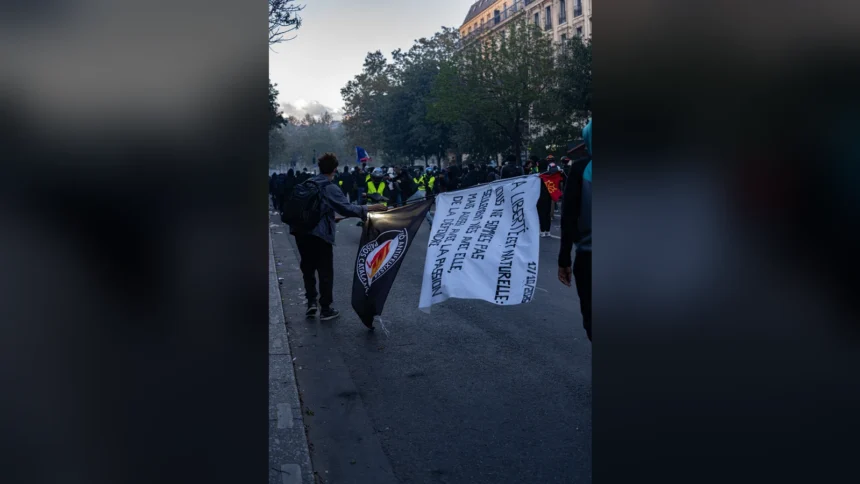
France woke up on Sunday to the aftermath of another tense weekend on its streets. Tens of thousands of people marched across the country on Saturday, November 7, in a fourth consecutive weekend of protests over the rising cost of living and deteriorating conditions in schools, with clashes breaking out in Paris despite a massive police presence.
The Interior Ministry said 146,000 people took part in demonstrations nationwide, including 46,000 in Paris. Trade unions put the figures far higher, at around 250,000 across France and 75,000 in the capital. Either way, the turnout was noticeably lower than the movement’s peak last weekend, when more than 500,000 people marched according to the ministry.
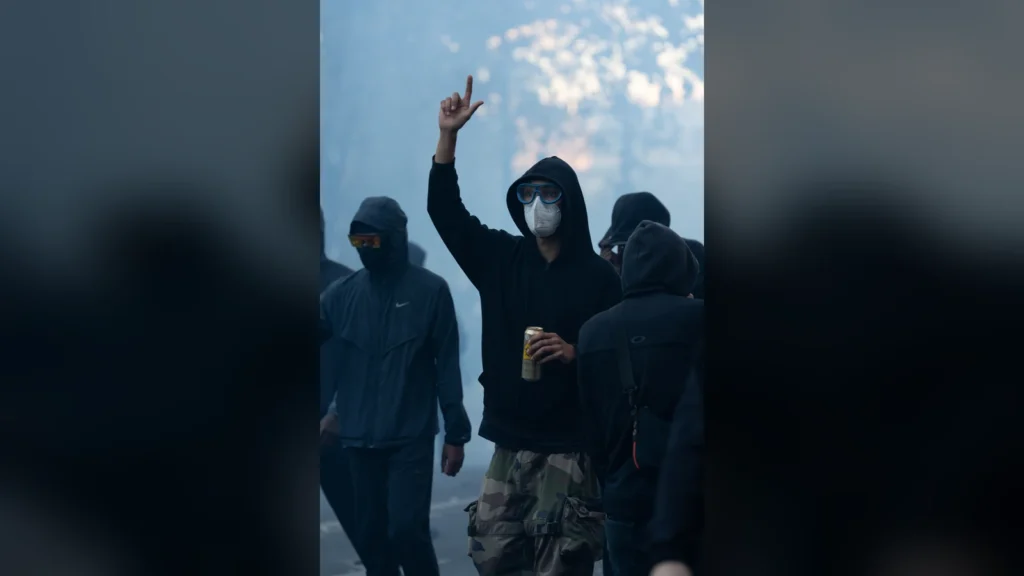
What has not eased is the tension. Police said nearly 1,000 people were arrested across France on Saturday, and officers faced what Interior Minister Laurent Nunez described as an extremely high level of violence in some spots. In Paris, a group of around 200 people attacked officers at the Place de la Concorde after a man was arrested for setting fire to a rubbish bin. Tear gas was fired in Paris and Lyon as police moved to contain trouble.
70,000 officers on the streets
Authorities had prepared for the worst. Around 70,000 police officers and gendarmes were deployed across the country on Saturday, roughly 10,000 more than the previous weekend, backed by elite units, mounted police, helicopters, drones, armoured vehicles and water cannon. Paris extended its nighttime curfew until Monday, while Lyon banned gatherings in central areas and restricted public transport.
The scale of the security operation reflects how quickly this movement has grown. It began in mid-September, when high school students blockaded their schools over dilapidated buildings, teacher shortages and what they see as an unfair system for getting into higher education. Within weeks, unions and groups protesting high living costs had joined them, and the Yellow Vest movement, which shook France in 2018 and 2019, has returned to the streets too.
On Saturday, a cheerful march set off from the Porte d’Italie in Paris and wound its way to the Porte de Vincennes, with families and students walking alongside union members. But the mood turned in places. Since last weekend’s violence, more than 2,700 people have been arrested, according to the Justice Ministry, and shops were looted in several cities.
Macron blames the far left
President Emmanuel Macron has blamed what he calls seditious acts by ultra-left groups for the violence, accusing them of trying to bring down the Republic. His government has also banned some demonstrations outright. Protests were barred in parts of Paris, Lyon, Lille and Grenoble on Thursday, and Macron announced that only union-authorised marches would be permitted at the weekend, a decision that drew sharp criticism from student groups.
On Friday, Macron met representatives of the student movement for the first time since the protests began. The meeting did not calm the streets. The national student union, UNEF, had already called for rallies on Saturday, and the movement has announced another protest for next Saturday.
What happens next
All eyes now turn to Monday, November 9, when Prime Minister Sebastien Lecornu meets unions and employer federations to talk about wages and purchasing power. The government has signalled plans to raise the minimum wage and to increase school staffing and funding, a direct response to the two grievances driving the protests.
Whether that is enough remains to be seen. Further protests are already planned for Tuesday, and the movement shows no sign of fading. The unrest comes at a sensitive moment for France, which heads to a presidential election in about five months. Macron is constitutionally barred from seeking a third consecutive term and will leave office in 2027, and the far right sees its best chance yet to win power.
For now, the pattern is set: students and workers on the streets each weekend, a government offering talks and tighter security in the same breath, and a country waiting to see which side blinks first.
FAQs
Why are people protesting in France?
The protests began over poor conditions in schools, including crumbling buildings and teacher shortages, and have grown into a wider movement against the rising cost of living and stagnant wages.
How many people marched on November 7?
The Interior Ministry counted 146,000 protesters nationwide, including 46,000 in Paris. Unions estimated the real figure at around 250,000.
How many police were deployed?
Around 70,000 police officers and gendarmes were deployed across France, with armoured vehicles, water cannon, drones and helicopters in support.
What is the government offering?
Prime Minister Sebastien Lecornu meets unions and employers on Monday, November 9, to discuss wages and purchasing power, with plans to raise the minimum wage and boost school funding.
Will the protests continue?
Yes. More demonstrations are planned for Tuesday, and the movement has already announced another protest for next Saturday.
France’s protest movement is still unfolding. We will keep tracking the wage talks on Monday and the next round of demonstrations as they develop.